Kathleen Battle

Classical
Opera
 Viberate Rank: 133316
 Viberate Rank: 133316
 Monthly ListenersFollowers
 Subscribers
 Followers
 Followers
 FansTop Spotify Songs
| Track | 7-Day Streams | |
|---|---|---|
1 | 18.15K | |
2 | 5.15K | |
3 | 5.00K | |
4 | 2.86K | |
5 | 2.67K |
Top YouTube VideosMonthly ListenersFeatured in Playlists| Playlist | Followers | |
|---|---|---|
1 |  This Is Handel Spotify | 151.87K |
2 |  Choir songs that give me chills Alexa👹 | 102.31K |
3 |  This Is Haydn Spotify | 91.91K |
4 |  Best of Klassik - Klassische Musik die jeder kennt The Sound Of | 69.47K |
5 |  Every song in Haruki Murakami's books Far Out Magazine | 21.78K |
Audience| City | Monthly Listeners | |
|---|---|---|
1 |  | 2.09K |
2 |  | 1.52K |
3 | | 1.29K |
4 |  | 1.27K |
5 |  | 1.03K |
See full performance history, audience data, playlist activity, rankings, comparisons, and more in Viberate music analytics. Start with a free trial, then continue with a paid plan.
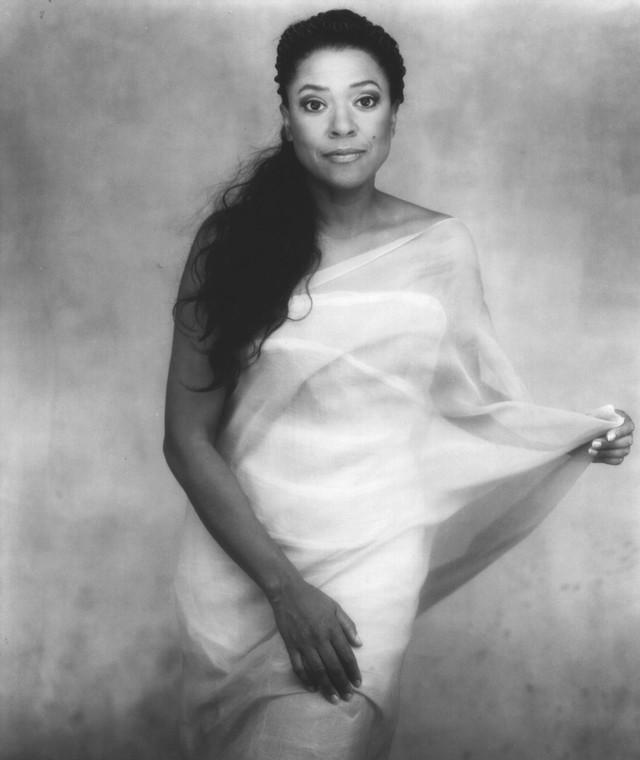
Kathleen Battle’s Spotify BioOne of the most famous African-American sopranos, Kathleen Battle received her vocal training at the Cincinnati College Conservatory, where she studied voice with Franklin Bens and also worked with Italo Tajo. While at Cincinnati she came to the attention of conductor Thomas Schippers who brought her to the Spoleto Festival in South Carolina to sing the Brahms Requiem in 1972. She made her stage debut in Rossini's Il barbiere di Siviglia as Rosina with the Michigan Opera Theater in Detroit in 1975. Susanna in Mozart's Le nozze di Figaro was her New York City Opera debut role in 1976. During this time, she also sang orchestral concerts in New York, Los Angeles, and Cleveland. James Levine brought her to the Metropolitan Opera in New York as the Shepherd in Wagner's Tannhäuser in 1978, and she appeared frequently at the Met in important roles until 1994. She first appeared in Europe in 1978 at the Italian Spoleto Festival, and in 1979 debuted at the Glyndebourne Festival.
Her first… appearance at Salzburg was in 1982 at an all-Mozart concert, and she often returned in concert, recital and opera. Her important opera roles at Salzburg were Susanna, Zerlina, and Despina, three Mozart roles with which she has been associated at many opera houses around the world. She has appeared at most of the major opera houses of the world including San Francisco, Chicago, Covent Garden, London, Geneva, Vienna, and Berlin. In 1985, she was the soprano soloist in Mozart's Coronation Mass at St. Peter's Cathedral at the Vatican, in a performance conducted by Herbert von Karajan. She sang Handel's Semele in a highly acclaimed performance in 1985 at Carnegie Hall and later recorded the role. In 1990 she was joined by Jessye Norman for a concert of spirituals which was conducted by James Levine at Carnegie Hall. Although best known for roles in the operas of Mozart and Strauss (Zdenka, Sophie and Zerbinetta), Battle has also had great success in Massenet's Werther, Donizetti's L'elisir d'amore, Don Pasquale, and La fille du regiment, Verdi's Un ballo in maschera and Falstaff and Rossini's Il barbiere di Siviglia and L'Italiana in Algeri. Battle has maintained an active recital career, and her Schubert interpretations are very fine. Her recital programs have also featured songs by Mozart, Strauss, Fauré and Rodrigo.
Kathleen Battle's voice is a high, very pure soprano with great charm. She has excellent technical control, which has allowed her to sing the difficult coloratura roles of Rosina and Zerbinetta though her approach is always more lyric that that of most coloratura sopranos. She is an excellent actress and tries to give full characterization to each of her roles. Several of her best roles were televised live from the Metropolitan Opera, New York and later released on video.
A perfectionist in her own work, Battle became more and more difficult to deal with as her career moved forward. Some felt that her demands were becoming unreasonable, and her behavior became erratic. These difficulties came to public attention when she was dismissed from the Metropolitan Opera in 1994 for "unprofessional conduct." Battle has continued to appear in concert and recital and remains a favorite of the public.
Viberate is a music analytics platform built for A&Rs, artist managers, labels, booking agents, marketers, and artists.
It helps music professionals track artist growth, analyze audience data, monitor playlist activity, compare artists, follow song performance, and identify opportunities across the music market.
Public artist pages provide a free preview of selected artist data. Paid plans provide access to deeper analytics, historical data, charts, comparisons, playlist tools, exports, alerts, reports, and additional professional features.
Yes. Public Viberate artist pages provide selected artist analytics and music data for free.
Viberate also offers a 7-day free trial of the full platform. A credit card is required to start the trial. The trial includes access to the complete product so users can test deeper artist analytics, historical views, playlist insights, comparisons, charts, exports, alerts, and reporting features before choosing a paid plan.
Viberate provides artist analytics across streaming, playlists, social media, video, radio airplay, songs, and audience markets.
Users can analyze Spotify performance, Spotify and Apple Music playlists, YouTube activity, TikTok and Instagram growth, radio spins, song performance, audience locations, demographics, rankings, and overall artist momentum.
Artist profiles also connect to music charts, similar artists, and comparison tools, helping users benchmark performance and evaluate artists in context.
Viberate updates key artist and track data daily.
For followed artists and tracks, selected data is refreshed multiple times per day. This helps teams monitor playlist changes, streaming movement, audience growth, releases, and campaign performance with more current data.
Update frequency can vary depending on the metric and data source.
Yes. Viberate lets users compare up to five artists side by side across streaming, social media, audience, and engagement metrics.
Users can compare fanbase growth, audience demographics, locations, Spotify performance, social metrics, and other artist data over selected time periods.
Artist comparison can be used for A&R scouting, benchmarking, booking decisions, campaign planning, and evaluating artists with similar audiences or market positions.