Rod Piazza

Blues
Classic Blues
Contemporary Blues
 Viberate Rank: 328729
 Viberate Rank: 328729
 Monthly ListenersFollowers
 Subscribers
 Followers
 Followers
 FansTop Spotify Songs
| Track | 7-Day Streams | |
|---|---|---|
1 | 873 | |
2 | 328 | |
3 | 324 | |
4 | 251 | |
5 | 220 |
Top YouTube VideosMonthly ListenersFeatured in Playlists| Playlist | Followers | |
|---|---|---|
1 |  Whiskey Blues 🥃 Тhe Original | The Best Slow Blues / Blues Rock Don's Tunes | 85.92K |
2 |  Boerderij van Dorst BNNVARA | 47.46K |
3 |  Blues Ballads/ Slow Blues Joar Fosså | 39.54K |
4 | Blues Classics StevieAnn | 35.56K |
5 | Blues Harmonica Mikael Levinsson | 33.48K |
Audience| City | Monthly Listeners | |
|---|---|---|
1 |  | 48 |
2 |  | 31 |
3 | | 28 |
4 |  | 26 |
5 |  | 25 |
See full performance history, audience data, playlist activity, rankings, comparisons, and more in Viberate music analytics. Start with a free trial, then continue with a paid plan.
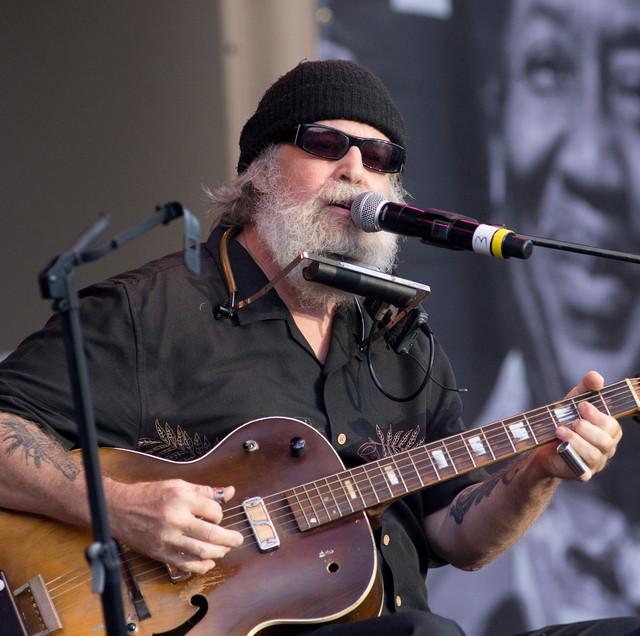
Rod Piazza’s Spotify BioA California-based blues bandleader, harmonica player, and singer, Rod Piazza's stratospheric harmonica wailings owe a heavy debt to both Little Walter and George "Harmonica" Smith. Piazza began his professional career as a member of the Dirty Blues Band in the mid-'60s, where he established his own technique and style that came to fruition on his solo debut, 1973's Bluesman. From 1980 on, he began playing with the Mighty Flyers, a band he formed with his keyboard-playing wife, Honey Alexander. Their boogie sound combines jump blues, West Coast blues, and Chicago blues. They have toured the globe many times and recorded more than a dozen albums, including 2014's acclaimed, award-winning Emergency Situation.
Piazza grew up in Southern California, where he studied blues records and perfected his harmonica work. He originally started on guitar, an instrument he began playing at the age of seven. In the mid-'60s, Piazza formed his first band, the House of DBS, which later changed its name… to the Dirty Blues Band. The band signed with ABC-BluesWay and released two albums in 1967 and 1968. The band broke up in 1968, and Piazza formed Bacon Fat with his idol and mentor, George "Harmonica" Smith, creating a dual-harp sound. Over the next decade and a half, Piazza and Smith performed together frequently; they also recorded occasionally. In 1969, Bacon Fat released their eponymous debut album on Blue Horizon. While he was performing with Smith, Piazza released his own solo albums, the first of which -- Bluesman -- appeared on LMI in 1973. The second, Chicago Flying Saucer Band, was released in 1979 on Gangster Records.
As Smith's health began to decline in the early '80s, Piazza assembled the Mighty Flyers -- with his wife Honey Alexander on keyboards -- which began playing clubs in 1980. Between 1981 and 1985, the Mighty Flyers released three albums: Radioactive Material (1981), File Under Rock (1984), and From the Start to the Finish (1985). During the early '80s, Piazza became a session musician, working with artists as diverse as Pee Wee Crayton and Michelle Shocked. In the mid-'80s, he began a full-fledged solo career, releasing Harpburn on Murray Brothers in 1986 and So Glad to Have the Blues in 1988. Piazza & the Mighty Flyers signed a contract with Black Top Records in 1991; the label later re-released the group's albums on CD. Throughout the '90s, Piazza continued to record and perform with the Mighty Flyers, releasing the occasional solo album, like 1999's Here and Now. Beyond the Source appeared in 2001. Three years later the Mighty Flyers returned with Keepin' It Real on the Blind Pig label, featuring two new members, Paul Fasulo on drums and guitarist Henry Carvajal. The next four albums were released by Delta Groove Records: For the Chosen Who in 2005, Thrillville in 2007, Soul Monster in 2009, and Almighty Dollar in 2011. In 2014, Piazza & the Mighty Flyers returned to Blind Pig with the album Emergency Situation. In the fall of 2018, he self-issued a retrospective collection of originals, Rod Piazza: His Instrumentals. Accompanied by various lineups of the Mighty Flyers from the past two decades, it also included a pair of unreleased tracks from the Live at B.B. King's Blues Club sessions. ~ Cub Koda, Rovi
Viberate is a music analytics platform built for A&Rs, artist managers, labels, booking agents, marketers, and artists.
It helps music professionals track artist growth, analyze audience data, monitor playlist activity, compare artists, follow song performance, and identify opportunities across the music market.
Public artist pages provide a free preview of selected artist data. Paid plans provide access to deeper analytics, historical data, charts, comparisons, playlist tools, exports, alerts, reports, and additional professional features.
Yes. Public Viberate artist pages provide selected artist analytics and music data for free.
Viberate also offers a 7-day free trial of the full platform. A credit card is required to start the trial. The trial includes access to the complete product so users can test deeper artist analytics, historical views, playlist insights, comparisons, charts, exports, alerts, and reporting features before choosing a paid plan.
Viberate provides artist analytics across streaming, playlists, social media, video, radio airplay, songs, and audience markets.
Users can analyze Spotify performance, Spotify and Apple Music playlists, YouTube activity, TikTok and Instagram growth, radio spins, song performance, audience locations, demographics, rankings, and overall artist momentum.
Artist profiles also connect to music charts, similar artists, and comparison tools, helping users benchmark performance and evaluate artists in context.
Viberate updates key artist and track data daily.
For followed artists and tracks, selected data is refreshed multiple times per day. This helps teams monitor playlist changes, streaming movement, audience growth, releases, and campaign performance with more current data.
Update frequency can vary depending on the metric and data source.
Yes. Viberate lets users compare up to five artists side by side across streaming, social media, audience, and engagement metrics.
Users can compare fanbase growth, audience demographics, locations, Spotify performance, social metrics, and other artist data over selected time periods.
Artist comparison can be used for A&R scouting, benchmarking, booking decisions, campaign planning, and evaluating artists with similar audiences or market positions.