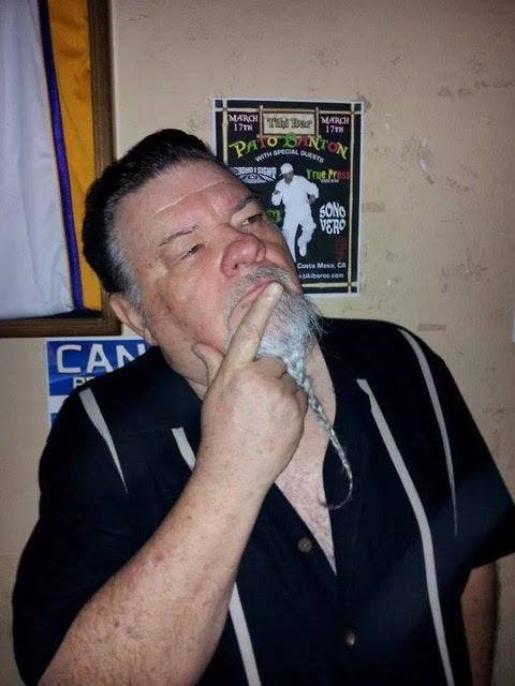
James Harman

Blues
Contemporary Blues
Jazz Fusion
 Viberate Rank: 345594
 Viberate Rank: 345594
 Monthly ListenersFollowers
 Subscribers
 Followers
 Followers
 FansTop Spotify Songs
| Track | 7-Day Streams | |
|---|---|---|
1 | 410 | |
2 | 206 | |
3 | 161 | |
4 | 141 | |
5 | 123 |
Top YouTube VideosMonthly ListenersFeatured in Playlists| Playlist | Followers | |
|---|---|---|
1 |  Whiskey Blues 🥃 Тhe Original | The Best Slow Blues / Blues Rock Don's Tunes | 85.92K |
2 | Slow Blues The Blues Room | 28.09K |
3 |  Slow Blues & Blues Rock | Don's Tunes Don's Tunes | 19.74K |
4 |  Keeping The Blues Alive Joe Bonamassa | 10.32K |
5 |  ARMÓNICA BLUES German Sierra | 7.86K |
Audience| City | Monthly Listeners | |
|---|---|---|
1 |  | 37 |
2 |  | 32 |
3 |  | 30 |
4 | | 27 |
5 |  | 24 |
See full performance history, audience data, playlist activity, rankings, comparisons, and more in Viberate music analytics. Start with a free trial, then continue with a paid plan.
James Harman’s Spotify BioEver since releasing his debut, Thank You Baby, on Enigma in 1983, James Harman kept the sound of classic electric blues alive. Harman grounded his sound in Chess -- there were distinct echoes of Little Walter and Sonny Boy Williamson -- and his bands often incubated new talents, including future Blaster Phil Alvin plus guitarists Hollywood Fats, Gene Taylor, and Kid Ramos. As such, Harman didn't break into the mainstream -- he did land a song in a pivotal scene in the Academy Award-winning 1988 film The Accused -- but he racked up W.C. Handy Awards as he kept touring and recording into the 2020s.
Born in Anniston, Alabama on June 8, 1946, Harman began playing piano at the age of four. He soon discovered his father's harmonicas in the family's piano bench, so he taught himself how to play the harp, then picked up the guitar and drums. Soon, he discovered the blues and began playing with local blues guitarist Radio Johnson. At the age of 16, he moved to Panama City, Florida, and started… playing in local blues and R&B bands, winding up in the Icehouse Blues Band. He signed a management deal with Earl Caldwell, who also managed the Swingin' Medallions, who helped shop singles to various local Florida imprints. None of these went anywhere, so he spent some time in New York, Miami, New Orleans, and Chicago before landing in Southern California in the 1970s. After battling health problems, he continued to lead a lineup of the Icehouse Blues Band, which eventually evolved into the James Harman Band in 1977.
The James Harman Band featured a number of prominent players, particularly in its earliest years when it featured Phil Alvin and Bill Bateman, who left the group to form the Blasters. Harman built up enough of a following to sign with Enigma in 1983, releasing Thank You Baby as his debut. Rhino issued Those Dangerous Gentlemen in 1987, which was followed by Extra Napkins in 1988. After Rivera released Strictly Live... In 85! in 1990, he moved to Black Top and stayed there through the '90s, releasing four albums for the label. Cannonball put out two records at the end of the '90s -- Takin' Chances in 1998 and Mo' Na'Kins, Please! in 1999 -- and he moved to Gulf Coast for Lonesome Moon Trance in 2003. Harman was quiet on the recording front during the remainder of the 2000s -- although he did cameo on two ZZ Top albums, contributing to 2003's Mescalero and 2012's La Futura -- returning in 2015 with Bonetime on the Electro-Fi imprint. Three years later, he delivered Fineprint. Harman died of a heart attack on May 23, 2021. ~ Stephen Thomas Erlewine, Rovi
Viberate is a music analytics platform built for A&Rs, artist managers, labels, booking agents, marketers, and artists.
It helps music professionals track artist growth, analyze audience data, monitor playlist activity, compare artists, follow song performance, and identify opportunities across the music market.
Public artist pages provide a free preview of selected artist data. Paid plans provide access to deeper analytics, historical data, charts, comparisons, playlist tools, exports, alerts, reports, and additional professional features.
Yes. Public Viberate artist pages provide selected artist analytics and music data for free.
Viberate also offers a 7-day free trial of the full platform. A credit card is required to start the trial. The trial includes access to the complete product so users can test deeper artist analytics, historical views, playlist insights, comparisons, charts, exports, alerts, and reporting features before choosing a paid plan.
Viberate provides artist analytics across streaming, playlists, social media, video, radio airplay, songs, and audience markets.
Users can analyze Spotify performance, Spotify and Apple Music playlists, YouTube activity, TikTok and Instagram growth, radio spins, song performance, audience locations, demographics, rankings, and overall artist momentum.
Artist profiles also connect to music charts, similar artists, and comparison tools, helping users benchmark performance and evaluate artists in context.
Viberate updates key artist and track data daily.
For followed artists and tracks, selected data is refreshed multiple times per day. This helps teams monitor playlist changes, streaming movement, audience growth, releases, and campaign performance with more current data.
Update frequency can vary depending on the metric and data source.
Yes. Viberate lets users compare up to five artists side by side across streaming, social media, audience, and engagement metrics.
Users can compare fanbase growth, audience demographics, locations, Spotify performance, social metrics, and other artist data over selected time periods.
Artist comparison can be used for A&R scouting, benchmarking, booking decisions, campaign planning, and evaluating artists with similar audiences or market positions.