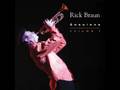
Rick Braun

Jazz
Smooth Jazz
Jazz Fusion
 Viberate Rank: 47596
 Viberate Rank: 47596
 Monthly ListenersFollowers
 Subscribers
 Followers
 Followers
 FansTop Spotify Songs
| Track | 7-Day Streams | |
|---|---|---|
1 | 38.09K | |
2 | 31.96K | |
3 | 11.92K | |
4 | 11.52K | |
5 | 11.22K |
Top YouTube VideosMonthly ListenersFeatured in Playlists| Playlist | Followers | |
|---|---|---|
1 |  Smooth Jazz Chill Spotify | 477.46K |
2 |  Smooth Jazz Spotify | 463.66K |
3 |  Smooth Jazz Classics Spotify | 194.30K |
4 |  Romantic Smooth Jazz Spotify | 176.27K |
5 |  Bottoms Up Spotify | 168.33K |
Audience| City | Monthly Listeners | |
|---|---|---|
1 | | 2.81K |
2 | | 2.77K |
3 | | 2.45K |
4 | | 2.39K |
5 | | 2.37K |
See full performance history, audience data, playlist activity, rankings, comparisons, and more in Viberate music analytics. Start with a free trial, then continue with a paid plan.
Rick Braun’s Spotify BioTrumpeter Rick Braun is instantly recognizable for his rounded tone and intimate, lyrical phrasing. A chart-topping instrumentalist, Braun emerged in the '90s, drawing upon the work of players like Chet Baker and Gil Evans-era Miles Davis, but with his own contemporary jazz style. In addition to more than 20 smooth jazz number one hits, he has collaborated with a bevy of jazz and pop greats, including Kirk Whalum, Norman Brown, Dave Koz, Rod Stewart, Natalie Cole, and Sade, among others. He has over five Top 200 albums, as well as five jazz number ones, beginning with 1998's Full Stride and running through 2001's Kisses in the Rain. In the 2010s, he accomplished the same feat with 2014's Can You Feel It and 2018's Summer Horns II: From A to Z with Dave Koz. In between, his recordings have charted on lists as diverse as Hip-Hop, Adult R&B, Dance Club, and Smooth Jazz Songs, as well as Independent and Holiday albums. In 2022, he celebrated the 30-year anniversary of his debut album.
Braun… was born in Allentown, Pennsylvania in 1955. His first instrument was drums, but he switched to trumpet in high school. He joined the jazz-fusion outfit Auracle, formed while he was a student at the prestigious Eastman School of Music. After two albums for Chrysalis -- Glider in 1978 and City Slickers in 1979 -- helmed by famed producer Teo Macero, the group disbanded, and Braun turned to songwriting, scoring a hit with REO Speedwagon's "Here with Me" in 1984.
In time, he directed his focus to contemporary jazz, issuing his solo debut, Intimate Secrets, in 1993. After touring with Sade, he returned in 1994 with Night Walk and the seasonal release Christmas Present. With 1995's Beat Street, Braun's popularity continued to snowball. The 1996 smash Body and Soul launched an NAC chart-topper titled "Notorious." A two-time winner of the Gavin Report's Smooth Jazz Artist of the Year award, he returned in 1998 with Full Stride. He also collaborated with Boney James on the 2000 release Shake It Up.
Kisses in the Rain followed in 2001 and Braun continued issuing albums throughout the decade of the 2000s, including Esperanto in 2003, Sessions, Vol. 1 in 2004, Yours Truly in 2005, RnR (a duo set co-led by saxophonist Richard Elliot) in 2007, and All It Takes in 2009. Braun offered a change of pace in 2011 with the self-explanatory Sings with Strings, an album of standards featuring string charts by Philippe Saisse. In 2014, Braun returned to the groove-oriented, instrumental, smooth jazz of his early work with Can You Feel It. Around the Horn appeared in 2017 on Shanachie, and earned positive reviews as well as a high placement on the contemporary jazz album charts. He followed with a return appearance on 2018's charting Dave Koz & Friends: Summer Horns II: From A to Z.
Braun returned to Shanachie for Crossroads in August 2019. The collection included covers of Stevie Wonder's "I Wish" as well as guest appearances on originals "Me and You" (featuring guitarist Peter White), and "Versace on the Floor" (with saxophonist Richard Elliot). In 2022, he marked 30 years since his debut album with the eponymously titled Rick Braun. Largely recorded at his home in Los Angeles, it featured contributions from guitarist Tony Pulizzi, percussionist Lenny Castro, and string orchestrations conducted by Nick Lane. ~ Matt Collar & Jason Ankeny, Rovi
Viberate is a music analytics platform built for A&Rs, artist managers, labels, booking agents, marketers, and artists.
It helps music professionals track artist growth, analyze audience data, monitor playlist activity, compare artists, follow song performance, and identify opportunities across the music market.
Public artist pages provide a free preview of selected artist data. Paid plans provide access to deeper analytics, historical data, charts, comparisons, playlist tools, exports, alerts, reports, and additional professional features.
Yes. Public Viberate artist pages provide selected artist analytics and music data for free.
Viberate also offers a 7-day free trial of the full platform. A credit card is required to start the trial. The trial includes access to the complete product so users can test deeper artist analytics, historical views, playlist insights, comparisons, charts, exports, alerts, and reporting features before choosing a paid plan.
Viberate provides artist analytics across streaming, playlists, social media, video, radio airplay, songs, and audience markets.
Users can analyze Spotify performance, Spotify and Apple Music playlists, YouTube activity, TikTok and Instagram growth, radio spins, song performance, audience locations, demographics, rankings, and overall artist momentum.
Artist profiles also connect to music charts, similar artists, and comparison tools, helping users benchmark performance and evaluate artists in context.
Viberate updates key artist and track data daily.
For followed artists and tracks, selected data is refreshed multiple times per day. This helps teams monitor playlist changes, streaming movement, audience growth, releases, and campaign performance with more current data.
Update frequency can vary depending on the metric and data source.
Yes. Viberate lets users compare up to five artists side by side across streaming, social media, audience, and engagement metrics.
Users can compare fanbase growth, audience demographics, locations, Spotify performance, social metrics, and other artist data over selected time periods.
Artist comparison can be used for A&R scouting, benchmarking, booking decisions, campaign planning, and evaluating artists with similar audiences or market positions.