Chuck Loeb

Jazz
Smooth Jazz
Jazz Fusion
 Viberate Rank: 61556
 Viberate Rank: 61556
 Monthly ListenersFollowers
 Subscribers
 Followers
 Followers
 FansTop Spotify Songs
| Track | 7-Day Streams | |
|---|---|---|
1 | 64.76K | |
2 | 48.36K | |
3 | 34.19K | |
4 | 24.31K | |
5 | 22.23K |
Top YouTube VideosMonthly ListenersFeatured in Playlists| Playlist | Followers | |
|---|---|---|
1 |  Smooth Jazz Chill Spotify | 477.46K |
2 |  Smooth Jazz Spotify | 463.66K |
3 |  Romantic Smooth Jazz Spotify | 176.27K |
4 |  Smooth Jazz - Instrumental Pekka Martikainen | 141.77K |
5 |  Saxophone Covers of Famous Songs 🎷 Prime Feelings | 105.08K |
Audience| City | Monthly Listeners | |
|---|---|---|
1 | | 2.37K |
2 | | 2.37K |
3 | | 2.24K |
4 |  | 2.16K |
5 | | 2.12K |
See full performance history, audience data, playlist activity, rankings, comparisons, and more in Viberate music analytics. Start with a free trial, then continue with a paid plan.
Chuck Loeb’s Spotify BioA skillful guitarist capable of playing any style of music, Chuck Loeb was an adept and commercially successful crossover jazz performer. He started playing guitar when he was 11; discovered jazz when he was 16; took lessons from Jim Hall, Pat Metheny, and Joe Puma, and attended the Berklee College of Music. Loeb freelanced in New York (with Hubert Laws, Chico Hamilton, and Joe Farrell, among others), and then in 1979 joined Stan Getz's group for two years. While in New York, Loeb worked on jingles and soundtracks both as a player and a composer. He spent 1985-1987 with Steps Ahead and later produced recordings by Donald Harrison, Nelson Rangell, Larry Coryell, George Garzone, and Warren Bernhardt, among others. As a performer, Loeb was part of Petite Blonde (a group featuring saxophonist Bill Evans), Metro, and the Fantasy Band, and played with Gary Burton, Dave Samuels, and many others; in addition, his compositions have been recorded by quite a few pop/jazz artists.
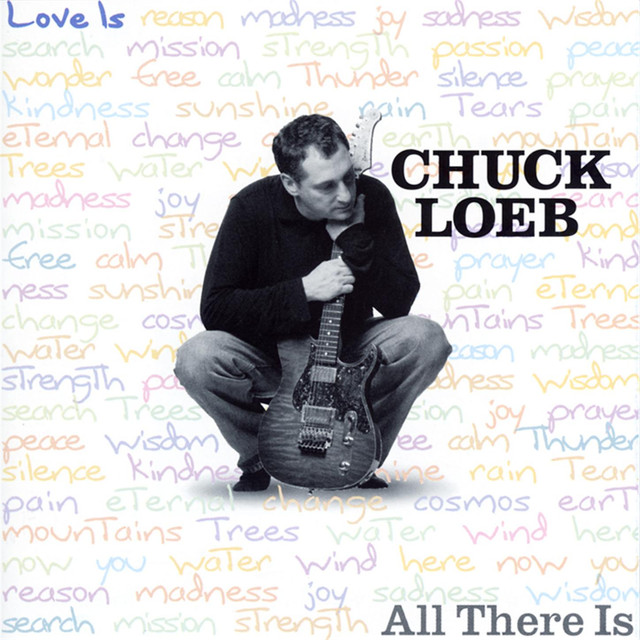
Loeb made his… first solo record in 1988, recorded extensively for DMP, and switched to Shanachie in 1996. Over the next seven years he released six albums for the label, beginning in 1998 with The Moon, the Stars and the Setting Sun, followed by Listen in 1999. Loeb remained active in the 21st century, releasing In a Heartbeat in early 2001, All There Is in 2002, and eBop one year later. The guitarist wrapped up his tenure with Shanachie in 2005 with When I'm with You, and signed with Heads Up International, a division of Telarc. His first outing for the label was Presence, released in 2007.
In 2010, Loeb replaced Larry Carlton as the guitarist for Fourplay, but continued as a producer, composer, arranger, and guitarist on his own, starting his own label, Heads Up, and with the release of Plain 'n' Simple in 2011 he revisited the world of 1960s jazz bebop organ trios. It's Love, an album with saxophonist Eric Marienthal, appeared in 2012. Loeb returned to Shanachie in 2013 with Silhouette, an eclectic album featuring the guitarist backed by four distinct ensembles including a group with drummer Peter Erskine and an organ trio with Pat Bianchi. Two years later, he again paired with Marienthal for Bridges, which also featured bassist John Patitucci. In 2016, Loeb delivered his 22nd studio album, Unspoken, featuring a bevy of collaborators including Jeff Lorber, Nathan East, Andy Snitzer, Till Brönner, and many more.
Loeb died of cancer on July 31, 2017 at the age of 61. ~ Scott Yanow, Rovi
Viberate is a music analytics platform built for A&Rs, artist managers, labels, booking agents, marketers, and artists.
It helps music professionals track artist growth, analyze audience data, monitor playlist activity, compare artists, follow song performance, and identify opportunities across the music market.
Public artist pages provide a free preview of selected artist data. Paid plans provide access to deeper analytics, historical data, charts, comparisons, playlist tools, exports, alerts, reports, and additional professional features.
Yes. Public Viberate artist pages provide selected artist analytics and music data for free.
Viberate also offers a 7-day free trial of the full platform. A credit card is required to start the trial. The trial includes access to the complete product so users can test deeper artist analytics, historical views, playlist insights, comparisons, charts, exports, alerts, and reporting features before choosing a paid plan.
Viberate provides artist analytics across streaming, playlists, social media, video, radio airplay, songs, and audience markets.
Users can analyze Spotify performance, Spotify and Apple Music playlists, YouTube activity, TikTok and Instagram growth, radio spins, song performance, audience locations, demographics, rankings, and overall artist momentum.
Artist profiles also connect to music charts, similar artists, and comparison tools, helping users benchmark performance and evaluate artists in context.
Viberate updates key artist and track data daily.
For followed artists and tracks, selected data is refreshed multiple times per day. This helps teams monitor playlist changes, streaming movement, audience growth, releases, and campaign performance with more current data.
Update frequency can vary depending on the metric and data source.
Yes. Viberate lets users compare up to five artists side by side across streaming, social media, audience, and engagement metrics.
Users can compare fanbase growth, audience demographics, locations, Spotify performance, social metrics, and other artist data over selected time periods.
Artist comparison can be used for A&R scouting, benchmarking, booking decisions, campaign planning, and evaluating artists with similar audiences or market positions.