Poco

Country
Contemporary Country
Country Rock
Pop Rock
 Viberate Rank: 37563
 Viberate Rank: 37563
 Monthly ListenersFollowers
 Subscribers
 Followers
 Followers
 FansTop Spotify Songs
| Track | 7-Day Streams | |
|---|---|---|
1 | 86.49K | |
2 | 60.94K | |
3 | 23.73K | |
4 | 20.64K | |
5 | 11.30K |
Top YouTube Videos| Video | 7-Day Views | |
|---|---|---|
1 | 12.97K | |
2 | 7.86K | |
3 | 3.26K | |
4 | 3.15K | |
5 | 2.17K |
Monthly ListenersFeatured in Playlists| Playlist | Followers | |
|---|---|---|
1 |  Soft Rock Spotify | 3.55M |
2 | Classic Rock Greatest Hits Scott Pruden | 341.38K |
3 |  70s Soft Rock Spotify | 332.84K |
4 |  Laurel Canyon Legends Spotify | 213.55K |
5 |  Country Rock Classics Spotify | 208.75K |
Audience| City | Monthly Listeners | |
|---|---|---|
1 | | 4.81K |
2 | | 4.12K |
3 | | 3.67K |
4 | | 3.48K |
5 | | 3.42K |
See full performance history, audience data, playlist activity, rankings, comparisons, and more in Viberate music analytics. Start with a free trial, then continue with a paid plan.
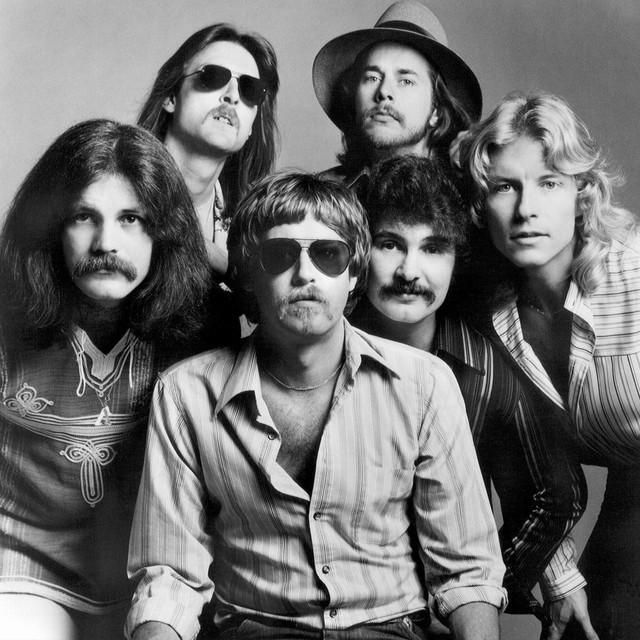
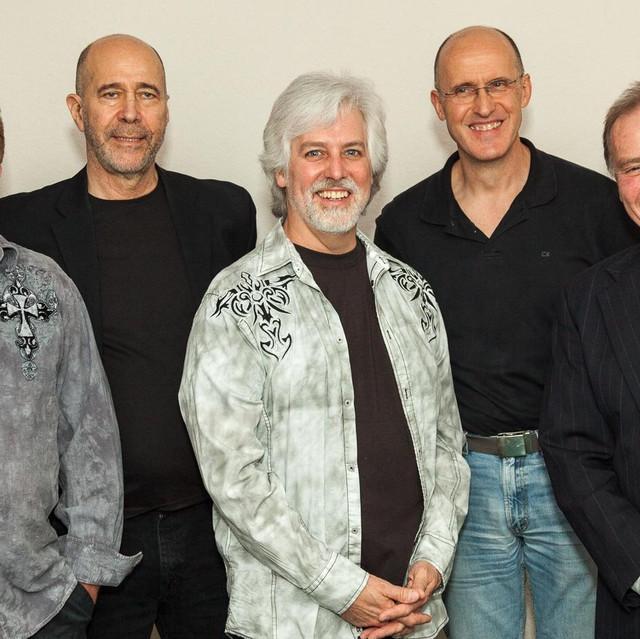
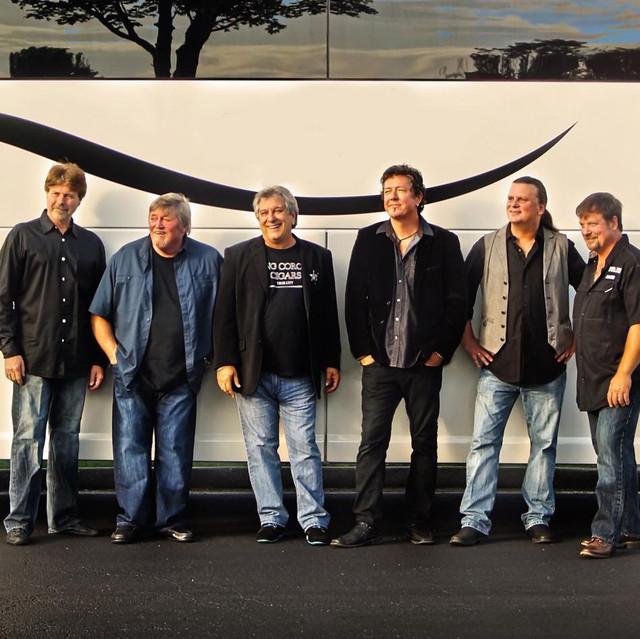
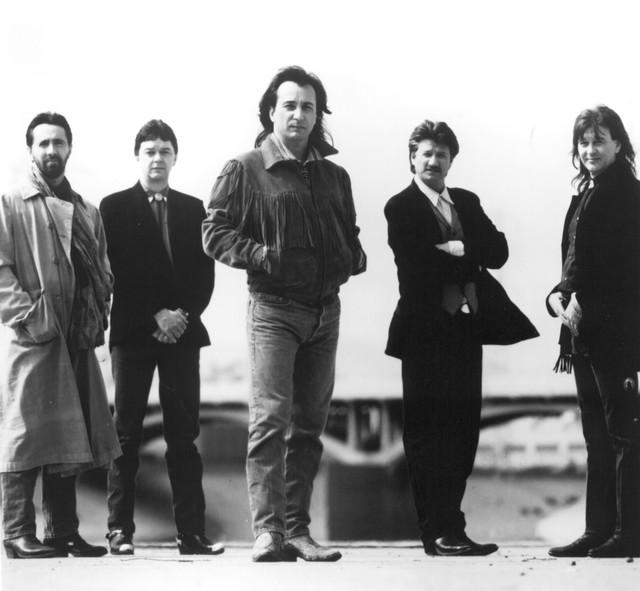
Poco’s Spotify BioOne of the first and longest-lasting country-rock groups, Poco had their roots in the dying embers of Buffalo Springfield. After Neil Young and Stephen Stills, the co-founders of that group, exited in the spring of 1968, only guitarist/singer Richie Furay and bassist Jim Messina remained to complete the group's swan song, Last Time Around. The final Springfield track, "Kind Woman," included only Furay and Messina, with a guest appearance on steel guitar by Rusty Young -- at the time, he was something of a rarity as a talented lap steel guitarist who was comfortable working in a rock idiom, and had previously belonged to a folk-rock-turned-psychedelic band called Boenzee Cryque. Young stuck with Furay and Messina, in the process skipping a scheduled audition for a new group that ex-Byrds member Gram Parsons was putting together. Auditions followed before the fledgling group reached out, at Young's urging, to ex-Boenzee Cryque drummer/vocalist George Grantham, and also to bassist/singer …Randy Meisner, who had previously played with a band called the Poor. This lineup rehearsed for four months before making its debut at The Troubadour in Los Angeles in November of 1968. A month later, they made their first appearance at the Fillmore West on a bill with the Steve Miller Band and Sly & the Family Stone.
At the time, they were using the name Pogo, but that didn't last. Walt Kelly, the creator of the comic strip Pogo, from which they'd freely admitted borrowing the name, didn't appreciate the group's choice and filed a lawsuit. Not wanting to lose all of the recognition and goodwill they'd built up locally over the previous five months, the result was a change of just one consonant, to Poco. They impressed everyone who heard them, but getting them a recording contract was itself a difficult proposition -- Meisner, Young, and Grantham weren't a problem, as they were essentially unsigned to any label, but as members of Buffalo Springfield, Messina and Furay were most definitely tied to Atlantic Records. As it happened, Columbia Records was interested in the group -- and hovering somewhere around this situation was David Geffen, then a young talent agent who was fast on his feet and persuasive in his manner. He, in turn, was trying to sort out the contractual situation surrounding ex-Springfield guitarist/singer Stephen Stills, and his new association with ex-Byrds singer/guitarist David Crosby, and Graham Nash, formerly of the Hollies, who wanted to record together but had the reverse problem; Stills was signed to Atlantic by way of Buffalo Springfield (which very much wanted Crosby, Stills & Nash), while Crosby and Nash, through their previous memberships in the Byrds and the Hollies, respectively, were both contractually bound to Columbia Records. With Geffen acting as catalyst between Atlantic chief Ahmet Ertegun and Columbia president Clive Davis, Messina and Furay had their contracts traded to Columbia in exchange for Crosby and Nash going to Atlantic.
The group's lineup problems, which proved to be perennial, started almost immediately after Poco were signed to Columbia Records' Epic label in early 1969. During the recording of their debut album, Meisner suddenly left the band -- accounts vary as to precisely when this took place; he left either at the outset of the recording, or after finishing the album. But the basic disagreement concerned the fact that Messina, who had experience as both an engineer and producer, would not permit Meisner (or anyone else) to participate in the mixing of the album. Whatever the circumstances, Meisner went on to play with Rick Nelson for a few months before gravitating toward a country-rock outfit that eventually christened themselves the Eagles. (Meisner died on July 26, 2023 at the age of 77.) Poco ended up recording their debut album, Pickin' Up the Pieces, as a quartet, with Messina handling the bass parts. The album was issued in June of 1969 to enthusiastic reviews but not overwhelming sales, a pattern that would follow the band for most of its history. Poco were back to a quintet in 1970 with the addition of bassist/vocalist Timothy B. Schmit, whose arrival coincided with the recording of their second album, Poco, on which he had two co-writing credits. The album showed the group pushing its range and received even better reviews at the time than its predecessor, but failed to generate a hit single or climb above the lower reaches of the charts.
It wasn't long after that Messina decided to leave, feeling that Furay had started to exert too much control over the group's sound. Before departing, however, he secured the services of a more-than-capable replacement member, guitarist/singer Paul Cotton, a onetime member of the country band Illinois Speed Press, who had recorded for Epic. Messina also played on and produced their subsequent live album, Deliverin' -- the latter represented an interesting change in strategy for the label and the band, which, after two artistically successful but commercially disappointing albums, was now looking to present itself in the strongest light possible. A live album consisting entirely of new material, Deliverin' offered the record-buying public a glimpse of the group's on-stage sound, which melded the excitement and energy of rock & roll with the lyricism and romanticism of country music. And it seemed to work to a degree, the album reached number 26 and yielded a minor hit in "C'mon." Messina's departure left Poco in need of a producer, and for their next album, From the Inside (1971), they turned to Booker T. & the M.G.'s guitarist Steve Cropper, who was an experienced producer, but one mostly associated with Southern soul. The resulting album had a heavier and more soulful sound than their earlier studio releases, but lacked the freewheeling spirit that had driven those albums. And, in a surprising development, this lineup -- Furay, Cotton, Young, Schmit, and Grantham -- lasted for more than one studio album. Poco decided to build their next release around one of their most popular concert numbers, a Furay song called "A Good Feeling to Know," which was also issued as a single -- the album A Good Feelin' to Know (1972) never got any higher than number 69, and the single never charted at all. By this time, even Furay had begun to lose heart over the band's lack of commercial success, and began making plans to move on.
Poco made one renewed effort, Crazy Eyes, their most accomplished studio album to date. Released late in 1973, it became their most successful LP up to that time, reaching number 38 and staying on the charts for almost six months. Any good news surrounding its sales was muted by the departure of Furay from the band upon its release, however -- he joined up with Chris Hillman and John David Souther to form the Souther-Hillman-Furay Band. Most music columnists were predicting Poco's likely demise, but the group was able to continue as a quartet. Their next album, Seven, released in the spring of 1974, failed to replicate the success of Crazy Eyes, although it was good enough to keep the fans interested. The group was at a critical point in its history following the release of one more Epic album, Cantamos, which appeared in the fall of 1974 and got no higher than number 76 -- it was the first album on which the bandmembers produced themselves, however, and offered a brace of beautiful songs and gorgeous harmonizing, as well as virtuoso-level playing and beautiful textures, embodied in harder-rocking tracks such as "High and Dry," which seemed to live up to all of the promise the band had shown in 1968 -- and it included unusually strong songwriting contributions by both Rusty Young and Timothy B. Schmit.
At this point, Poco and their record label came to a parting of ways, as Columbia's executives felt that they'd given the group every chance for success across a period of nearly seven years, without more than middling results despite often sterling reviews and a healthy concert audience for the band. Poco signed with ABC Records in 1975, and their first album for the new label, Head Over Heels (1975), surpassed the sales of any of their then-recent Epic releases, climbing to number 48, and also generated a moderately successful single in "Keep on Tryin'," which reached number 50 on the Billboard chart. It was also perhaps indicative of the perception of their aging appeal within the industry that the single also got to number 45 on Cashbox's listings, which are based exclusively on record sales (as opposed to Billboard's mix of sales and radio play) -- Poco seemed able to draw fans more easily to their records than their label could induce radio stations to play those records. The album's performance was all the more impressive, given that Epic issued a double-LP compilation, The Very Best of Poco, just two weeks after Head Over Heels came out. That compilation reached number 90, which was probably just enough to cost Head Over Heels a notch or two in its own chart placement, competing for the attention of the fans.
Rose of Cimarron (1976) offered a gorgeous title track by Rusty Young, with a melody that was almost impossible not to keep humming once heard, and as high a "haunt count" as anything the group had ever released -- the song was later covered by Emmylou Harris and turned into the de facto title track of her Cimarron album, and was also included on her Songs of the West compilation in the 1990s. But the Poco album only reached number 89, and their single release of the track just made the Top 50 before disappearing. The album's release was complicated, as was its predecessor, by Epic's issue of another catalog item, this time a previously unreleased concert recording, Live, just a couple of months before. The group came close to splitting up at the time, and new member Al Garth, who had previously played with Loggins & Messina, did exit the lineup midway through the year. In the spring of 1977, Poco released Indian Summer, which, fortunately, did somewhat better than its predecessor, peaking at number 57. But those and other then-recent releases were not the kind of numbers that allow a band to long sustain itself, except through a lot of hard work and extensive touring -- and even the most enthusiastic musicians, after a few years of that pace, can feel as though they're on a career treadmill.
Four months after Indian Summer's release, it was Timothy B. Schmit's turn to leave. His exit took place under more amicable circumstances. He was as happy in the group as anyone, and had hung in there longer than anyone except Young and Grantham, and they were all having to work a little too hard to sell fewer records than their music merited, and definitely harder than they might have liked after a decade, just to sustain what momentum they had -- but he might well have stayed for the long haul. That summer, however, lightning suddenly struck Schmit's career from an unexpected locale. Long-ago departed Poco co-founder Randy Meisner, who had been with the Eagles from the beginning of their history, had quit the latter group just as they were riding a wave of mega-platinum sales and the kind of top-ticket, top-of-the-bill arena-scale bookings that most bands dream of. And just as it had happened when Meisner quit Poco in 1969, Schmit was offered his bassist/vocalist spot in the Eagles -- and not as a hired musician, which would have been the usual approach made to a potential replacement member, but with a full share in a group that was counting both its annual album sales and concert earnings in the millions. The other members of Poco not only didn't try to dissuade him, but actively encouraged Schmit to accept the offer.
Grantham, who had been in the band longer than anyone still there except Rusty Young, left in January of 1978 -- he later joined Ricky Skaggs' band. Meanwhile, Poco re-formed with two British musicians, bassist/singer Charlie Harrison and drummer Steve Chapman joining Young and Cotton; Kim Bullard, a Crosby, Stills & Nash alumnus, came in on keyboards in December of that year, and Poco were once again a quintet. All of these personnel changes seemed to have done the trick, because their next album, Legend, released late in 1978, became the best-selling LP in their history, earning a gold record in the course of rising to number 14. The accompanying single, the ethereal "Crazy Love," became their biggest hit ever, reaching number 17 on the pop charts (and number one as an adult contemporary hit), and it was nearly matched by Cotton's "Heart of the Night," one of the most beautiful songs in the group's history, which got to number 20 during the summer of 1979.
Sad to say, the group was never able to replicate that sudden flash of success at the end of the '70s. Their next album, Under the Gun (1980), was perhaps too accurate in its title, reflecting the sudden pressure they were under to re-create the hit status of Legend; Blue and Gray (1981) was an ambitious Civil War-based concept album that failed to capture the public's imagination, and Cowboys & Englishmen (1982) was their escape hatch from MCA Records, which had taken over ABC, and showed as little inspiration as most contractual-obligation releases. Each of their last three records performed more poorly than its predecessor, and the group's problem seemed to go deeper than a lack of inspiration or time to generate good material. A generational shift in music took place in the early '80s, as a whole new era of post-punk/post-new wave bands started dominating the marketplace and the airwaves, and veteran acts such as Poco -- whose audience had already been identified as "an aging lot" in one review back in 1977 -- were left behind. This new generation of acts was especially well-versed in the new marketing medium of the music video, which, with the rise of MTV, completely altered the manner in which new singles gained exposure. In the midst of this transition and a jump to Atlantic Records, the group issued Ghost Town in late 1982 -- it was superior to at least two of their three preceding albums, with some beautiful melodies and playing, but it peaked at an anemic number 195. In 1984, the group seemed to turn backward for the first time in its history as Furay and Schmit came back aboard as guest artists for Inamorata, which scarcely made any impact.
Amid myriad line-up shifts, Poco continued to tour sporadically over the next five years. Then, in 1989, came one of the more unexpected turns in the band's history. Furay, Messina, Young, Grantham, and Meisner, who had last worked together in 1968, reunited and began recording and touring together as Poco. Their comeback single, "Call It Love," hit the Top 20, accompanied by the album Legacy, which made it to number 40. Although the 1968 line-up didn't stay together after the tour, Poco were restored as a working band, and from that point on worked under the leadership of Young and Cotton at their core, joined by Grantham for a time. Studio albums were few and far between, as the changes in the music marketplace made Poco less appealing to record labels in the 1990s and beyond, but they did release a new record, Running Horse, through their website in 2002, and The Last Roundup followed two years later on Future Edge. George Grantham was with them until 2004, when he suffered a crippling stroke during a performance. Keeping the Legend Alive (2004), released as a CD and a DVD, was a concert recording that brought Richie Furay back into the fold as a guest artist, and Bareback at Big Sky, released in 2005, found Poco with their first unplugged live album. Two more live recordings, Keep on Tryin' and Alive in the Heart of the Night, followed in 2006, and another live release, The Wildwood Tapes, appeared on CD in early 2007.
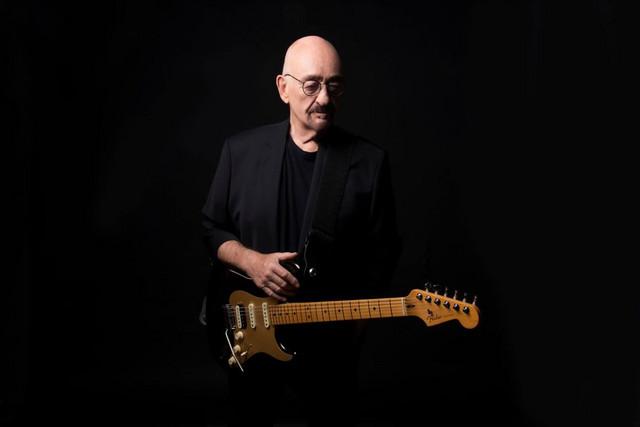
In 2007, Poco consisted of Rusty Young (playing an impressive array of stringed instruments, including mandolin) and Paul Cotton, with longtime bassist/singer Jack Sundrud and drummer George Lawrence, who stepped into the breach when Grantham fell ill in 2004. Their set was weighted toward their middle years in the 1970s, though Young and Cotton did a few of their own numbers from the early Epic Records era, and rescued a few worthy favorite numbers from obscurity for their set. By 2010, Cotton had departed and was replaced by keyboardist Michael Webb. With this line-up, Poco returned to the studio for the first time since 2002 to record their 21st studio LP, All Fired Up, which was released in 2013. Crazy Love, a new live album, followed in 2014, after which Young announced his retirement from touring. While he didn't rule out occasional short runs and one-off shows, he wanted a break from the kind of hardcore touring the group had done for its first 45 years. Rusty Young's retirement proved to be permanent and he died on April 14, 2021 at the age of 75. Only a few months later, guitarist Paul Cotton died on August 1, 2021, at the age of 78. ~ Bruce Eder, Rovi
Viberate is a music analytics platform built for A&Rs, artist managers, labels, booking agents, marketers, and artists.
It helps music professionals track artist growth, analyze audience data, monitor playlist activity, compare artists, follow song performance, and identify opportunities across the music market.
Public artist pages provide a free preview of selected artist data. Paid plans provide access to deeper analytics, historical data, charts, comparisons, playlist tools, exports, alerts, reports, and additional professional features.
Yes. Public Viberate artist pages provide selected artist analytics and music data for free.
Viberate also offers a 7-day free trial of the full platform. A credit card is required to start the trial. The trial includes access to the complete product so users can test deeper artist analytics, historical views, playlist insights, comparisons, charts, exports, alerts, and reporting features before choosing a paid plan.
Viberate provides artist analytics across streaming, playlists, social media, video, radio airplay, songs, and audience markets.
Users can analyze Spotify performance, Spotify and Apple Music playlists, YouTube activity, TikTok and Instagram growth, radio spins, song performance, audience locations, demographics, rankings, and overall artist momentum.
Artist profiles also connect to music charts, similar artists, and comparison tools, helping users benchmark performance and evaluate artists in context.
Viberate updates key artist and track data daily.
For followed artists and tracks, selected data is refreshed multiple times per day. This helps teams monitor playlist changes, streaming movement, audience growth, releases, and campaign performance with more current data.
Update frequency can vary depending on the metric and data source.
Yes. Viberate lets users compare up to five artists side by side across streaming, social media, audience, and engagement metrics.
Users can compare fanbase growth, audience demographics, locations, Spotify performance, social metrics, and other artist data over selected time periods.
Artist comparison can be used for A&R scouting, benchmarking, booking decisions, campaign planning, and evaluating artists with similar audiences or market positions.