Pere Ubu

Rock
Alternative Rock
Post Punk
 Viberate Rank: 96074
 Viberate Rank: 96074
 Monthly ListenersFollowers
 Subscribers
 Followers
 Followers
 FansTop Spotify Songs
| Track | 7-Day Streams | |
|---|---|---|
1 | 3.82K | |
2 | 3.74K | |
3 | 1.93K | |
4 | 1.67K | |
5 | 1.34K |
Top YouTube Videos| Video | 7-Day Views | |
|---|---|---|
1 | 652 | |
2 | 353 | |
3 | 342 | |
4 | 312 | |
5 | 295 |
Monthly ListenersFeatured in Playlists| Playlist | Followers | |
|---|---|---|
1 |  Punk Classics Filtr Legacy Sweden | 73.27K |
2 | Post-Punk Essentials Vol. 1 Definitive Gaze | 54.34K |
3 |  Every Track Star* Song Track Star* | 36.85K |
4 | AHS Full Soundtrack (Season 1 - 11) val_toriello | 17.14K |
5 | American Horror Story Soundtrack Nick Marsico-Morea | 16.36K |
Audience| City | Monthly Listeners | |
|---|---|---|
1 |  | 691 |
2 | | 475 |
3 | | 466 |
4 |  | 428 |
5 | | 400 |
See full performance history, audience data, playlist activity, rankings, comparisons, and more in Viberate music analytics. Start with a free trial, then continue with a paid plan.
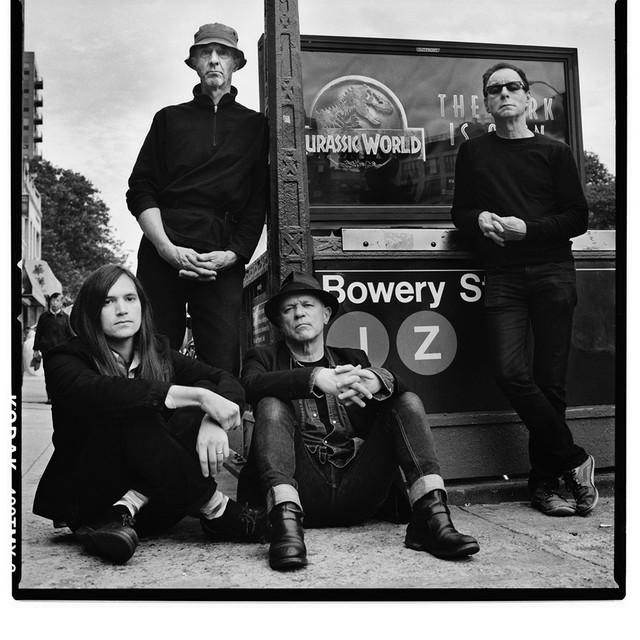
Pere Ubu’s Spotify BioOne of the American underground's most influential bands, Pere Ubu express the angst and chaos of their times with apocalyptic fervor and surprising humanity. Led by frontman David Thomas -- whose absurdist warble and rapturously demented lyrics defined the band -- Ubu emerged from Cleveland's urban wastelands with their 1975 debut single, "30 Seconds Over Tokyo," which introduced the self-destructing melodies, scattershot rhythms, and industrial-strength dissonance they expanded on with 1978's debut album, The Modern Dance. On later efforts including 1989's Cloudland and 1993's Story of My Life, their protean art punk became more accessible, but hiatuses and lineup changes never diluted Pere Ubu's idiosyncratic vision. The band welcomed the 21st century with uncompromising albums that honored their roots without rehashing them, including 2002's St. Arkansas. Their momentum continued into the 2010s and 2020s, with works like 2013's Lady from Shanghai and 2023's Trouble on Big Beat… Street reflecting a literate, volatile sound and viewpoint that was unmistakably Pere Ubu.
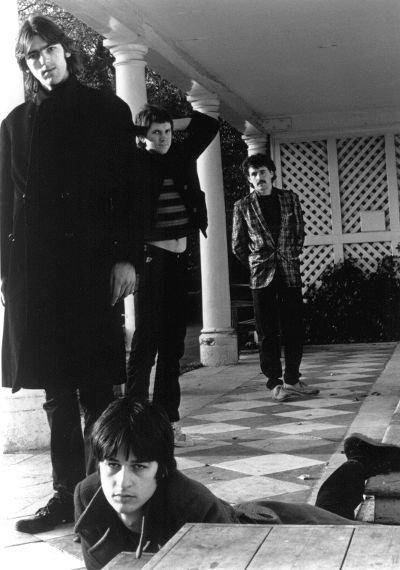
Named in honor of Alfred Jarry's surrealist play Ubu Roi, Pere Ubu formed in 1975 from the ashes of local cult favorite Rocket from the Tombs, reuniting Thomas (aka Crocus Behemoth) with guitarist Peter Laughner. After adding guitarist Tom Herman, bassist Tim Wright, keyboardist Allen Ravenstine, and drummer Scott Krauss, the group soon issued their first single, "30 Seconds Over Tokyo," on Thomas' Hearthan label. The follow-up, "Final Solution," appeared on the renamed Hearpen in early 1976, and resulted in a series of live dates at New York City's famed club Max's Kansas City.
Laughner's long-standing battles with drugs and alcohol forced his exit from Pere Ubu in June 1976; within a year, he was dead. The group continued on as a quintet, with bassist Tony Maimone signing on after Wright's move to New York, where he joined the pioneering no wave band DNA. In the wake of Ubu's third single, "Street Waves," Thomas was approached by Mercury label A&R exec Cliff Burnstein, who convinced the label to form a new imprint, Blank Records, for the express purposes of signing Pere Ubu. Recorded at Cleveland Recording and Suma Studios -- where the band would record many of their future albums -- their debut LP, The Modern Dance, was issued in January 1978. Although the record made little commercial impact at home or abroad, its manic intensity and dark impenetrability proved profoundly influential on countless post-punk acts on both sides of the Atlantic. Its follow-up, November 1978's Dub Housing, was even better. Arriving on Chrysalis Records, it pushed the band to further extremes of otherworldliness. However, the cracks were already beginning to show, and upon completing September 1979's New Picnic Time (working title: Goodbye), Ubu disbanded. Although the group re-formed months later, Herman opted not to return and was replaced by Red Krayola mastermind Mayo Thompson. The first album to feature Thompson, January 1980's The Art of Walking, found the band moving away from a heavier attack, with subsequent tours in support of the record heralding the increasingly pop-centric sound that would distinguish later Ubu projects. A live record, 390° of Simulated Stereo, appeared the following March. Krauss was replaced by drummer Anton Fier for September 1982's Song of the Bailing Man, but as before, personal and creative differences began taking their toll and Ubu again disbanded.
While Maimone and Krauss reunited in the group Home and Garden, Thomas continued the solo career he'd begun with the 1981 effort The Sound of the Sand (And Other Songs of the Pedestrians), a collaboration with guitar virtuoso Richard Thompson. He recorded 1987's Blame the Messenger with the Wooden Birds, a backing band including fellow Ubu alums Ravenstine and Maimone; after Krauss sat in for a Cleveland live date, the decision was made to work as Pere Ubu again. Guitarist Jim Jones and drummer Chris Cutler were also recruited for March 1988's comeback effort The Tenement Year, a vividly idiosyncratic pop album far more accessible than anything in the group's back catalog. Arriving on Fontana Records, May 1989's Stephen Hague-produced Cloudland further refined the approach, with the single "Waiting for Mary" peaking at number six on Billboard's Modern Rock Tracks and the video earning airplay on MTV.
After both Ravenstine and Cutler exited Pere Ubu (the former becoming a commercial airline pilot), onetime Captain Beefheart sideman Eric Drew Feldman was installed for May 1991's Worlds in Collision. Produced by Gil Norton, the album continued the band's more mainstream direction. Feldman soon departed as well to join Frank Black, and the remaining quartet recorded April 1993's Story of My Life for the short-lived Imago label. Maimone was the next to go, with bassist Michele Temple and keyboardist Garo Yellin stepping in for August 1995's planned swan song, Ray Gun Suitcase.
As Ubu again slipped into limbo, the band's massive influence was celebrated in 1996 with the release of the five-disc box set Datapanik in the Year Zero. The renewed interest spurred Thomas back into action, and he reunited with Tom Herman for the first time in two decades to record March 1998's Pennsylvania, a sprawling album revolving around road trips across America that also featured holdovers Jones and Temple in addition to keyboardist Robert Wheeler and drummer Steve Mehlman. Pere Ubu delivered some of their darkest and most theatrical work to date with May 2002's St. Arkansas, which was hailed as one of the band's best albums since their re-formation in the '80s.
With Pere Ubu once again going strong, Thomas reassembled Rocket from the Tombs for a short run of shows in 2003. (Former Television guitarist Richard Lloyd sat in for the late Peter Laughner.) What was expected to be a short-term revival evolved into a second career with RFTT, following the release of an archival album of old recordings and a set of re-interpretations by the new lineup. In 2006, Thomas returned his attentions to Pere Ubu, releasing the provocatively titled Why I Hate Women -- the first Pere Ubu album to feature only Thomas from the band's original lineup -- in September. A remix album also arrived that year. In November 2009, the group released Long Live Pere Ubu!, which featured songs from a musical adaptation of the band's namesake play Ubu Roi and included contributions from Communards' Sarah Jane Morris and electronic artist Gagarin. Pere Ubu's next album, January 2013's Lady from Shanghai, was nearly as ambitious. Described as "an album of dance music fixed," it commemorated the 35th anniversary of The Modern Dance with abrasive, industrial-tinged rhythms and an accompanying book, Chinese Whispers: The Making of Pere Ubu's Lady from Shanghai. Also in 2013, the band performed their underscore for the cult classic horror film Carnival of Souls. Several pieces from the score became the basis for September 2014's Carnival of Souls, which arrived in different CD and vinyl versions.
In 2015, Thomas released a new Rocket from the Tombs album and also looked back at Pere Ubu's past with a pair of archival vinyl-only box sets, Elitism for the People 1975-1978 and Architecture of Language 1979-1982. For 20 Years in a Montana Missile Silo, Thomas had the bandmembers -- who included guitarist Gary Siperko and Swans' Christoph Hahn -- work on their parts individually, then he combined them into tracks that inspired his lyrics. A concise, noisy set that riffed on blues, surf, and garage, the album arrived in October 2017. Two years later, Pere Ubu returned with what Thomas described as the band's "definitive destination." Released by Cherry Red Records in July 2019, The Long Goodbye's dense, caustic pieces took inspiration from Raymond Chandler's classic noir novel as well as the commercial pop radio Thomas listened to while writing its songs. In 2021, Pere Ubu reissued 390° of Simulated Stereo and Pennsylvania, while the 2022 box set Nuke the Whales collected the band's output from 2006 to 2014.
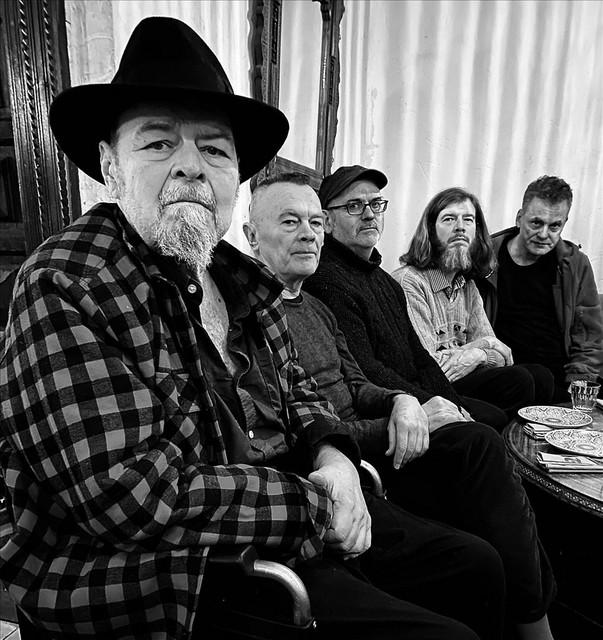
In May 2023, Pere Ubu returned with Trouble on Big Beat Street. Shaped by Thomas' belief that a song is at its best the first time it is played, its pieces were performed by the band only once while recording. Produced, mixed, and engineered by Thomas, Trouble on Big Beat Street's vinyl edition featured ten songs, while the CD release included all 17 songs recorded during the sessions. At the time of the album's release, Pere Ubu's other projects included the live-streaming show DPK-TV and Thomas' monthly radio show, Stay Sick, Turn Blue. ~ Heather Phares & Jason Ankeny, Rovi
Viberate is a music analytics platform built for A&Rs, artist managers, labels, booking agents, marketers, and artists.
It helps music professionals track artist growth, analyze audience data, monitor playlist activity, compare artists, follow song performance, and identify opportunities across the music market.
Public artist pages provide a free preview of selected artist data. Paid plans provide access to deeper analytics, historical data, charts, comparisons, playlist tools, exports, alerts, reports, and additional professional features.
Yes. Public Viberate artist pages provide selected artist analytics and music data for free.
Viberate also offers a 7-day free trial of the full platform. A credit card is required to start the trial. The trial includes access to the complete product so users can test deeper artist analytics, historical views, playlist insights, comparisons, charts, exports, alerts, and reporting features before choosing a paid plan.
Viberate provides artist analytics across streaming, playlists, social media, video, radio airplay, songs, and audience markets.
Users can analyze Spotify performance, Spotify and Apple Music playlists, YouTube activity, TikTok and Instagram growth, radio spins, song performance, audience locations, demographics, rankings, and overall artist momentum.
Artist profiles also connect to music charts, similar artists, and comparison tools, helping users benchmark performance and evaluate artists in context.
Viberate updates key artist and track data daily.
For followed artists and tracks, selected data is refreshed multiple times per day. This helps teams monitor playlist changes, streaming movement, audience growth, releases, and campaign performance with more current data.
Update frequency can vary depending on the metric and data source.
Yes. Viberate lets users compare up to five artists side by side across streaming, social media, audience, and engagement metrics.
Users can compare fanbase growth, audience demographics, locations, Spotify performance, social metrics, and other artist data over selected time periods.
Artist comparison can be used for A&R scouting, benchmarking, booking decisions, campaign planning, and evaluating artists with similar audiences or market positions.