Pat Travers

Rock
Hard Rock
Blues Rock
 Viberate Rank: 84075
 Viberate Rank: 84075
 Monthly ListenersFollowers
 Subscribers
 Followers
 Followers
 FansTop Spotify Songs
| Track | 7-Day Streams | |
|---|---|---|
1 | 4.95K | |
2 | 3.19K | |
3 | 2.70K | |
4 | 2.69K | |
5 | 2.38K |
Top YouTube VideosMonthly ListenersFeatured in Playlists| Playlist | Followers | |
|---|---|---|
1 | GRUNGE zerubi | 80.90K |
2 |  The American Dream ✨ The Sandlot Vintage | 64.97K |
3 |  80s Movie Soundtracks Lee Coursey | 34.49K |
4 | Best Classic Rock from the 70s and 80s WilliamX | 24.50K |
5 |  Slow Blues & Blues Rock | Don's Tunes Don's Tunes | 19.74K |
Audience| City | Monthly Listeners | |
|---|---|---|
1 | | 1.47K |
2 | | 1.01K |
3 |  | 985 |
4 | | 818 |
5 | | 753 |
See full performance history, audience data, playlist activity, rankings, comparisons, and more in Viberate music analytics. Start with a free trial, then continue with a paid plan.
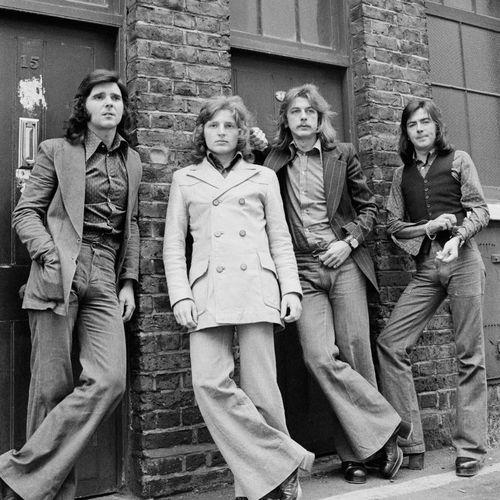
Pat Travers’ Spotify BioWith his hard, edgy tone, rough and rowdy vocals, and barroom boogie aesthetic, Canadian singer, guitarist, and keyboardist Pat Travers is a fine example of a Canadian bluesy hard rock act. He arrived during the '70s heyday of hard blues-rocking guitar heroes. His eight-album run for Polydor -- from his eponymous 1976 debut through 1984's Hot Shot -- netted seven Top 200 chart placements and two Top 40 singles, including the party anthem classic "Boom Boom (Out Go the Lights)." Subsequently, he placed four singles in the Hot 100, and two more in the upper rungs of the Mainstream Rock Songs charts. Travers is equally adept at playing funk, jazz, and prog. He has toured almost annually for more than 40 years, playing more than 150 dates per year. Travers continued to record for a variety of labels in the 21st century. Better-known dates include 2003's P.T. Power Trio, 2005's Bazooka (with drummer Carmine Appice), 2015's Retro Rocket, 2016's The Balls Album (also with Appice), 2019's… jump-jazz album Swing, and 2022's The Art of Time Travel.
Born in Toronto on April 12, 1954, Travers first picked up the guitar after witnessing a local performance by the great Jimi Hendrix. It wasn't long before Travers was studying the other top rock guitarists of the day (Eric Clapton, Jeff Beck, Jimmy Page, etc.), and paying his dues by playing in bar bands in Quebec. His first true touring gig came his way when he hooked up with '50s rock & roll vet Ronnie Hawkins (best known for performing with a backing cast that would eventually transform into the Band).
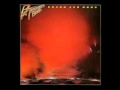
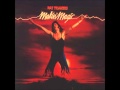
But Travers' main love was hard rock, so after a year, he packed up his belongings and headed to London. Shortly after touchdown in the U.K., Travers recorded a demo that would land him a recording deal with Polydor and result in the release of his debut, Pat Travers, during the spring of 1976. A performance at England's annual Reading Festival the same year only piqued further interest, which resulted in two more releases in 1977, Makin' Magic and Putting It Straight (both of which followed a pre-Iron Maiden Nicko McBrain on drums), before Travers returned to North America and set his sights on the U.S. rock market.
Featuring drummer Tommy Aldridge, guitarist Pat Thrall, and bassist Mars Cowling, the new Travers band lineup premiered on 1979's Heat in the Street. This led to Travers' most commercially successful period, resulting in a pair of Top 30 releases, 1979's Live! Go for What You Know (considered by many Travers fans to be his finest hour) and 1980's Crash and Burn. But soon after the dawn of the '80s, bluesy hard rock seemed to quickly fall out of favor among the U.S. record-buying public in favor of slickly produced arena rock, and later, MTV-approved bands.
As a result, each subsequent Travers release sold less -- his last albums to appear on the U.S. album charts included 1981's Radio Active, 1982's Black Pearl, and 1984's Hot Shot. Unhappy with Polydor, Travers opted to take a break from releasing records for the remainder of the decade, but continued to tour. Travers' 1990 comeback album, School of Hard Knocks, failed to re-spark interest on the charts, although he continued to issue new studio albums (Blues Tracks, Just a Touch, Blues Magnet, etc.) and archival live sets (King Biscuit Flower Hour, BBC Radio One Live in Concert) throughout the decade.
Travers continues to tour and record regularly (playing alongside the likes of Night Ranger's Jeff Watson, Cinderella's Tom Keifer, and Rick Derringer), and in 2001, performed as part of the Voices of Classic Rock tour. Travers emerged from the recording studio once more in 2003, with P.T. Power Trio, a recording that featured covers of songs by the likes of Cream ("White Room"), Robin Trower ("Day of the Eagle"), and ZZ Top ("Nasty Dogs and Funky Kings"), among others. Subsequent releases include 2004's It Takes a Lot of Balls, a collaboration with Carmine Appice, PT=MC2 (2005), a second Power Trio outing called P.T. Power Trio 2 (2006), Travelin' Blues (2009), Blues on Fire (2012), Can Do (2013), and Retro Rocket (2015). In 2016, Travers reunited with Appice for the cheekily titled Balls Album, which saw the dynamic duo tearing through a set of classic blues-rock numbers. In 2019, Travers went well outside his musical persona by issuing Swing!, a collection of thoroughly reimagined big-band jazz classics from the '40s and '50s including Duke Ellington's "Take the 'A' Train," Louis Prima's "Sing Sing Sing!," Glenn Miller's "In the Mood," Louis Jordan's "Is You Is or Is You Ain't My Baby," and "Let the Good Times Roll."
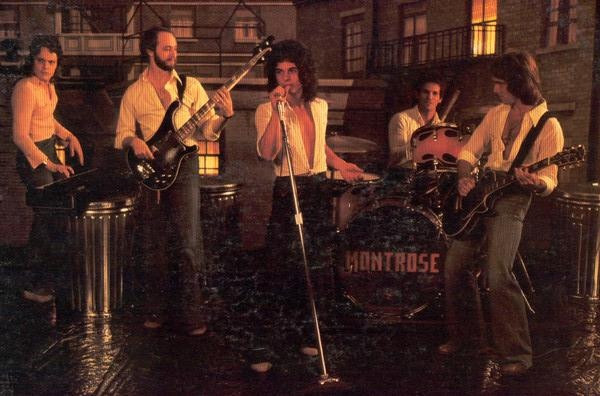
In 2022, Travers issued The Art of Time Travel, a return to hard blues-rock. The anthemic, raucous title song appeared as a pre-release single. Second track "Ronnie" was penned in tribute to the late guitarist -- and Travers' mentoring influence -- Ronnie Montrose. The album included the horn-drenched R&B single "Push Yourself" and "Natalie," a tender instrumental. ~ Greg Prato, Rovi
Viberate is a music analytics platform built for A&Rs, artist managers, labels, booking agents, marketers, and artists.
It helps music professionals track artist growth, analyze audience data, monitor playlist activity, compare artists, follow song performance, and identify opportunities across the music market.
Public artist pages provide a free preview of selected artist data. Paid plans provide access to deeper analytics, historical data, charts, comparisons, playlist tools, exports, alerts, reports, and additional professional features.
Yes. Public Viberate artist pages provide selected artist analytics and music data for free.
Viberate also offers a 7-day free trial of the full platform. A credit card is required to start the trial. The trial includes access to the complete product so users can test deeper artist analytics, historical views, playlist insights, comparisons, charts, exports, alerts, and reporting features before choosing a paid plan.
Viberate provides artist analytics across streaming, playlists, social media, video, radio airplay, songs, and audience markets.
Users can analyze Spotify performance, Spotify and Apple Music playlists, YouTube activity, TikTok and Instagram growth, radio spins, song performance, audience locations, demographics, rankings, and overall artist momentum.
Artist profiles also connect to music charts, similar artists, and comparison tools, helping users benchmark performance and evaluate artists in context.
Viberate updates key artist and track data daily.
For followed artists and tracks, selected data is refreshed multiple times per day. This helps teams monitor playlist changes, streaming movement, audience growth, releases, and campaign performance with more current data.
Update frequency can vary depending on the metric and data source.
Yes. Viberate lets users compare up to five artists side by side across streaming, social media, audience, and engagement metrics.
Users can compare fanbase growth, audience demographics, locations, Spotify performance, social metrics, and other artist data over selected time periods.
Artist comparison can be used for A&R scouting, benchmarking, booking decisions, campaign planning, and evaluating artists with similar audiences or market positions.