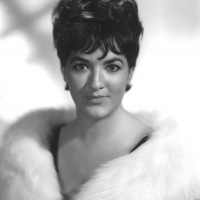
Morgana King

Jazz
Bebop
Vocal jazz
 Viberate Rank: 139927
 Viberate Rank: 139927
 Monthly ListenersFollowers
 Subscribers
 Followers
 Followers
 FansTop Spotify Songs
| Track | 7-Day Streams | |
|---|---|---|
1 | 18.09K | |
2 | 14.14K | |
3 | 11.64K | |
4 | 6.64K | |
5 | 3.66K |
Top YouTube VideosMonthly ListenersFeatured in Playlists| Playlist | Followers | |
|---|---|---|
1 |  Classic Voices in Jazz Spotify | 250.32K |
2 |  Jazz Bar Spotify | 208.13K |
3 |  In the Mood for Jazz Spotify | 144.39K |
4 |  Sunny Day Jazz Spotify | 134.10K |
5 |  Dinner Jazz Spotify | 96.80K |
Audience| City | Monthly Listeners | |
|---|---|---|
1 |  | 1.39K |
2 |  | 1.15K |
3 | | 1.13K |
4 |  | 1.04K |
5 | | 1.01K |
See full performance history, audience data, playlist activity, rankings, comparisons, and more in Viberate music analytics. Start with a free trial, then continue with a paid plan.
Morgana King’s Spotify BioNone of the more than 30 albums recorded by singer Morgana King beginning in the mid-'50s were embraced by the size of the audience that bought tickets to see the first two chapters of The Godfather film trilogy, in which King acted in the role of Mama Corleone. But it would be wrong to assume she had more impact as an actress than as a vocalist. Her acting roles, few and far between, were chosen with care, but did not have the resonance of some of her finest recordings. Millions saw her onscreen in the Godfather films, but her performance was certainly overshadowed by performers such as Robert DeNiro and Al Pacino, not to mention the famous turn by Marlon Brando as her husband. Another role of King's was in the 1997 film A Brooklyn State of Mind; she also appeared in several television productions.
It is possible that there are actors and actresses who have named Morgana King as a great inspiration. Yet, the results of a simple Internet search under her name only yielded dozens of… quotes from vocalists and other musicians about the great influence of her recordings and singing style, not her work before the camera. It might not be a surprise when a young female singer gushed about King's albums, but these fans also included deeper thinkers such as classical bass virtuoso Gary Karr. References to her music also show up regularly in fiction as a kind of mood-setting device, such as: "It was a beautiful day in Malibu. He got up, made a coffee and put on a Morgana King record."
Some record collectors might be surprised to realize that a complete set of King sides might eliminate any elbow room for, say, the discography of one of the prolific blues guitarists with this regal surname. Morgana King sides can be divided into several periods. It took her almost eight years to peak at whatever commercial success she was going to have with the 1964 A Taste of Honey album, thus ending the early years. She was then absorbed into the Atlantic and Reprise corporation and an exemplary series of releases by singers such as Big Joe Turner, Ruth Brown, Lavern Baker, and Ray Charles. The label's greatest producers stared the oncoming rock & roll in the eye, never forgetting their basic R&B orientation. Within a few years, a subcategory developed, seen through paisley glasses. The material became more philosophical, the increasing intellectual depth not surprisingly accompanied by the audience stampeding in the opposite direction. This might make sense, though; while 1965's The Winter of My Discontent is a masterpiece, 1968's Gemini Changes is laughably pretentious.
By the early '70s she was eager to get into films, the music business pushing away any and all veteran talent. Later in the decade she launched the mature period of her career, though, once again recording as more of a jazz-flavored artist for Muse, a label which in itself indicates a disinterest in pop culture. The label was loyal to her, regularly recording her through the following decade. This material was reissued in the late '90s by the 32 Jazz label, whose honcho, Joel Dorn, also presided over the reissue of her Reprise sides. If a special sort of bittersweet feeling pervaded her later performances, perhaps it had something to do with this return to her jazz singing roots. Her father had been a performer of folk and popular music on voice and guitar, and she had begun singing in nightclubs such as Basin Street in New York City when she was in her mid-twenties.
Only a few years earlier, she had been immersed in classical studies at the Metropolitan School of Music. Basin Street may have been in the same city, but it must have seemed like a completely different musical world. The formal training undoubtedly filled in aspects of her musical walk where some of her peers might have had to limp. For this reason alone, some listeners find her efforts the most swinging of the '60s generation of pop singers. It meant much critical acclaim during her career, if not great commercial success. At many stages, King seemed to have been making other plans. For the 1960 Encyclopedia of Jazz by Leonard Feather, she listed this ambition: "To become a dramatic actress." ~ Eugene Chadbourne
Viberate is a music analytics platform built for A&Rs, artist managers, labels, booking agents, marketers, and artists.
It helps music professionals track artist growth, analyze audience data, monitor playlist activity, compare artists, follow song performance, and identify opportunities across the music market.
Public artist pages provide a free preview of selected artist data. Paid plans provide access to deeper analytics, historical data, charts, comparisons, playlist tools, exports, alerts, reports, and additional professional features.
Yes. Public Viberate artist pages provide selected artist analytics and music data for free.
Viberate also offers a 7-day free trial of the full platform. A credit card is required to start the trial. The trial includes access to the complete product so users can test deeper artist analytics, historical views, playlist insights, comparisons, charts, exports, alerts, and reporting features before choosing a paid plan.
Viberate provides artist analytics across streaming, playlists, social media, video, radio airplay, songs, and audience markets.
Users can analyze Spotify performance, Spotify and Apple Music playlists, YouTube activity, TikTok and Instagram growth, radio spins, song performance, audience locations, demographics, rankings, and overall artist momentum.
Artist profiles also connect to music charts, similar artists, and comparison tools, helping users benchmark performance and evaluate artists in context.
Viberate updates key artist and track data daily.
For followed artists and tracks, selected data is refreshed multiple times per day. This helps teams monitor playlist changes, streaming movement, audience growth, releases, and campaign performance with more current data.
Update frequency can vary depending on the metric and data source.
Yes. Viberate lets users compare up to five artists side by side across streaming, social media, audience, and engagement metrics.
Users can compare fanbase growth, audience demographics, locations, Spotify performance, social metrics, and other artist data over selected time periods.
Artist comparison can be used for A&R scouting, benchmarking, booking decisions, campaign planning, and evaluating artists with similar audiences or market positions.