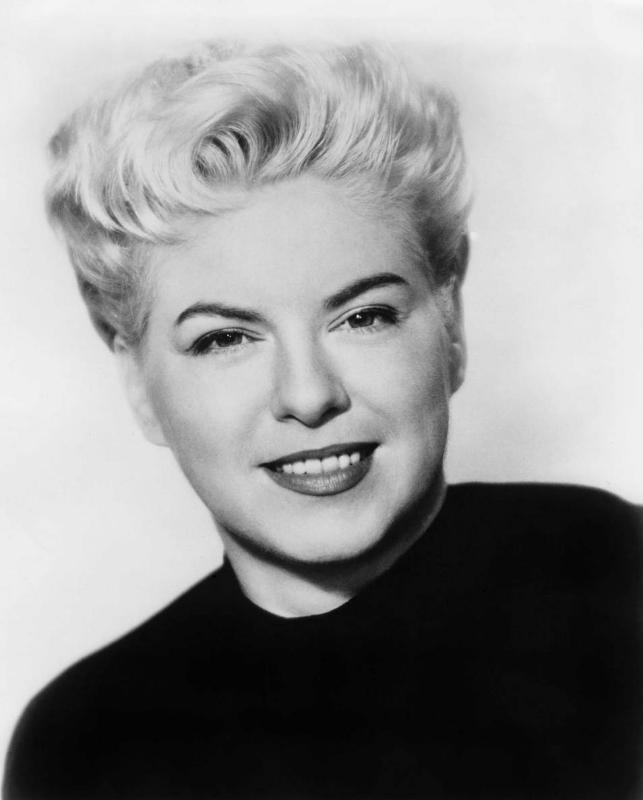
Ernestine Anderson

Jazz
Bebop
Vocal jazz
 Viberate Rank: 87449
 Viberate Rank: 87449
 Monthly ListenersFollowers
 Subscribers
 Followers
 Followers
 FansTop Spotify Songs
| Track | 7-Day Streams | |
|---|---|---|
1 | 40.42K | |
2 | 26.16K | |
3 | 19.32K | |
4 | 17.86K | |
5 | 15.25K |
Top YouTube VideosMonthly ListenersFeatured in Playlists| Playlist | Followers | |
|---|---|---|
1 |  Feel Good Jazz Spotify | 549.41K |
2 |  Classic Voices in Jazz Spotify | 250.32K |
3 |  Cozy Jazz Spotify | 223.48K |
4 |  In the Mood for Jazz Spotify | 144.39K |
5 |  Sunny Day Jazz Spotify | 134.10K |
Audience| City | Monthly Listeners | |
|---|---|---|
1 |  | 3.10K |
2 | | 2.76K |
3 |  | 2.16K |
4 | | 2.10K |
5 |  | 1.73K |
See full performance history, audience data, playlist activity, rankings, comparisons, and more in Viberate music analytics. Start with a free trial, then continue with a paid plan.
Ernestine Anderson’s Spotify BioPositioned squarely in the mainstream, at home in the worlds of jazz and pop standards as well as the blues, comfortable with small groups and big bands, Ernestine Anderson regularly received a lot of airplay on traditional jazz radio stations. She fit those demographics well with her tasteful, slightly gritty, moderately swinging contralto; she rarely probed too deeply into emotional quagmires (and thus didn't disturb the dispositions of those who use the radio as background) but always gave listeners an honest musical account.
Anderson's career actually got rolling in the embryonic R&B field at first; as a teenager, she sang with Russell Jacquet's band in 1943, and she moved on to the Johnny Otis band from 1947 to 1949, making her first recording with Shifty Henry's orchestra in 1947 for the Black & White label. In the '50s, however, she converted over to the jazz side, working with Lionel Hampton in 1952-1953 and recording with a band featuring Jacquet, Milt Jackson, and Quincy Jones… in 1953, and with Gigi Gryce in 1955. Upon hearing the latter record, Rolf Ericson booked Anderson on a three-month Scandinavian tour; while in Sweden, she made a recording called Hot Cargo that, ironically, established her reputation in America. Once back in the U.S., she signed with Mercury and made a number of albums for that label until the early '60s.
She moved to England in 1965 and remained largely invisible on the American radar until 1975, when Ray Brown heard her sing at the Turnwater Festival in Canada. Brown became her manager, and got her to appear at the 1976 Concord Jazz Festival, which led to a Concord contract that immediately bore fruit with the albums Live from Concord to London and Hello Like Before. These and other comeback albums made her a top-flight jazz attraction in the U.S. again -- this time for the long haul -- and in the '80s, she was recording with the Hank Jones Trio, George Shearing, Benny Carter, the Capp-Pierce Juggernaut, the Clayton-Hamilton Jazz Orchestra, and her own quartet. By 1992, she had attracted major-label attention once again, signing with Quincy Jones' Qwest outfit. For Koch, Anderson issued Isn't It Romantic in 1998. The live album I Love Being Here with You appeared in 2002, while 2003’s Love Makes the Changes found her signed to Highnote. The label released her album A Song for You in 2009. Anderson remained with the label for 2011's Nightlife, a live album that featured the singer in a number of small-group settings, with a guest appearance by labelmate Houston Person. Anderson passed away from natural causes on March 10, 2016 at the age of 87. ~ Richard S. Ginell, Rovi
Viberate is a music analytics platform built for A&Rs, artist managers, labels, booking agents, marketers, and artists.
It helps music professionals track artist growth, analyze audience data, monitor playlist activity, compare artists, follow song performance, and identify opportunities across the music market.
Public artist pages provide a free preview of selected artist data. Paid plans provide access to deeper analytics, historical data, charts, comparisons, playlist tools, exports, alerts, reports, and additional professional features.
Yes. Public Viberate artist pages provide selected artist analytics and music data for free.
Viberate also offers a 7-day free trial of the full platform. A credit card is required to start the trial. The trial includes access to the complete product so users can test deeper artist analytics, historical views, playlist insights, comparisons, charts, exports, alerts, and reporting features before choosing a paid plan.
Viberate provides artist analytics across streaming, playlists, social media, video, radio airplay, songs, and audience markets.
Users can analyze Spotify performance, Spotify and Apple Music playlists, YouTube activity, TikTok and Instagram growth, radio spins, song performance, audience locations, demographics, rankings, and overall artist momentum.
Artist profiles also connect to music charts, similar artists, and comparison tools, helping users benchmark performance and evaluate artists in context.
Viberate updates key artist and track data daily.
For followed artists and tracks, selected data is refreshed multiple times per day. This helps teams monitor playlist changes, streaming movement, audience growth, releases, and campaign performance with more current data.
Update frequency can vary depending on the metric and data source.
Yes. Viberate lets users compare up to five artists side by side across streaming, social media, audience, and engagement metrics.
Users can compare fanbase growth, audience demographics, locations, Spotify performance, social metrics, and other artist data over selected time periods.
Artist comparison can be used for A&R scouting, benchmarking, booking decisions, campaign planning, and evaluating artists with similar audiences or market positions.