Lionel Hampton

Jazz
Big band Jazz
 Viberate Rank: 93248
 Viberate Rank: 93248
 Monthly ListenersFollowers
 Subscribers
 Followers
 Followers
 FansTop Spotify Songs
| Track | 7-Day Streams | |
|---|---|---|
1 | 93.22K | |
2 | 27.66K | |
3 | 21.18K | |
4 | 16.82K | |
5 | 16.22K |
Top YouTube VideosMonthly ListenersFeatured in Playlists| Playlist | Followers | |
|---|---|---|
1 |  Jazz Classics Spotify | 5.08M |
2 |  The Birth of Rhythm & Blues Spotify | 319.26K |
3 |  Feel Good Christmas Spotify | 201.43K |
4 |  Just Jazz Spotify | 173.76K |
5 |  Cool Jazz Spotify | 163.24K |
Audience| City | Monthly Listeners | |
|---|---|---|
1 |  | 4.31K |
2 | | 4.20K |
3 | | 4.03K |
4 | | 3.27K |
5 |  | 3.12K |
See full performance history, audience data, playlist activity, rankings, comparisons, and more in Viberate music analytics. Start with a free trial, then continue with a paid plan.
Lionel Hampton’s Spotify BioLionel Hampton was the first jazz vibraphonist and was one of the jazz giants beginning in the mid-'30s. He has achieved the difficult feat of being musically open-minded (even recording "Giant Steps") without changing his basic swing style. Hamp started out as a drummer, playing with the Chicago Defender Newsboys' Band as a youth. His original idol was Jimmy Bertrand, a '20s drummer who occasionally played xylophone. Hampton played on the West Coast with such groups as Curtis Mosby's Blue Blowers, Reb Spikes, and Paul Howard's Quality Serenaders (with whom he made his recording debut in 1929) before joining Les Hite's band, which for a period accompanied Louis Armstrong. At a recording session in 1930, a vibraphone happened to be in the studio, and Armstrong asked Hampton (who had practiced on one previously) if he could play a little bit behind him and on "Memories of You" and "Shine"; Hamp became the first jazz improviser to record on vibes.
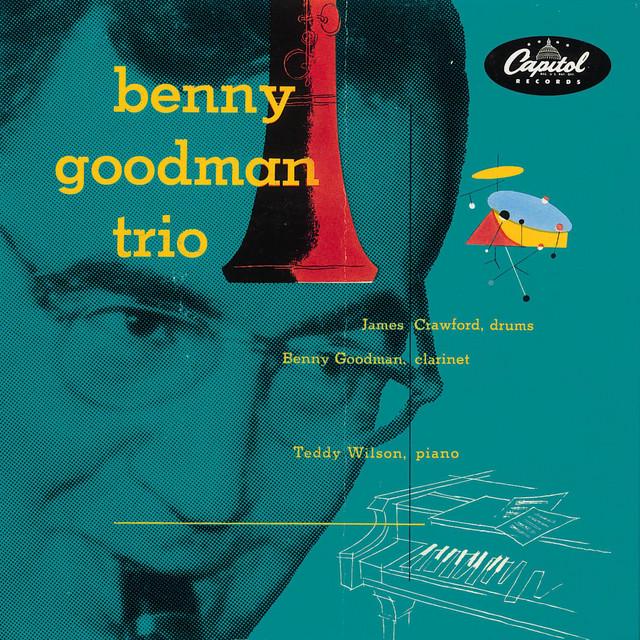
It would be another six years before he… found fame. Lionel Hampton, after leaving Hite, had his own band in Los Angeles' Paradise Cafe, until one night in 1936 when Benny Goodman came into the club and discovered him. Soon, Hampton recorded with B.G., Teddy Wilson, and Gene Krupa as the Benny Goodman Quartet, and six weeks later he officially joined Goodman. An exciting soloist whose enthusiasm even caused B.G. to smile, Hampton became one of the stars of his organization, appearing in films with Goodman, at the famous 1938 Carnegie Hall concert, and nightly on the radio. In 1937, he started recording regularly as a leader for Victor with specially assembled all-star groups that formed a who's who of swing; all of these timeless performances (1937-1941) were reissued by Bluebird on a six-LP set, although in piecemeal fashion on CD.
Hampton stayed with Goodman until 1940, sometimes substituting on drums and taking vocals. In 1940, Lionel Hampton formed his first big band, and in 1942 had a huge hit with "Flying Home," featuring a classic Illinois Jacquet tenor spot (one of the first R&B solos). During the remainder of the decade, Hampton's extroverted orchestra was a big favorite, leaning toward R&B, showing the influence of bebop after 1944, and sometimes getting pretty exhibitionistic. Among his sidemen, in addition to Jacquet, were Arnett Cobb, Dinah Washington (who Hampton helped discover), Cat Anderson, Marshall Royal, Dexter Gordon, Milt Buckner, Earl Bostic, Snooky Young, Johnny Griffin, Joe Wilder, Benny Bailey, Charles Mingus, Fats Navarro, Al Gray, and even Wes Montgomery and Betty Carter. Hampton's popularity allowed him to continue leading big bands off and on into the mid-'90s, and the 1953 edition that visited Paris (with Clifford Brown, Art Farmer, Quincy Jones, Jimmy Cleveland, Gigi Gryce, George Wallington, and Annie Ross) would be difficult to top, although fights over money and the right of the sideman to record led to its breakup. Hampton appeared and recorded with many all-star groups in the 1950s including reunions with Benny Goodman, meetings with the Oscar Peterson Trio, Stan Getz, Buddy DeFranco, and as part of a trio with Art Tatum and Buddy Rich. He also was featured in The Benny Goodman Story (1956).
Since the 1950s, Lionel Hampton has mostly repeated past triumphs, always playing "Hamp's Boogie Woogie" (which features his very rapid two-finger piano playing), "Hey Ba-Ba-Re-Bop," and "Flying Home." However, his enthusiasm still causes excitement and he remains a household name. Hampton has recorded through the years for nearly every label, including two of his own (Glad Hamp and Who's Who). Despite strokes and the ravages of age, Lionel Hampton remained a vital force into the 1990s. In January 2001, a vibraphone he had played for 15 years was put into the National Museum of American History. On August 31, 2002, at age 94, Lionel Hampton suffered major heart failure and passed away. ~ Scott Yanow, Rovi
Viberate is a music analytics platform built for A&Rs, artist managers, labels, booking agents, marketers, and artists.
It helps music professionals track artist growth, analyze audience data, monitor playlist activity, compare artists, follow song performance, and identify opportunities across the music market.
Public artist pages provide a free preview of selected artist data. Paid plans provide access to deeper analytics, historical data, charts, comparisons, playlist tools, exports, alerts, reports, and additional professional features.
Yes. Public Viberate artist pages provide selected artist analytics and music data for free.
Viberate also offers a 7-day free trial of the full platform. A credit card is required to start the trial. The trial includes access to the complete product so users can test deeper artist analytics, historical views, playlist insights, comparisons, charts, exports, alerts, and reporting features before choosing a paid plan.
Viberate provides artist analytics across streaming, playlists, social media, video, radio airplay, songs, and audience markets.
Users can analyze Spotify performance, Spotify and Apple Music playlists, YouTube activity, TikTok and Instagram growth, radio spins, song performance, audience locations, demographics, rankings, and overall artist momentum.
Artist profiles also connect to music charts, similar artists, and comparison tools, helping users benchmark performance and evaluate artists in context.
Viberate updates key artist and track data daily.
For followed artists and tracks, selected data is refreshed multiple times per day. This helps teams monitor playlist changes, streaming movement, audience growth, releases, and campaign performance with more current data.
Update frequency can vary depending on the metric and data source.
Yes. Viberate lets users compare up to five artists side by side across streaming, social media, audience, and engagement metrics.
Users can compare fanbase growth, audience demographics, locations, Spotify performance, social metrics, and other artist data over selected time periods.
Artist comparison can be used for A&R scouting, benchmarking, booking decisions, campaign planning, and evaluating artists with similar audiences or market positions.