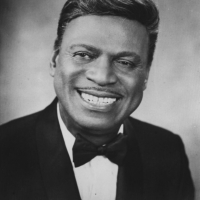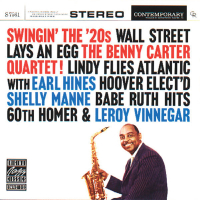
Benny Carter

Jazz
Big band Jazz
Swing
 Viberate Rank: 59804
 Viberate Rank: 59804
 Monthly ListenersFollowers
 Subscribers
 Followers
 Followers
 FansTop Spotify Songs
| Track | 7-Day Streams | |
|---|---|---|
1 | 161.07K | |
2 | 142.68K | |
3 | 86.90K | |
4 | 61.40K | |
5 | 24.70K |
Top YouTube VideosMonthly ListenersFeatured in Playlists| Playlist | Followers | |
|---|---|---|
1 |  Christmas Jazz Spotify | 645.31K |
2 |  Feel Good Jazz Spotify | 549.36K |
3 |  Jazz Noir Spotify | 349.57K |
4 |  Feel Good Christmas Spotify | 201.26K |
5 |  This Is Louis Armstrong Spotify | 199.36K |
Audience| City | Monthly Listeners | |
|---|---|---|
1 | | 10.58K |
2 | | 9.19K |
3 | | 8.61K |
4 |  | 7.42K |
5 | | 6.35K |
See full performance history, audience data, playlist activity, rankings, comparisons, and more in Viberate music analytics. Start with a free trial, then continue with a paid plan.
Benny Carter’s Spotify BioTo say that Benny Carter had a remarkable and productive career would be an extreme understatement. As an altoist, arranger, composer, bandleader, and occasional trumpeter, Carter was at the top of his field since at least 1928, and in the late '90s, Carter was as strong an altoist at the age of 90 as he was in 1936 (when he was merely 28). His gradually evolving style did not change much through the decades, but neither did it become at all stale or predictable except in its excellence. Benny Carter was a major figure in every decade of the 20th century since the 1920s, and his consistency and longevity were unprecedented.
Essentially self-taught, Benny Carter started on the trumpet and, after a period on C-melody sax, switched to alto. In 1927, he made his recording debut with Charlie Johnson's Paradise Ten. The following year, he had his first big band (working at New York's Arcadia Ballroom) and was contributing arrangements to Fletcher Henderson and even Duke Ellington. Carter was… with Henderson during 1930-1931, briefly took over McKinney's Cotton Pickers, and then went back to leading his own big band (1932-1934). Already at this stage he was considered one of the two top altoists in jazz (along with Johnny Hodges), a skilled arranger and composer ("Blues in My Heart" was an early hit and would be followed by "When Lights Are Low"), and his trumpet playing was excellent; Carter would also record on tenor, clarinet (an instrument he should have played more), and piano, although his rare vocals show that even he was human.
In 1935, Benny Carter moved to Europe, where in London he was a staff arranger for the BBC dance orchestra (1936-1938); he also recorded in several European countries. Carter's "Waltzing the Blues" was one of the very first jazz waltzes. He returned to the U.S. in 1938, led a classy but commercially unsuccessful big band (1939-1941), and then headed a sextet. In 1943, he relocated permanently to Los Angeles, appearing in the film Stormy Weather (as a trumpeter with Fats Waller) and getting lucrative work writing for the movie studios. He would lead a big band off and on during the next three years (among his sidemen were J.J. Johnson, Miles Davis, and Max Roach) before giving up on that effort. Carter wrote for the studios for over 50 years, but he continued recording as an altoist (and all-too-rare trumpeter) during the 1940s and '50s, making a few tours with Jazz at the Philharmonic and participating on some of Norman Granz's jam-session albums. By the mid-'60s, his writing chores led him to hardly playing alto at all, but he made a full "comeback" by the mid-'70s, and maintained a very busy playing and writing schedule even at his advanced age. Even after the rise of such stylists as Charlie Parker, Cannonball Adderley, Eric Dolphy, Ornette Coleman, and David Sanborn (in addition to their many followers), Benny Carter still ranks near the top of alto players. His concert and recording schedule remained active through the '90s, slowing only at the end of the millenium. After eight amazing decades of writing and playing, Benny Carter passed away quietly on July 13, 2003 at a Los Angeles hospital. He was 95. ~ Scott Yanow, Rovi
Viberate is a music analytics platform built for A&Rs, artist managers, labels, booking agents, marketers, and artists.
It helps music professionals track artist growth, analyze audience data, monitor playlist activity, compare artists, follow song performance, and identify opportunities across the music market.
Public artist pages provide a free preview of selected artist data. Paid plans provide access to deeper analytics, historical data, charts, comparisons, playlist tools, exports, alerts, reports, and additional professional features.
Yes. Public Viberate artist pages provide selected artist analytics and music data for free.
Viberate also offers a 7-day free trial of the full platform. A credit card is required to start the trial. The trial includes access to the complete product so users can test deeper artist analytics, historical views, playlist insights, comparisons, charts, exports, alerts, and reporting features before choosing a paid plan.
Viberate provides artist analytics across streaming, playlists, social media, video, radio airplay, songs, and audience markets.
Users can analyze Spotify performance, Spotify and Apple Music playlists, YouTube activity, TikTok and Instagram growth, radio spins, song performance, audience locations, demographics, rankings, and overall artist momentum.
Artist profiles also connect to music charts, similar artists, and comparison tools, helping users benchmark performance and evaluate artists in context.
Viberate updates key artist and track data daily.
For followed artists and tracks, selected data is refreshed multiple times per day. This helps teams monitor playlist changes, streaming movement, audience growth, releases, and campaign performance with more current data.
Update frequency can vary depending on the metric and data source.
Yes. Viberate lets users compare up to five artists side by side across streaming, social media, audience, and engagement metrics.
Users can compare fanbase growth, audience demographics, locations, Spotify performance, social metrics, and other artist data over selected time periods.
Artist comparison can be used for A&R scouting, benchmarking, booking decisions, campaign planning, and evaluating artists with similar audiences or market positions.