Lee Ranaldo

Rock
Alternative Rock
Indie Rock
 Viberate Rank: 87451
 Viberate Rank: 87451
 Monthly ListenersFollowers
 Subscribers
 Followers
 Followers
 FansTop Spotify Songs
| Track | 7-Day Streams | |
|---|---|---|
1 | 9.44K | |
2 | 853 | |
3 | 510 | |
4 | 395 | |
5 | 383 |
Top YouTube VideosMonthly ListenersFeatured in Playlists| Playlist | Followers | |
|---|---|---|
1 |  I Wanna Rock! Filtr Italy | 16.55K |
2 |  Living In My Headphones James Lavelle (UNKLE) | 16.04K |
3 | Never back down movie Cajsa Kling | 15.98K |
4 |  I Know Training Music I Know | 12.72K |
5 |  Duyster (all tracks ever played) Wike | 8.15K |
Audience| City | Monthly Listeners | |
|---|---|---|
1 |  | 143 |
2 | | 128 |
3 |  | 111 |
4 |  | 101 |
5 | | 96 |
See full performance history, audience data, playlist activity, rankings, comparisons, and more in Viberate music analytics. Start with a free trial, then continue with a paid plan.
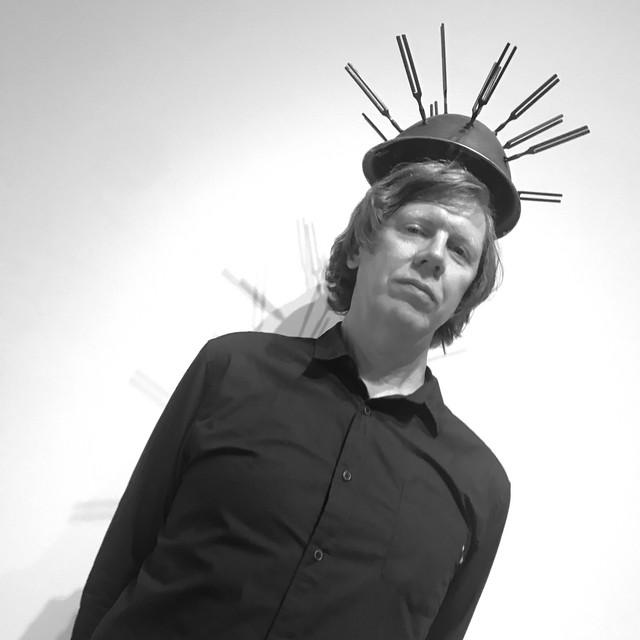
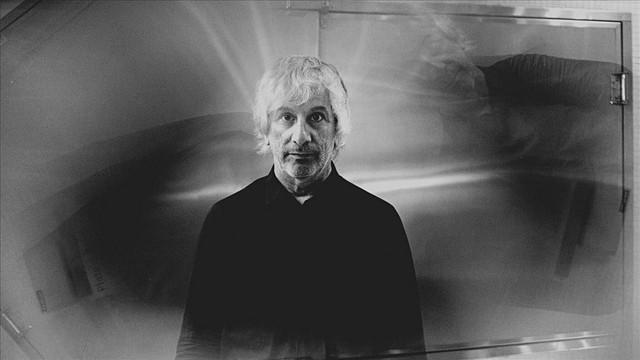
Lee Ranaldo’s Spotify BioAs one of the founding members of Sonic Youth and on his own, Lee Ranaldo bridges the gaps between experimental music and the larger world of alternative rock. Along with former bandmate Thurston Moore, Ranaldo developed an innovative approach to the electric guitar with unique tunings and a percussive playing style and lent an atmospheric, vaguely psychedelic undertow to their music on tracks like "Eric's Trip." During his years with Sonic Youth, Ranaldo's solo releases were a platform for his more introspective music, such as 1998's Amarillo Ramp (For Robert Smithson). He also embarked on collaborations with fellow experimental music luminaries on albums like 1998's Clouds, one of several works with percussionist William Hooker. When the band's time came to an end, Ranaldo incorporated some of the more structured songwriting into albums like 2012's Between the Times and the Tides and 2017's Electric Trim, balancing these releases with more free-form efforts such as 2021's In Virus… Times.
Lee Ranaldo was born in 1956 in East Norwich, New York. Ranaldo attended SUNY Binghamton in Binghamton, New York, where he played in an experimental punk outfit called the Fluks (named after the Dadaist art movement Fluxus). His early influences include many psychedelic California bands from the late '60s, including the Grateful Dead, Jefferson Airplane, and Hot Tuna, as well as early New York City punk units like the Ramones, Television, and Talking Heads. After moving to New York City in 1979, Ranaldo briefly attempted to revive the Fluks before performing with a series of acts including Rhys Chatham and Plus Instruments (with whom he recorded an LP in 1981). Through Chatham, Ranaldo met composer Glenn Branca, who created avant-garde pieces for electric guitar ensembles. After Ranaldo met Thurston Moore and Kim Gordon, who were also working with Branca's ensemble, they began playing as Sonic Youth in 1981 (following a succession of drummers, Steve Shelley became their permanent timekeeper in 1985).
Throughout the '80s, Sonic Youth recorded and toured constantly. Their early years are documented in two books adapted from road journals written by Ranaldo, Road Movies and Jrnls80s. As the band moved from the abrasive, no-wave inspired approach of 1983's Confusion Is Sex to the more structured and melodic but still experimental territory of 1987's Sister and the following year's landmark album Daydream Nation, Sonic Youth became a fixture of America's underground rock scene. In 1987, Ranaldo released his first solo album, From Here to Infinity, on SST Records, Sonic Youth's label at the time; the original vinyl release featured locking grooves at the end of each track, while its second side was impossible to play (it was a piece of engraved artwork by artist Savage Pencil).
By the early '90s, Sonic Youth were looked up to as elders in the fledgling alternative music scene and acted as mentors to dozens of younger bands, including Nirvana. In this role, Ranaldo produced
albums for Babes in Toyland, You Am I, Deity Guns, and others. He also spent more time on his solo career and on collaborations outside of Sonic Youth. His own releases ranged from EPs such as 1992's A Perfect Day and 1994's Broken Circle to collections of earlier recordings like 1993's Scriptures of the Golden Eternity and East Jesus from 1995. That year, he joined jazz percussionist William Hooker on a pair of albums, Envisioning and The Gift of Tongues (which also featured Zeena Parkins) that found Hooker on drums and Ranaldo on modified guitars, synthesizers, and other electronics as they took turns reading and improvising poetry. In addition, Ranaldo issued Bookstore, a book of his poetry and Leah Singer's photography, and edited Online Diaries, a volume of tour journals from the 1995 Lollapalooza Tour featuring contributions from Moore, Beck, Stephen Malkmus of Pavement, Courtney Love, and others. In the latter half of the decade, he collaborated with Moore, Loren Mazzacane Connors, and Jean-Marc Montera on 1997's MMMR; reunited with Hooker for 1998's heavily edited live album Clouds; and released Moroccan Journal, an account of his visit to the Master Musicians of Jajouka featuring Singer's photography, in 1999. Dirty Windows and Amarillo Ramp (For Robert Smithson), both of which collected recordings from the early '90s, appeared in 1998.
Throughout the 2000s, Ranaldo continued to collaborate with other leading lights of the avant-garde during his downtime from Sonic Youth. At the beginning of the decade, he worked with Moore, Shelley, and Mats Gustafsson on New York - Ystad and with Christian Marclay on Bouquet; Fuck Shit Up, a live album capturing a performance with Moore and Marclay, also arrived in 2000. Around this time, the improvisational group Text of Light formed, and its 2004 self-titled debut album featured performances from Marclay, Hooker, Ulrich Krieger, Tim Barnes, and Alan Licht. That year also saw Ranaldo publish two books, Lengths & Breaths and Road Movies. In 2005, he reunited with Hooker, Licht, and Marclay for 2005's Music for Stage and Screen, which featured excerpts of a score Ranaldo produced for Dania Saragovia's film Jealousy, as well as music for plays by Gil Kofman and Michele Salimbeni. Additionally, Ranaldo and Hooker collaborated on The Celestial Answer and Oasis of Whispers, which also featured Glen Hall. The following year's Four Guitars Live captured Ranaldo, Moore, Nels Cline and Carlos Giffoni at a 2001 concert.
The solo work Ranaldo created at this time also explored the possibilities of the guitar. His Suspended Guitar installation, which featured a guitar hanging from a rope generating feedback that could be manipulated with a bow or by hitting its body or strings, appeared in performance spaces and museums in Europe and the U.S. Ranaldo's other sound art included 2006's Shibuya Displacement (a Soundwalk), which was commissioned by the Hudson Valley Center for Contemporary Art. His work as a visual artist was celebrated with a residency at Paris' CNEAI in 2007 and 2008. Also in 2008, Ranaldo released the EP Countless Centuries Fled into the Distance Like So Many Storms, a set of electric guitar variations that, like From Here to Infinity, featured an etched artwork by Savage Pencil. Ranaldo's status as one of the most influential guitarists of his time was cemented by two guitar designs that were inspired by him. First was the Moonlander, an 18-string guitar built for him by Yuri Landman in 2007, then Fender designed a signature, transparent blue Jazzmaster named for him in 2009.
Ranaldo remained a prolific collaborator and solo artist in the 2010s. He kicked off the decade with an appearance on Marclay's Graffitti Composition, which also featured adventurous guitarists Elliott Sharp and Vernon Reid, and issued the solo album Maelstrom from the Drift, on which he was supported by Necks drummer Tony Buck and Highland Bagpipes' David Watson on bagpipes and guitar. When Sonic Youth moved from DGC Records to the independent Matador label, Ranaldo also signed on as a solo artist. The band went on hiatus in 2011, and that year he and Moore teamed up with Montera for Les Anges Du Péché, a collection of guitar duets. He made his debut for Matador as a solo artist with March 2012's Between the Times and the Tides, a set of more straightforward and melodic songs featuring familiar faces such as Licht, Cline, Shelley, and Jim O'Rourke. That year, Ranaldo, Watson, and Buck made their debut as Glacial Trio with On Jones Beach. He closed out the year with the December publication of the poetry book How not to get played on the radio. For 2013's Last Night on Earth, Ranaldo assembled a new band, the Dust, which featured Licht and Shelley along with Tim Luntzel. While touring in Europe, Ranaldo and company recorded a set of acoustic sessions in Barcelona with producer Raül Refree that later became Acoustic Dust, which was released in October 2014 to accompany another European tour. A 2015 exhibition of his visual art in Manhattan and more touring preceded September 2017's Electric Trim, a set of songs recorded in New York and Barcelona that featured the Dust, Refree, Cline, and Sharon Van Etten, along with lyrics by novelist Jonathan Lethem. The album arrived in 2017 on Mute, one of Sonic Youth's former labels. A solo acoustic performance from a tour in support of the album was released in late 2018 as Electric Trim Live at Rough Trade East. The following year, Ranaldo collaborated on an album with Jim Jarmusch, Marc Urselli, and Balazs Pandi, then teamed up with Refree again for Names of North End Women, their first album as a duo. Incorporating spoken word, found sounds, and other experiments, it came out on Mute in February 2020. That September, he recorded in his home a four-part instrumental acoustic piece inspired by the way the COVID-19 global pandemic seemed to make time stop. Incorporating droning and ringing acoustic guitars as well as environmental sounds, In Virus Times appeared in November 2021. ~ Heather Phares & Mark Deming, Rovi
Viberate is a music analytics platform built for A&Rs, artist managers, labels, booking agents, marketers, and artists.
It helps music professionals track artist growth, analyze audience data, monitor playlist activity, compare artists, follow song performance, and identify opportunities across the music market.
Public artist pages provide a free preview of selected artist data. Paid plans provide access to deeper analytics, historical data, charts, comparisons, playlist tools, exports, alerts, reports, and additional professional features.
Yes. Public Viberate artist pages provide selected artist analytics and music data for free.
Viberate also offers a 7-day free trial of the full platform. A credit card is required to start the trial. The trial includes access to the complete product so users can test deeper artist analytics, historical views, playlist insights, comparisons, charts, exports, alerts, and reporting features before choosing a paid plan.
Viberate provides artist analytics across streaming, playlists, social media, video, radio airplay, songs, and audience markets.
Users can analyze Spotify performance, Spotify and Apple Music playlists, YouTube activity, TikTok and Instagram growth, radio spins, song performance, audience locations, demographics, rankings, and overall artist momentum.
Artist profiles also connect to music charts, similar artists, and comparison tools, helping users benchmark performance and evaluate artists in context.
Viberate updates key artist and track data daily.
For followed artists and tracks, selected data is refreshed multiple times per day. This helps teams monitor playlist changes, streaming movement, audience growth, releases, and campaign performance with more current data.
Update frequency can vary depending on the metric and data source.
Yes. Viberate lets users compare up to five artists side by side across streaming, social media, audience, and engagement metrics.
Users can compare fanbase growth, audience demographics, locations, Spotify performance, social metrics, and other artist data over selected time periods.
Artist comparison can be used for A&R scouting, benchmarking, booking decisions, campaign planning, and evaluating artists with similar audiences or market positions.