Kurt Atterberg

Classical
Orchestral
 Viberate Rank: 445416
 Viberate Rank: 445416
 Monthly ListenersFollowers
 Subscribers
 Followers
 Followers
 FansTop Spotify Songs
| Track | 7-Day Streams | |
|---|---|---|
1 | 566 | |
2 | 537 | |
3 | 360 | |
4 | 283 | |
5 | 267 |
Top YouTube VideosMonthly ListenersFeatured in Playlists| Playlist | Followers | |
|---|---|---|
1 |  Cello Dark Cello ALUGOSI | 22.45K |
2 |  Sad,very sad, classical music Peer Wijntjes | 12.86K |
3 |  Oboe Solos I Like ❤️ Collin | 7.11K |
4 |  Chamber Music for Self-Renewal synergy555 | 4.21K |
5 |  Relaxing Nighttime Classical George | 4.07K |
Audience| City | Monthly Listeners | |
|---|---|---|
1 |  | 112 |
2 | | 100 |
3 |  | 85 |
4 |  | 68 |
5 |  | 51 |
See full performance history, audience data, playlist activity, rankings, comparisons, and more in Viberate music analytics. Start with a free trial, then continue with a paid plan.
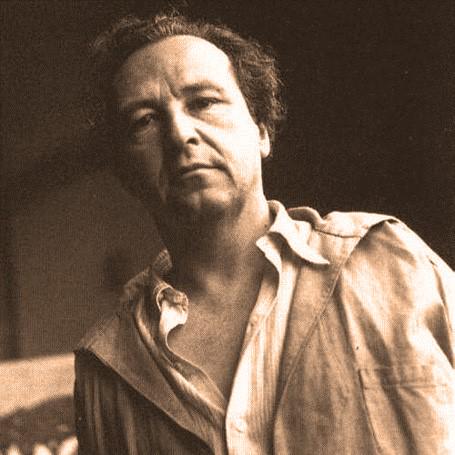
Kurt Atterberg’s Spotify BioOne of Sweden's leading composers during the middle twentieth century, Kurt Atterberg championed contemporary Swedish music as a whole in his work as a conductor, critic, and officer in composer-advocacy organizations. His music was easily accessible -- a polytonal treatment of late Romanticism -- and he had little love for more advanced techniques or the composers, even young Swedes, who used them. In his lifetime, he developed only a small reputation outside Scandinavia, mainly in Germany; even in Sweden he was regarded as something of a relic by the 1950s, his final period of extensive composition. Atterberg's work has enjoyed a revival on compact disc, if not in the concert hall, and his posthumous reputation now seems secure at least among omnivorous record collectors.
Atterberg studied cello in school, but as a composer he was largely self-taught, despite a stint at the Swedish Royal Academy of Music (1910 - 1911) and as a scholarship student of Max von Schillings in Germany in… 1911 and 1913. His main course of study at the Stockholm College of Technology was civil engineering and his primary career, from 1912 to 1968, was in the patent office. Nevertheless, like many composers before him (particularly Russia's "Mighty Handful"), he devoted as much time as he could to music. He made his conducting debut in his native Goteborg in 1912 with a performance of his Symphony No. 1, and conducted regularly at Stockholm's Royal Dramatic Theater from 1916 to 1922. In the '20s, he was particularly active as a guest conductor, especially of his own music and that of other Swedes. During this time, he also managed to launch his tertiary career as a music administrator; in 1924 he co-founded the Society of Swedish Composers (with which he stayed until 1947) and the Swedish Performing Rights Society (STIM). He was also a part-time music critic published in Stockholm newspapers from 1919 to 1957.
As a composer, Atterberg initially owed much to Brahms and Alfvén, although he was more inclined to paint vivid, loosely structured melodic pictures than to put his themes through a traditional classical workout. His music was becoming more impressionistic by World War I, the period of his Symphony No. 3, Violin Concerto, and String Quartet No. 2. He soon gave much of his music a polytonal cast, but never as aggressively as, say, Darius Milhaud. His works remained fairly folkloristic, especially his operas and ballets.
For many years, the only Atterberg work that circulated widely outside Sweden in performance, recording, and notoriety was his Symphony No. 6, which in 1928 won a prize from the Columbia Graphophone Company in celebration of the Schubert centenary. The contest initially aimed to finish Schubert's "Unfinished" symphony; it drew heavy criticism, much of which fell upon Atterberg, who was the victim of rumors that he had ingratiated himself with such jury members as Glazunov and Nielsen by writing in their style -- an insupportable charge, considering the diversity of the judges' styles and that Atterberg's polytonal music was more advanced than that of any of the judges except Nielsen. Atterberg wrote fairly little chamber music or song, favoring the orchestral medium. He generated at least five operas, well-regarded in Sweden for their surface appeal but not for any penetrating use of psychology. His nine orchestral suites are colorful and often folkloristic; his nine numbered symphonies are more serious, though not showing Atterberg to best advantage as a melodist.
Viberate is a music analytics platform built for A&Rs, artist managers, labels, booking agents, marketers, and artists.
It helps music professionals track artist growth, analyze audience data, monitor playlist activity, compare artists, follow song performance, and identify opportunities across the music market.
Public artist pages provide a free preview of selected artist data. Paid plans provide access to deeper analytics, historical data, charts, comparisons, playlist tools, exports, alerts, reports, and additional professional features.
Yes. Public Viberate artist pages provide selected artist analytics and music data for free.
Viberate also offers a 7-day free trial of the full platform. A credit card is required to start the trial. The trial includes access to the complete product so users can test deeper artist analytics, historical views, playlist insights, comparisons, charts, exports, alerts, and reporting features before choosing a paid plan.
Viberate provides artist analytics across streaming, playlists, social media, video, radio airplay, songs, and audience markets.
Users can analyze Spotify performance, Spotify and Apple Music playlists, YouTube activity, TikTok and Instagram growth, radio spins, song performance, audience locations, demographics, rankings, and overall artist momentum.
Artist profiles also connect to music charts, similar artists, and comparison tools, helping users benchmark performance and evaluate artists in context.
Viberate updates key artist and track data daily.
For followed artists and tracks, selected data is refreshed multiple times per day. This helps teams monitor playlist changes, streaming movement, audience growth, releases, and campaign performance with more current data.
Update frequency can vary depending on the metric and data source.
Yes. Viberate lets users compare up to five artists side by side across streaming, social media, audience, and engagement metrics.
Users can compare fanbase growth, audience demographics, locations, Spotify performance, social metrics, and other artist data over selected time periods.
Artist comparison can be used for A&R scouting, benchmarking, booking decisions, campaign planning, and evaluating artists with similar audiences or market positions.