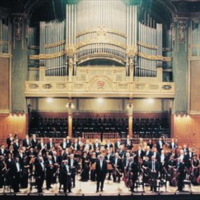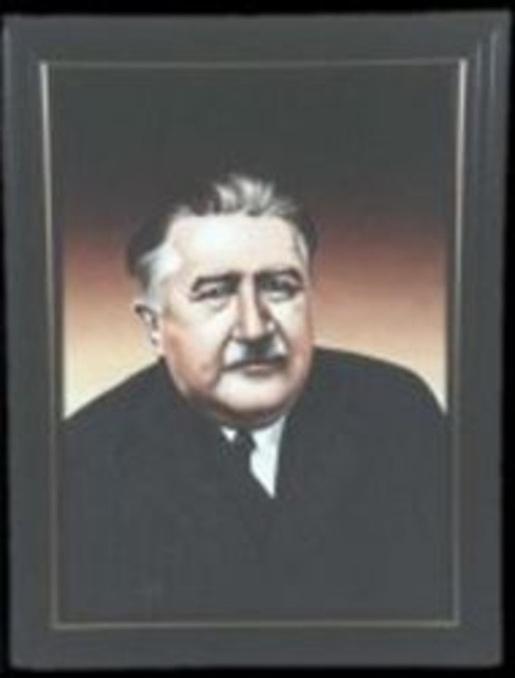
Josef Suk

Classical
Chamber Music
 Viberate Rank: 290357
 Viberate Rank: 290357
 Monthly ListenersFollowers
 Subscribers
 Followers
 Followers
 FansTop Spotify SongsTop YouTube VideosMonthly ListenersFeatured in Playlists
| Playlist | Followers | |
|---|---|---|
1 |  Haruki Murakami's vinyl collection Masamaro | 109.94K |
2 |  Year of Wonder : Classical Music for Every Day - Clemency Burton-Hill lilham | 16.11K |
3 |  NPR Classical NPR Music | 14.43K |
4 |  Sad,very sad, classical music Peer Wijntjes | 12.86K |
5 |  Edvard Grieg – Classical Moods: Nostalgia spotifyplaylists.com | 12.51K |
Audience| City | Monthly Listeners | |
|---|---|---|
1 | | 392 |
2 |  | 285 |
3 |  | 228 |
4 |  | 223 |
5 |  | 181 |
See full performance history, audience data, playlist activity, rankings, comparisons, and more in Viberate music analytics. Start with a free trial, then continue with a paid plan.
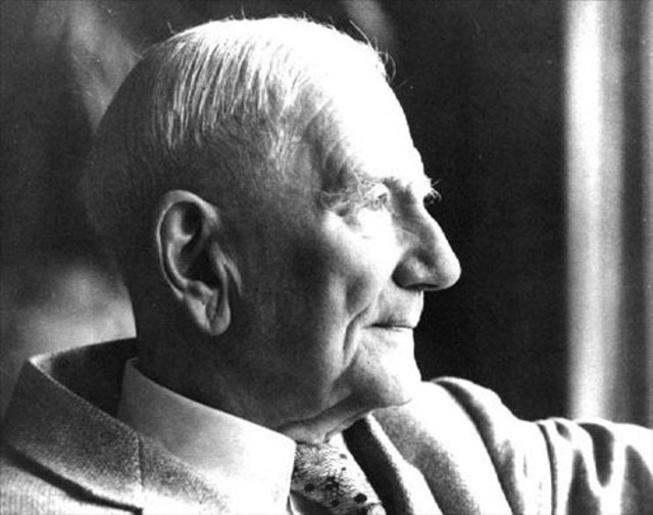
Josef Suk’s Spotify BioCzech composer Josef Suk was born on January 4, 1874, in Krecovice, Bohemia, where his father was a choral director. The elder Josef Suk taught his son to play the piano, violin, and organ. In 1885, at the age of 11, Suk entered the Prague Conservatory. By 1888, he had composed a mass, the Krecovická mase; he received his degree in 1891, with what became the Op. 1 piano quartet as his thesis. When Antonín Dvorák became a professor at the Conservatory, Suk stayed an extra year to study with him. Dvorák considered Suk his best student, and the two became personally close. In 1898, Suk married Dvorák's daughter Otilie.
Suk's compositional life may be divided into two periods. His early works are characterized by a late Romantic style that created a general perception of Suk as Dvorák's heir. Compared with Dvorák, Suk wrote little chamber music, but found success with the Four Pieces for violin and piano, Op. 17, written in 1900, and the Fantasy for violin and orchestra, Op. 24, of 1903,… as well as with several solo piano works -- the "Song of Love" from the six piano pieces of Op. 7 became a standard recital piece. He wrote few songs and never approached opera, concentrating mainly on orchestral music. In 1892, he wrote the Serenade for Strings, Op. 6, which boosted his career when Brahms promoted it, much as Dvorák himself had benefited from the Viennese giant's support years before. In 1897 and 1898, he composed incidental music for the play Radúz a Mahulena, one of his most popular works and one that had resonances with Suk's own happy marriage. An optimistic mood is especially evident in the piano suites Jaro (Spring) Op. 22 and Letní dojmi Op. 22b, both written in 1902. It was during this time that his son was born.
In 1904, Suk's father-in-law and mentor Dvorák died, and 14 months later, in 1905, his beloved wife Otilie passed away. Their deaths had a devastating impact, and the beginnings of a second phase of Suk's career may be discerned in the works that followed. His compositions became more introspective, complex, and infused with emotion. Completed in 1906, the symphony Asrael, Op. 27, exemplifies this new phase. It is a massive work, considered by many the summit of his achievement. Suk began to experiment with polytonality, notably in his symphonic poem Zrání (Ripening) of 1917. He expanded upon the structure and language of Zrání in his symphony with soloists and chorus Epilog, completed in 1929; these three major orchestral works form a trilogy of vast, almost Mahlerian ambition and scope. Unlike his Czech contemporaries, Suk did not incorporate folk or literary motifs into his compositions. Interestingly, however, his final composition was a Czech dance entitled Sousedská.
Suk made a living largely as a performer and teacher, scheduling composing time around his daily responsibilities. The lack of chamber music in his oeuvre is all the more remarkable in view of his long tenure as second violinist of the Czech Quartet. The quartet's first concert took place in Vienna in 1893, where it received praise from Brahms, and Suk enjoyed international success with the quartet for forty years, remaining a member until he retired in 1933. In 1922 Suk assumed a professorship in composition at the Prague Conservatory, where he tutored such future Czech composers such as Martinu, Jezek, and Borkovec. He was twice appointed head of the Conservatory, serving from 1924 to 1926, and from 1933 until 1935. He died in 1935, at the age of 61.
Viberate is a music analytics platform built for A&Rs, artist managers, labels, booking agents, marketers, and artists.
It helps music professionals track artist growth, analyze audience data, monitor playlist activity, compare artists, follow song performance, and identify opportunities across the music market.
Public artist pages provide a free preview of selected artist data. Paid plans provide access to deeper analytics, historical data, charts, comparisons, playlist tools, exports, alerts, reports, and additional professional features.
Yes. Public Viberate artist pages provide selected artist analytics and music data for free.
Viberate also offers a 7-day free trial of the full platform. A credit card is required to start the trial. The trial includes access to the complete product so users can test deeper artist analytics, historical views, playlist insights, comparisons, charts, exports, alerts, and reporting features before choosing a paid plan.
Viberate provides artist analytics across streaming, playlists, social media, video, radio airplay, songs, and audience markets.
Users can analyze Spotify performance, Spotify and Apple Music playlists, YouTube activity, TikTok and Instagram growth, radio spins, song performance, audience locations, demographics, rankings, and overall artist momentum.
Artist profiles also connect to music charts, similar artists, and comparison tools, helping users benchmark performance and evaluate artists in context.
Viberate updates key artist and track data daily.
For followed artists and tracks, selected data is refreshed multiple times per day. This helps teams monitor playlist changes, streaming movement, audience growth, releases, and campaign performance with more current data.
Update frequency can vary depending on the metric and data source.
Yes. Viberate lets users compare up to five artists side by side across streaming, social media, audience, and engagement metrics.
Users can compare fanbase growth, audience demographics, locations, Spotify performance, social metrics, and other artist data over selected time periods.
Artist comparison can be used for A&R scouting, benchmarking, booking decisions, campaign planning, and evaluating artists with similar audiences or market positions.