Arthur Honegger

Classical
Orchestral
Neoclassical
 Viberate Rank: 254900
 Viberate Rank: 254900
 Monthly ListenersFollowers
 Subscribers
 Followers
 Followers
 FansTop Spotify Songs
| Track | 7-Day Streams | |
|---|---|---|
1 | 773 | |
2 | 380 | |
3 | 290 | |
4 | 263 | |
5 | 180 |
Top YouTube VideosMonthly ListenersFeatured in Playlists| Playlist | Followers | |
|---|---|---|
1 |  Epic Intense Classical Music 🎻 vacho | 27.56K |
2 | 1200 Years of Women Composers Ulysses' Classical | 14.93K |
3 |  NPR Classical NPR Music | 14.43K |
4 | Organ Music davidjamesmurray | 7.94K |
5 |  定番クラシック名曲ベスト HiroyukiF | 7.67K |
Audience| City | Monthly Listeners | |
|---|---|---|
1 |  | 144 |
2 | | 113 |
3 |  | 107 |
4 |  | 92 |
5 |  | 92 |
See full performance history, audience data, playlist activity, rankings, comparisons, and more in Viberate music analytics. Start with a free trial, then continue with a paid plan.
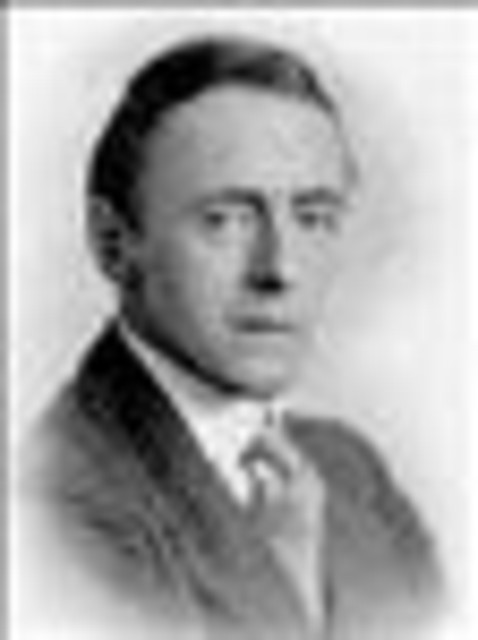
Arthur Honegger’s Spotify BioArthur Honegger was a composer of operas, chamber music, and orchestral music. An almost exact contemporary of Prokofiev (1891-1953), he rivaled Poulenc as the most successful member of Les Six and was without doubt among the greatest French composers of his day. He was influenced in his early work by the impressionists and Stravinsky's modernism, but stylistically, he was quite protean, eschewing the Impressionism of Debussy while absorbing certain features of neo-Classicism and taking on a sometimes brash and usually rugged expressive manner, always within a tonal context. Honegger used a personal style in his mature work that is densely bitonal, classically polyphonic, and emotionally austere. This is especially apparent in the beautiful Symphony No. 2 for string orchestra -- with a mysteriously emerging trumpet solo in the last movement -- a work written in occupied Paris of WWII.
Born in France to Swiss parents, Honegger became proficient on the violin as a child, but he also… developed an interest in composition early on. His first work, an unorchestrated opera, Philippa, dates to 1903. He enrolled at the Zurich Conservatory while in his teens, where he studied composition with Friedrich Hegar and violin with Willem de Boer. He left after two years for the more prestigious Paris Conservatory in 1911, where he studied composition with Widor and Gédalge. Although he continued to take instruction on the violin there, Honegger was clearly more interested in a career as a composer. In 1913, his family relocated to Zurich, but he remained in Le Havre and commuted daily to Paris by train, perhaps one of the reasons he developed a fascination with locomotives. His first works began gaining exposure by 1916, and four years later, he and his conservatory friends Milhaud, Auric, and Tailleferre, along with Poulenc and Durey, found themselves aligned in the famous musical group called Les Six, a name coined by critic Henri Collet. Les Six was formed in reaction to Impressionism and Wagnerian ideas, but Honegger did not recognize any musical creed in his association with the group.
In 1923, Honegger composed one of his most famous works, Pacific 231 (Mouvement symphonique No. 1), a work whose motoric qualities were inspired by the sounds and rhythms of a locomotive. The piece was a tremendous success and spawned many imitations. In 1926, Honegger married a young, highly gifted French pianist, Andrée Vaurabourg. The two rarely lived together during their marriage, owing to the composer's need for solitude in his creative activities. On concert tours, however, they apparently shared quarters and throughout their marriage were otherwise a happy, loving couple. The 1928 Rugby (Mouvement symphonique No. 2) was also a success for Honegger and is another example of the composer being inspired by an extra-musical interest: he was a sports enthusiast, especially of rugby. Honegger made many concert tours in the 1930s with his wife, who would perform his piano and chamber works or serve as accompanist to his songs. His oratorio Jeanne d'Arc au Bucher (1935) is a significant work told in a series of episodic "flashbacks," a form that fits well with the music. His concert and compositional activity was curtailed for a year when he nursed his wife along to recovery following a serious injury in a 1935 automobile accident.
During the war years, Honegger taught at the École Normale de Musique and made many trips to Zurich, where his Symphony No. 2 (1940-1941) was successfully premiered by Paul Sacher and the Collegium Musicum on May 18, 1942. Honegger remained quite prolific during these dark years, especially in the realm of film music. He wrote 11 film scores in the period of 1942 to 1943, though some were collaborations with other composers, such as Jolivet. In 1947, on a concert tour in the United States, Honegger suffered a heart attack and thereafter his health declined, severely limiting his musical activities, with his wife tending to him in his final year. ~ TiVo Staff, Rovi
Viberate is a music analytics platform built for A&Rs, artist managers, labels, booking agents, marketers, and artists.
It helps music professionals track artist growth, analyze audience data, monitor playlist activity, compare artists, follow song performance, and identify opportunities across the music market.
Public artist pages provide a free preview of selected artist data. Paid plans provide access to deeper analytics, historical data, charts, comparisons, playlist tools, exports, alerts, reports, and additional professional features.
Yes. Public Viberate artist pages provide selected artist analytics and music data for free.
Viberate also offers a 7-day free trial of the full platform. A credit card is required to start the trial. The trial includes access to the complete product so users can test deeper artist analytics, historical views, playlist insights, comparisons, charts, exports, alerts, and reporting features before choosing a paid plan.
Viberate provides artist analytics across streaming, playlists, social media, video, radio airplay, songs, and audience markets.
Users can analyze Spotify performance, Spotify and Apple Music playlists, YouTube activity, TikTok and Instagram growth, radio spins, song performance, audience locations, demographics, rankings, and overall artist momentum.
Artist profiles also connect to music charts, similar artists, and comparison tools, helping users benchmark performance and evaluate artists in context.
Viberate updates key artist and track data daily.
For followed artists and tracks, selected data is refreshed multiple times per day. This helps teams monitor playlist changes, streaming movement, audience growth, releases, and campaign performance with more current data.
Update frequency can vary depending on the metric and data source.
Yes. Viberate lets users compare up to five artists side by side across streaming, social media, audience, and engagement metrics.
Users can compare fanbase growth, audience demographics, locations, Spotify performance, social metrics, and other artist data over selected time periods.
Artist comparison can be used for A&R scouting, benchmarking, booking decisions, campaign planning, and evaluating artists with similar audiences or market positions.