Klaus Thunemann

Classical
Chamber Music
Classical Crossover
 Viberate Rank: 277609
 Viberate Rank: 277609
 Monthly ListenersFollowers
 Subscribers
 Followers
 Followers
 FansTop Spotify Songs
| Track | 7-Day Streams | |
|---|---|---|
1 | 2.73K | |
2 | 2.72K | |
3 | 1.92K | |
4 | 600 | |
5 | 350 |
Top YouTube VideosMonthly ListenersFeatured in Playlists| Playlist | Followers | |
|---|---|---|
1 | Classical & Symphony Orchestra Adriansyah Wijaya | 47.77K |
2 |  Schubert - Best of Deutsche Grammophon (DG) | 31.36K |
3 |  baroque bangers jackson ellis | 11.43K |
4 |  Mozart - Complete Chronological Catalogue based on Köchel catalogue K6 Ulysses' Classical | 9.54K |
5 |  Oboe: Best of Udiscovermusic classical | 7.97K |
Audience| City | Monthly Listeners | |
|---|---|---|
1 |  | 264 |
2 |  | 232 |
3 |  | 193 |
4 | | 185 |
5 |  | 174 |
See full performance history, audience data, playlist activity, rankings, comparisons, and more in Viberate music analytics. Start with a free trial, then continue with a paid plan.
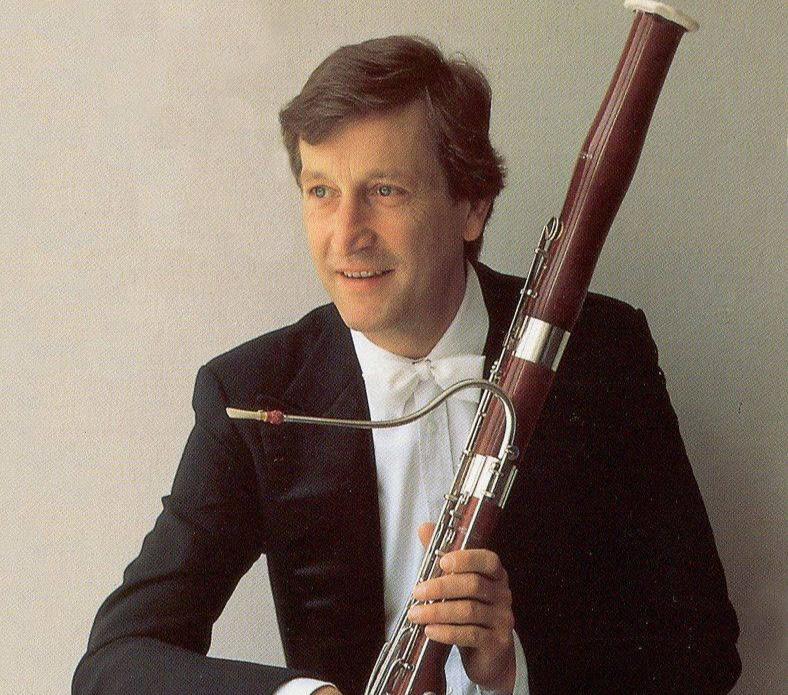
Klaus Thunemann’s Spotify BioHis many admirers will assert that Klaus Thunemann is the greatest bassoonist of all time. Certainly, critics and public alike have long considered him one of the finest bassoonists of his generation and arguably the most celebrated. He is generally viewed as the leading German bassoon teacher and has probably made more recordings than any other bassoonist with the possible exception of Milan Turkovic. Thunemann has performed as an orchestral member, chamber player, and soloist, and possesses a vast repertory in all areas, from J.S. Bach and Vivaldi to Mozart and Beethoven; and from Schubert and Carl Maria von Weber to Hindemith and Sofia Gubaidulina. Thunemann is one of those rare musicians who grasps virtually every feature of his/her instrument, not just the interpretive and technical ones. He published an authoritative article in 1995 on the medical aspects of playing the bassoon ("Medical problems in instrumentalists: Causes and Prevention"). Thunemann's recordings can be found on… several labels, including Philips, Decca, DG, Hänssler Classics, Naxos, and BIS.
Klaus Thunemann was born in Magdeburg, Germany, on April 19, 1937. He studied piano from an early age, but at 18 turned his focus to the bassoon. He enrolled at the Hochschule für Musik in Berlin, where his most important teacher was Willy Fugmann.
Thunemann graduated in 1961 and from 1962-1978 he served as first chair bassoonist for the Hamburg-based NDR Symphony Orchestra. During this stint he also regularly appeared as soloist and chamber player.
In 1978 he abandoned orchestral playing and turned to teaching, accepting a professorship at the Hochschule für Musik and Theater in Hanover. He continued with solo and chamber work, often appearing in concert with oboist/composer Heinz Holliger. The pair made a series of acclaimed Mozart recordings on the Philips label that was reissued in 2006. Thunemann began teaching at the Hanns Eisler Musikhochschule in Berlin in 1996. He regularly gave master classes in the U.S., Japan, and various locales in Europe.
Thunemann retired from teaching in 2005 and the following year was recognized by the German government for his contributions to the arts with the Order of Merit of the Federal Republic of Germany (the Federal Cross of Merit). Thunemann remained active on the concert scene after his retirement from teaching. Among his more acclaimed engagements was his September 2008 appearance at the Jerusalem International Chamber Music Festival, where he played the Saint-Saëns Sonata for bassoon and piano.
Viberate is a music analytics platform built for A&Rs, artist managers, labels, booking agents, marketers, and artists.
It helps music professionals track artist growth, analyze audience data, monitor playlist activity, compare artists, follow song performance, and identify opportunities across the music market.
Public artist pages provide a free preview of selected artist data. Paid plans provide access to deeper analytics, historical data, charts, comparisons, playlist tools, exports, alerts, reports, and additional professional features.
Yes. Public Viberate artist pages provide selected artist analytics and music data for free.
Viberate also offers a 7-day free trial of the full platform. A credit card is required to start the trial. The trial includes access to the complete product so users can test deeper artist analytics, historical views, playlist insights, comparisons, charts, exports, alerts, and reporting features before choosing a paid plan.
Viberate provides artist analytics across streaming, playlists, social media, video, radio airplay, songs, and audience markets.
Users can analyze Spotify performance, Spotify and Apple Music playlists, YouTube activity, TikTok and Instagram growth, radio spins, song performance, audience locations, demographics, rankings, and overall artist momentum.
Artist profiles also connect to music charts, similar artists, and comparison tools, helping users benchmark performance and evaluate artists in context.
Viberate updates key artist and track data daily.
For followed artists and tracks, selected data is refreshed multiple times per day. This helps teams monitor playlist changes, streaming movement, audience growth, releases, and campaign performance with more current data.
Update frequency can vary depending on the metric and data source.
Yes. Viberate lets users compare up to five artists side by side across streaming, social media, audience, and engagement metrics.
Users can compare fanbase growth, audience demographics, locations, Spotify performance, social metrics, and other artist data over selected time periods.
Artist comparison can be used for A&R scouting, benchmarking, booking decisions, campaign planning, and evaluating artists with similar audiences or market positions.