Johann Stamitz

Classical
Orchestral
 Viberate Rank: 410963
 Viberate Rank: 410963
 Monthly ListenersFollowers
 Subscribers
 Followers
 Followers
 FansTop Spotify SongsTop YouTube VideosMonthly ListenersFeatured in Playlists
| Playlist | Followers | |
|---|---|---|
1 | Classical & Symphony Orchestra Adriansyah Wijaya | 47.77K |
2 | Flute Solos bakery1 | 5.56K |
3 | Viola Concertos Preston Patterson | 4.55K |
4 | Carmen - Habanera lynchbc | 3.55K |
5 | Very relaxing classical Jenni | 3.25K |
Audience| City | Monthly Listeners | |
|---|---|---|
1 |  | 209 |
2 |  | 206 |
3 |  | 171 |
4 |  | 170 |
5 |  | 154 |
See full performance history, audience data, playlist activity, rankings, comparisons, and more in Viberate music analytics. Start with a free trial, then continue with a paid plan.
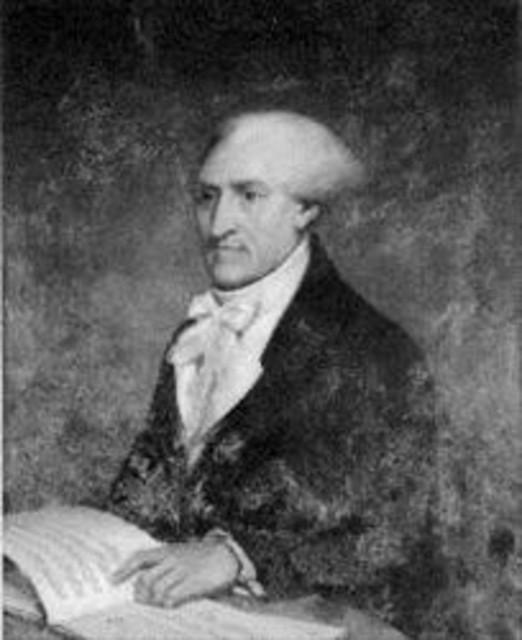
Johann Stamitz’s Spotify BioJohann Stamitz was an important composer of the early Classical period, notable as the chief member of the so-called Mannheim School. His innovations in the development of the symphony clearly place him in the pioneering ranks of his time. Stamitz was the first major composer to become identified with the use of four movements in the symphony. Moreover, he often used a third movement minuet with a trio, a form that many others would adopt later on, including Beethoven. His first movements often approximated the structure of what would become the typical sonata form of first subject, second subject, development and reprise. He produced at least 72 symphonies, though about 58 survive. He also wrote ten orchestral trios, nine of which come from his mature period and nearly rank with his symphonies in importance. In addition, he wrote a number of concertos, chamber music, and sacred music. None of his original manuscripts have survived, thus creating difficulties in dating some of his… compositions.
Stamitz was born probably in mid-June, 1717. His father was an organist and schoolmaster who gave him his first music lessons. In 1728, young Johann, already proficient on the violin, entered the Jesuit-run Gymnasium in Jihlava, known for its excellence in music education. He left the gymnasium in 1734, and, after a brief period of study at Prague University, seems to have launched a career as a concert violinist. His activities from this point until 1741 are not known, though one can speculate that whatever career inroads he made were mostly insignificant.
By 1742, however, he had become a respected violinist in Mannheim and the following year advanced from a lower-chair position in the Mannheim Court orchestra to the first chair post. He was eventually appointed conductor, (actually "leader") of the ensemble. Stamitz undoubtedly wrote many of his early symphonies during the early- and mid-1740s. He probably began writing for the Court chapel by the latter time, as well.
In 1744, Stamitz married Maria Antonia Lüneborn. He was shaping his Mannheim Court ensemble now into one of the finest orchestras in Europe. As a conductor, he was known to be a perfectionist, able to achieve performances of the highest standards. He toured Germany with the group, both he and the players receiving lavish praise in every city where they performed. The orchestra became associated with a group of composers, the so-called Mannheim School, at the head of which stood Stamitz, and whose members included Ignaz Holzbauer (1711 - 1783), Franz Xaver Richter (1709 - 1789), and later on Christian Cannibich (1731 - 1798) and Stamitz's son, Karl (d. 1801).
In 1750, Stamitz was appointed director of chamber music at the Court. This was a newly-created post, probably given him as a result of the success of his compositions in this genre. By now, some of his six trios for violin, flute, and basso continuo had been written, as well as sonatas for violin and basso continuo.
By the early-1750s, Stamitz was turning out symphonies of greater sophistication. They were usually comprised of four movements now, and his handling of structure and thematic development was more assured. In the summer of 1754, Stamitz departed for Paris, where he was already a celebrity owing to his widely performed compositions. He enjoyed much acclaim on his tour there. The composer returned from Paris in 1755, and thereafter not much is known about his remaining years. Though Stamitz was still a young man, his health must have begun to decline rapidly. He died at the age of thirty-nine.
Viberate is a music analytics platform built for A&Rs, artist managers, labels, booking agents, marketers, and artists.
It helps music professionals track artist growth, analyze audience data, monitor playlist activity, compare artists, follow song performance, and identify opportunities across the music market.
Public artist pages provide a free preview of selected artist data. Paid plans provide access to deeper analytics, historical data, charts, comparisons, playlist tools, exports, alerts, reports, and additional professional features.
Yes. Public Viberate artist pages provide selected artist analytics and music data for free.
Viberate also offers a 7-day free trial of the full platform. A credit card is required to start the trial. The trial includes access to the complete product so users can test deeper artist analytics, historical views, playlist insights, comparisons, charts, exports, alerts, and reporting features before choosing a paid plan.
Viberate provides artist analytics across streaming, playlists, social media, video, radio airplay, songs, and audience markets.
Users can analyze Spotify performance, Spotify and Apple Music playlists, YouTube activity, TikTok and Instagram growth, radio spins, song performance, audience locations, demographics, rankings, and overall artist momentum.
Artist profiles also connect to music charts, similar artists, and comparison tools, helping users benchmark performance and evaluate artists in context.
Viberate updates key artist and track data daily.
For followed artists and tracks, selected data is refreshed multiple times per day. This helps teams monitor playlist changes, streaming movement, audience growth, releases, and campaign performance with more current data.
Update frequency can vary depending on the metric and data source.
Yes. Viberate lets users compare up to five artists side by side across streaming, social media, audience, and engagement metrics.
Users can compare fanbase growth, audience demographics, locations, Spotify performance, social metrics, and other artist data over selected time periods.
Artist comparison can be used for A&R scouting, benchmarking, booking decisions, campaign planning, and evaluating artists with similar audiences or market positions.