Carl Stamitz

Classical
Orchestral
 Viberate Rank: 232943
 Viberate Rank: 232943
 Monthly ListenersFollowers
 Subscribers
 Followers
 Followers
 FansTop Spotify Songs
| Track | 7-Day Streams | |
|---|---|---|
1 | 4.29K | |
2 | 765 | |
3 | 731 | |
4 | 575 | |
5 | 568 |
Top YouTube VideosMonthly ListenersFeatured in Playlists| Playlist | Followers | |
|---|---|---|
1 |  Energetic Classical Federico N. Aschieri | 55.39K |
2 |  Klassik zum Entspannen Filtr Germany | 42.04K |
3 |  kaliah | 8.94K |
4 |  light & happy classical music trinity | 7.72K |
5 | The Best of Clarinet 🎵🎶 Michael Chaney | 7.60K |
Audience| City | Monthly Listeners | |
|---|---|---|
1 |  | 440 |
2 |  | 361 |
3 |  | 302 |
4 | | 288 |
5 |  | 268 |
See full performance history, audience data, playlist activity, rankings, comparisons, and more in Viberate music analytics. Start with a free trial, then continue with a paid plan.
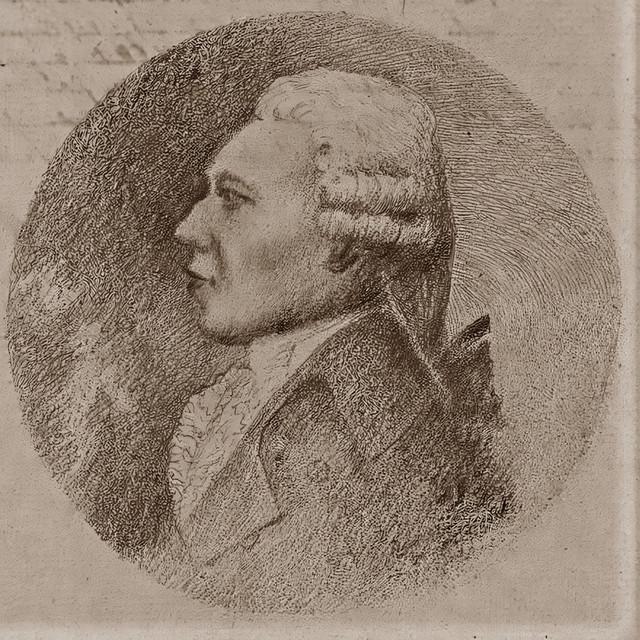
Carl Stamitz’s Spotify BioThe career of composer Carl Stamitz is closely associated with the Mannheim school, whose distinguished members included Carl's father Johann and brother Anton, and Ignaz Holzbauer, Franz Xaver Richter, and Johann Christian Cannabich. Carl Stamitz is generally considered to be the leading figure of the second generation of these composers, among which Cannabich and Stamitz's younger brother Anton are to be counted.
Born probably in early May 1745 (he was baptized on May 8), Carl Stamitz received his first music lessons from his father, then a member -- but soon to be leader -- of the Mannheim Orchestra, an ensemble connected with the Court of the Elector Palatine. Johann died when Carl was only 11, leaving the boy's further music education to Holzbauer, Richter, and Cannabich. In 1762, young Carl became a member of the Mannheim Orchestra, serving as a second violinist throughout his eight-year tenure there. Some of his earliest works date to this period, including the Three Symphonies,… Op. 2. Shortly after his departure from the Mannheim Orchestra in 1770, Carl and Anton traveled to Paris, where in 1771 he accepted the dual post of court composer and conductor for the Duke Louis of Noailles. Stamitz turned out a number of works during his French years, including the Symphony, La promenade royale, written in Versailles in 1772; several other program symphonies; numerous quartets for various instruments; and other symphonic and chamber compositions. He also toured regularly as a violinist during the 1770s, making visits to Vienna (1772), Frankfurt (1773), and to Augsburg, Strasbourg, and back to Vienna (1774). Along with playing in concerts on these tours, he sometimes delivered manuscripts of new works, as he did on the Strasbourg visit, to satisfy a commission from Prince Kraft Ernst of Oettingen-Wallerstein. In 1777, Stamitz journeyed to London, where he lived for two years. He found less success there, though he apparently received substantial fees for the publication of numerous works, including many duos and trios for various instrumental combinations, the majority of which, however, were not published until well after his departure in 1779 or 1780. In about 1780, Stamitz settled in the Hague. There he began performing as a violist at the Court of William V of Orange, appearing in one concert with the 12-year-old Beethoven, who accompanied on fortepiano. Throughout the 1780s, Stamitz toured abroad, generally as a violist, visiting Hamburg (1785), Leipzig and Berlin (1786), and Dresden and Prague (1787). Probably in the late 1780s, Stamitz married Maria Josepha Pilz, who was 19 years his junior. The newlyweds settled in Greiz, Germany. Maria was in frail health after the birth of a son in 1790 and a daughter two years later, and Stamitz thus had to curtail his travels. He made a meager living selling his compositions to the King of Prussia and to royalty at smaller courts. He returned to Mannheim in 1795 and secured several commissions. That same year, he accepted the post of concertmaster at Jena, where he then moved his family. He also taught at the university there, but both positions yielded him only a modest income. He began to sink deeply into debt and made heroic efforts at arranging tours and concerts, but could not bring them off. Stamitz's wife died in January 1801 and he succumbed later that year.
Viberate is a music analytics platform built for A&Rs, artist managers, labels, booking agents, marketers, and artists.
It helps music professionals track artist growth, analyze audience data, monitor playlist activity, compare artists, follow song performance, and identify opportunities across the music market.
Public artist pages provide a free preview of selected artist data. Paid plans provide access to deeper analytics, historical data, charts, comparisons, playlist tools, exports, alerts, reports, and additional professional features.
Yes. Public Viberate artist pages provide selected artist analytics and music data for free.
Viberate also offers a 7-day free trial of the full platform. A credit card is required to start the trial. The trial includes access to the complete product so users can test deeper artist analytics, historical views, playlist insights, comparisons, charts, exports, alerts, and reporting features before choosing a paid plan.
Viberate provides artist analytics across streaming, playlists, social media, video, radio airplay, songs, and audience markets.
Users can analyze Spotify performance, Spotify and Apple Music playlists, YouTube activity, TikTok and Instagram growth, radio spins, song performance, audience locations, demographics, rankings, and overall artist momentum.
Artist profiles also connect to music charts, similar artists, and comparison tools, helping users benchmark performance and evaluate artists in context.
Viberate updates key artist and track data daily.
For followed artists and tracks, selected data is refreshed multiple times per day. This helps teams monitor playlist changes, streaming movement, audience growth, releases, and campaign performance with more current data.
Update frequency can vary depending on the metric and data source.
Yes. Viberate lets users compare up to five artists side by side across streaming, social media, audience, and engagement metrics.
Users can compare fanbase growth, audience demographics, locations, Spotify performance, social metrics, and other artist data over selected time periods.
Artist comparison can be used for A&R scouting, benchmarking, booking decisions, campaign planning, and evaluating artists with similar audiences or market positions.