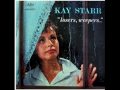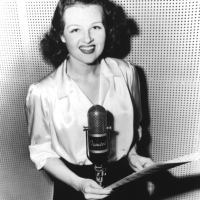
Kay Starr

Jazz
Vocal jazz
Mainstream Pop
 Viberate Rank: 49572
 Viberate Rank: 49572
 Monthly ListenersFollowers
 Subscribers
 Followers
 Followers
 FansTop Spotify Songs
| Track | 7-Day Streams | |
|---|---|---|
1 | 847.32K | |
2 | 42.56K | |
3 | 26.31K | |
4 | 21.72K | |
5 | 17.34K |
Top YouTube VideosMonthly ListenersFeatured in Playlists| Playlist | Followers | |
|---|---|---|
1 |  Christmas Classics Spotify | 3.70M |
2 |  POPULAR CHRISTMAS MUSIC 🎅🏻🎄🎁 HITS 2026 Clark Shipley | 1.33M |
3 |  World’s Best Christmas Playlist Henry Janzen | 1.27M |
4 |  Christmas Music & Holiday Hits universal.fm | 424.08K |
5 |  50s Love Songs Spotify | 320.26K |
Audience| City | Monthly Listeners | |
|---|---|---|
1 | | 15.36K |
2 | | 14.04K |
3 | | 11.58K |
4 | | 11.18K |
5 | | 10.44K |
See full performance history, audience data, playlist activity, rankings, comparisons, and more in Viberate music analytics. Start with a free trial, then continue with a paid plan.
Kay Starr’s Spotify BioA solid jazz singer whose early recordings tended to be forgotten after her ascendancy into the commercial sphere during the mid-'50s, Kay Starr was among the first pop singers to capitalize on the "rock fad" with her 1955 novelty "Rock and Roll Waltz." Her biggest hit came with the era-defining "Wheel of Fortune," a prime slice of '50s adult pop with a suitably brassy reading. Born in Oklahoma, she moved to Dallas at a young age and made her debut on radio while still in school. A brief stay with Glenn Miller & His Orchestra precipitated her working with groups led by Bob Crosby, Joe Venuti, and finally Charlie Barnet. She recorded a few numbers with Barnet that earned her a solo contract with Capitol.
By 1948, Starr made her Your Hit Parade breakthrough with "You Were Only Foolin' (While I Was Falling in Love)." Subsequent hits like "Hoop-Dee-Doo," "Oh, Babe!," and "I'll Never Be Free" (the latter with Tennessee Ernie Ford) framed her in an emerging vein of the popular market that… also looked back to traditional country and folk. In 1952, "Wheel of Fortune" became her biggest hit and one of the signature songs of the '50s pop sound. She struggled to reach a similar chart peak for several years afterwards, though "Comes A-Long A-Love" topped the British charts. With her move to RCA in 1955, the comical "Rock and Roll Waltz" spent several weeks at number one. It was her last major hit, followed by just one additional Top Ten entry, 1957's "My Heart Reminds Me." By the 1960s, she had begun to concentrate more on performing (especially in Las Vegas) than recording, despite moving back to Capitol in 1961. She subsequently played several oldies packages, including the 3 Girls 3 tour with Helen O'Connell and Margaret Whiting. Kay Starr died at her home in Los Angeles in November 2016; she was 94 years old. ~ John Bush, Rovi
Viberate is a music analytics platform built for A&Rs, artist managers, labels, booking agents, marketers, and artists.
It helps music professionals track artist growth, analyze audience data, monitor playlist activity, compare artists, follow song performance, and identify opportunities across the music market.
Public artist pages provide a free preview of selected artist data. Paid plans provide access to deeper analytics, historical data, charts, comparisons, playlist tools, exports, alerts, reports, and additional professional features.
Yes. Public Viberate artist pages provide selected artist analytics and music data for free.
Viberate also offers a 7-day free trial of the full platform. A credit card is required to start the trial. The trial includes access to the complete product so users can test deeper artist analytics, historical views, playlist insights, comparisons, charts, exports, alerts, and reporting features before choosing a paid plan.
Viberate provides artist analytics across streaming, playlists, social media, video, radio airplay, songs, and audience markets.
Users can analyze Spotify performance, Spotify and Apple Music playlists, YouTube activity, TikTok and Instagram growth, radio spins, song performance, audience locations, demographics, rankings, and overall artist momentum.
Artist profiles also connect to music charts, similar artists, and comparison tools, helping users benchmark performance and evaluate artists in context.
Viberate updates key artist and track data daily.
For followed artists and tracks, selected data is refreshed multiple times per day. This helps teams monitor playlist changes, streaming movement, audience growth, releases, and campaign performance with more current data.
Update frequency can vary depending on the metric and data source.
Yes. Viberate lets users compare up to five artists side by side across streaming, social media, audience, and engagement metrics.
Users can compare fanbase growth, audience demographics, locations, Spotify performance, social metrics, and other artist data over selected time periods.
Artist comparison can be used for A&R scouting, benchmarking, booking decisions, campaign planning, and evaluating artists with similar audiences or market positions.