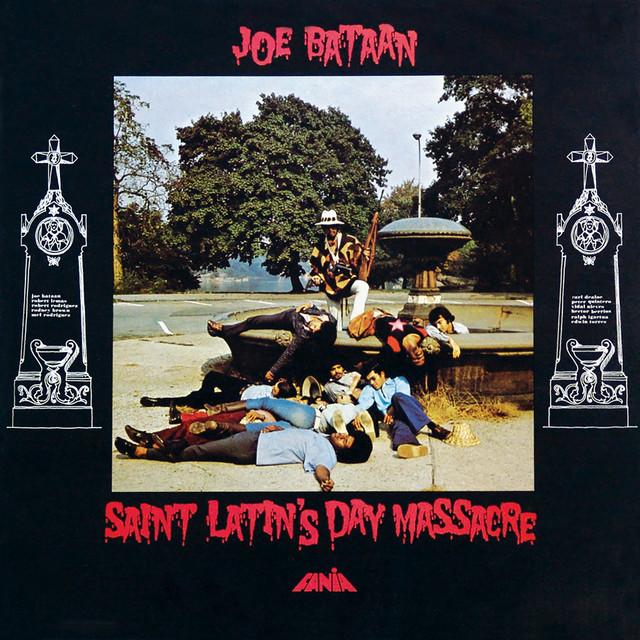
Joe Bataan

Latin
Salsa
Soul
 Viberate Rank: 51109
 Viberate Rank: 51109
 Monthly ListenersFollowers
 Subscribers
 Followers
 Followers
 FansTop Spotify Songs
| Track | 7-Day Streams | |
|---|---|---|
1 | 54.58K | |
2 | 28.17K | |
3 | 18.17K | |
4 | 17.35K | |
5 | 15.99K |
Top YouTube Videos| Video | 7-Day Views | |
|---|---|---|
1 | 7.14K | |
2 | 2.44K | |
3 | 2.22K | |
4 | 1.85K | |
5 | 1.46K |
Monthly ListenersFeatured in Playlists| Playlist | Followers | |
|---|---|---|
1 |  70s R&B/Soul - The Golden Era Raul Gabriel - Music | 159.65K |
2 |  Lowrider Crusin' Spotify | 144.17K |
3 |  Boogaloo Essentials Spotify | 107.38K |
4 | Lowrider oldies Pinchekodiak | 91.32K |
5 |  Best Low Rider Oldies🎭 truly | 82.65K |
Audience| City | Monthly Listeners | |
|---|---|---|
1 | | 18.49K |
2 | | 5.20K |
3 | | 4.88K |
4 | | 4.81K |
5 | | 4.31K |
See full performance history, audience data, playlist activity, rankings, comparisons, and more in Viberate music analytics. Start with a free trial, then continue with a paid plan.
Joe Bataan’s Spotify BioNo recording artist has more impeccable street credentials than Joe Bataan, the originator of the New York Latin soul style that paralleled Latin boogaloo and anticipated disco. His musical experience began with street corner doo wop in the 1950s, and came to include one of the first rap records to hit the charts, 1979's "Rap-O, Clap-O." In between these milestones, he recorded classic albums like Saint Latin's Day Massacre, a perennial favorite in the salsa market, Salsoul, which gave the record label its name and helped spark the national explosion of urban dance music, and Afrofilipino, which included one of the very earliest New York disco hits, an instrumental version of Gil Scott-Heron's "The Bottle."
Born Peter Nitollano, of African-American/Filipino parents, Joe Bataan grew up in Spanish Harlem, where he ran with Puerto Rican gangs and absorbed R&B, Afro-Cuban, and Afro-Rican musical influences. His music career followed a pair of stints in Coxsackie State Prison. Self-taught on… the piano, he organized his first band in 1965 and scored his first recording success in 1967 with "Gypsy Woman" on Fania Records. The tune was a hit with the New York Latin market despite its English lyrics sung by Bataan, and exemplified the nascent Latin soul sound. In early anticipation of the disco formula, "Gypsy Woman" created dance energy by alternating what was fundamentally a pop-soul tune with a break featuring double-timed handclaps. Bataan would take this tendency even further on his influential Salsoul, which fused funk and Latin influences in slick yet soulful orchestrations. Salsoul remains influential as a rare groove cult item, and pointed to the future at the time of its release. The LP embodied the artist's highly deliberate and culturally aware musical concept. Bataan theorized the '70s next big thing as a hybrid: an Afro Cuban rhythm section playing Brazilian influenced patterns over orchestral funk. In many ways, his vision was on the money, though most of the money would go to others and mainstream stardom would elude him. He did, however, get in on the ground floor of the new trend as an early hitmaker. His biggest commercial move was a Salsoul production released under the Epic umbrella, and promoted to the new disco market as Afrofilipino, which included 1975's "The Bottle," a much-anthologized classic that drives an R&B horn arrangement with a relentless piano montuno.
Always in touch with the street, Joe Bataan picked up on rap very early in the game. His minor rap hit, "Rap-O, Clap-O" was a bit more successful in Europe than in the States, and is remembered as rap's debut in the European market. Nevertheless, his legacy remains his gritty and realistic Latin soul lyrics, his self-identification as an "Ordinary Guy", and his highly personal and prophetic merger of Latin and soul influences. ~ Richard Pierson, Rovi
Viberate is a music analytics platform built for A&Rs, artist managers, labels, booking agents, marketers, and artists.
It helps music professionals track artist growth, analyze audience data, monitor playlist activity, compare artists, follow song performance, and identify opportunities across the music market.
Public artist pages provide a free preview of selected artist data. Paid plans provide access to deeper analytics, historical data, charts, comparisons, playlist tools, exports, alerts, reports, and additional professional features.
Yes. Public Viberate artist pages provide selected artist analytics and music data for free.
Viberate also offers a 7-day free trial of the full platform. A credit card is required to start the trial. The trial includes access to the complete product so users can test deeper artist analytics, historical views, playlist insights, comparisons, charts, exports, alerts, and reporting features before choosing a paid plan.
Viberate provides artist analytics across streaming, playlists, social media, video, radio airplay, songs, and audience markets.
Users can analyze Spotify performance, Spotify and Apple Music playlists, YouTube activity, TikTok and Instagram growth, radio spins, song performance, audience locations, demographics, rankings, and overall artist momentum.
Artist profiles also connect to music charts, similar artists, and comparison tools, helping users benchmark performance and evaluate artists in context.
Viberate updates key artist and track data daily.
For followed artists and tracks, selected data is refreshed multiple times per day. This helps teams monitor playlist changes, streaming movement, audience growth, releases, and campaign performance with more current data.
Update frequency can vary depending on the metric and data source.
Yes. Viberate lets users compare up to five artists side by side across streaming, social media, audience, and engagement metrics.
Users can compare fanbase growth, audience demographics, locations, Spotify performance, social metrics, and other artist data over selected time periods.
Artist comparison can be used for A&R scouting, benchmarking, booking decisions, campaign planning, and evaluating artists with similar audiences or market positions.