Honey Bane

Punk
Pop Punk
Punk Rock
 Viberate Rank: 295672
 Viberate Rank: 295672
 Monthly ListenersFollowers
 Subscribers
 Followers
 Followers
 FansTop Spotify Songs
| Track | 7-Day Streams | |
|---|---|---|
1 | 413 | |
2 | 116 | |
3 | 68 | |
4 | 51 | |
5 | 48 |
Top YouTube VideosMonthly ListenersFeatured in Playlists| Playlist | Followers | |
|---|---|---|
1 |  Découvertes du mois Audrey Becaert | 4.99K |
2 |  Sub Pop Takeover: Twisted Teens Sub Pop | 4.22K |
3 |  lesbian rock, grunge, and punk Daydreambeliever | 3.86K |
4 | 1980's - Every Song In The UK Top 40 (Jan 1st 1980 - Dec 31st 1989) Chris Bonner UK | 2.92K |
5 |  Office Space Efficient Space | 2.88K |
Audience| City | Monthly Listeners | |
|---|---|---|
1 | | 70 |
2 |  | 54 |
3 | | 29 |
4 | | 25 |
5 | | 22 |
See full performance history, audience data, playlist activity, rankings, comparisons, and more in Viberate music analytics. Start with a free trial, then continue with a paid plan.
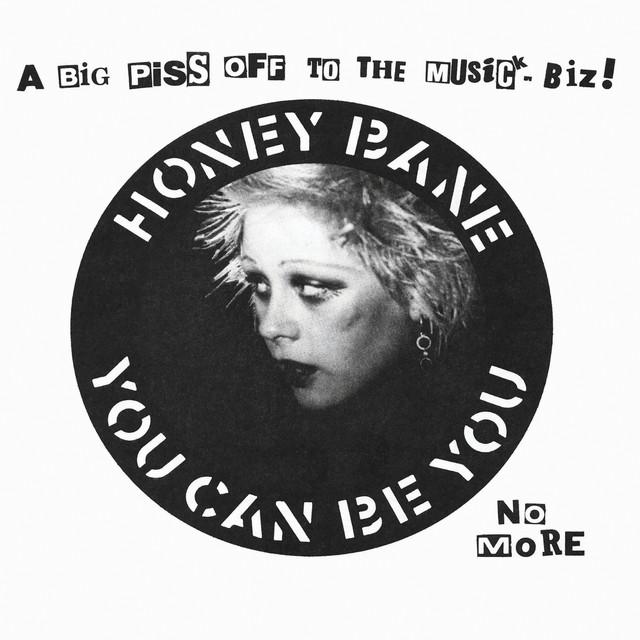
Honey Bane’s Spotify Biob. Donna Tracy, England. Honey Bane was previously the young singer in the Fatal Microbes, who released an EP, Violence Grows, and shared a 12-inch single release with the Poison Girls. She started her solo career in 1979 after escaping from a reform centre where she had been admitted for alcohol abuse. ‘You Can Be You’, on the Crass label, was recorded in a single day. Her backing band was the Kebabs, actually a pseudonym for Crass, although the three ‘anarcho-punk’ songs still retained the spirit of Fatal Microbes. It was almost a year before the follow-up, ‘Guilty’, was released on Honey’s own label, and it stirred up enough interest to secure a contract with EMI Records subsidiary Zonophone. With the help of Peter Godwin from Metro and Jimmy Pursey from Sham 69, they tried to manufacture a pop star. In January 1981 ‘Turn Me On, Turn Me Off’ peaked at number 37. Her provocative ‘naughty girl’ image had short-lived appeal and after one further glimpse at the charts with a cover… version of the Supremes’ ‘Baby Love’, her popularity saw a rapid decline. Successive singles ‘Jimmy... (Listen To Me)’, ‘Wish I Could Be Me’ and ‘Dizzy Dreamers’ passed unnoticed, prompting Honey to concentrate on her acting career.
Viberate is a music analytics platform built for A&Rs, artist managers, labels, booking agents, marketers, and artists.
It helps music professionals track artist growth, analyze audience data, monitor playlist activity, compare artists, follow song performance, and identify opportunities across the music market.
Public artist pages provide a free preview of selected artist data. Paid plans provide access to deeper analytics, historical data, charts, comparisons, playlist tools, exports, alerts, reports, and additional professional features.
Yes. Public Viberate artist pages provide selected artist analytics and music data for free.
Viberate also offers a 7-day free trial of the full platform. A credit card is required to start the trial. The trial includes access to the complete product so users can test deeper artist analytics, historical views, playlist insights, comparisons, charts, exports, alerts, and reporting features before choosing a paid plan.
Viberate provides artist analytics across streaming, playlists, social media, video, radio airplay, songs, and audience markets.
Users can analyze Spotify performance, Spotify and Apple Music playlists, YouTube activity, TikTok and Instagram growth, radio spins, song performance, audience locations, demographics, rankings, and overall artist momentum.
Artist profiles also connect to music charts, similar artists, and comparison tools, helping users benchmark performance and evaluate artists in context.
Viberate updates key artist and track data daily.
For followed artists and tracks, selected data is refreshed multiple times per day. This helps teams monitor playlist changes, streaming movement, audience growth, releases, and campaign performance with more current data.
Update frequency can vary depending on the metric and data source.
Yes. Viberate lets users compare up to five artists side by side across streaming, social media, audience, and engagement metrics.
Users can compare fanbase growth, audience demographics, locations, Spotify performance, social metrics, and other artist data over selected time periods.
Artist comparison can be used for A&R scouting, benchmarking, booking decisions, campaign planning, and evaluating artists with similar audiences or market positions.