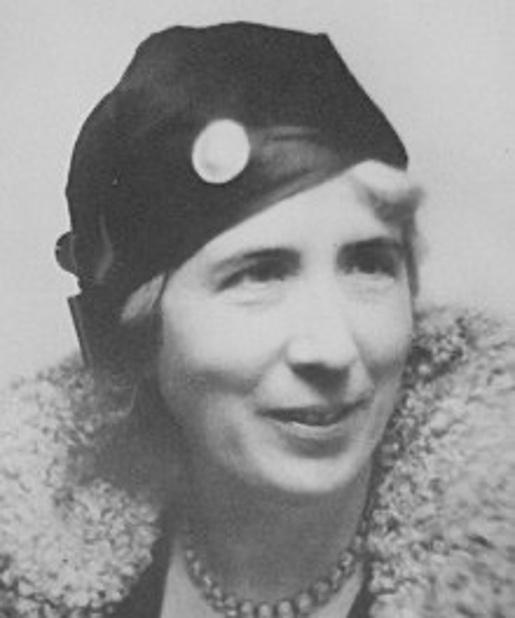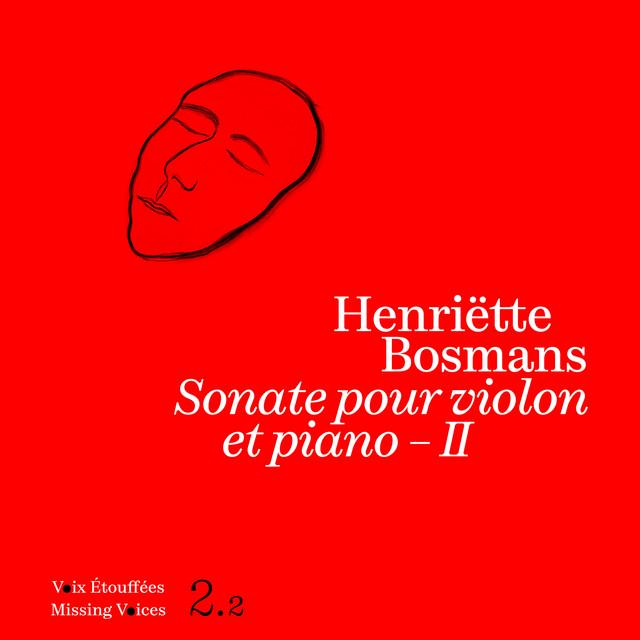
Henriëtte Bosmans

Classical
Classical Crossover
 Viberate Rank: 605421
 Viberate Rank: 605421
 Monthly ListenersFollowers
 Subscribers
 Followers
 Followers
 FansTop Spotify SongsTop YouTube VideosMonthly ListenersFeatured in Playlists
| Playlist | Followers | |
|---|---|---|
1 |  Klassieke Top 400 (2026) | NPO Klassiek NPO Klassiek | 24.19K |
2 | Music for Writing Hans-Peter Akkerman | 5.84K |
3 |  Kalm met Klassiek NPO Klassiek | 4.96K |
4 |  Chamber Music for Self-Renewal synergy555 | 4.21K |
5 |  365 Days of Music by Women Chords & Queens | 2.42K |
Audience| City | Monthly Listeners | |
|---|---|---|
1 |  | 460 |
2 | | 155 |
3 |  | 119 |
4 |  | 110 |
5 |  | 108 |
See full performance history, audience data, playlist activity, rankings, comparisons, and more in Viberate music analytics. Start with a free trial, then continue with a paid plan.
Henriëtte Bosmans’ Spotify BioHenriëtte Bosmans was a Dutch pianist and composer of the early 20th century known for her songs, chamber music, and concertos. Her style initially utilized the aesthetics of the romantic era, and her later modern style embraced polytonality, the colorful harmonies of impressionism, and unexpected metric modulations. She was born in Amsterdam in 1895 and both of her parents were prominent musicians. Her mother, Sara Bosmans-Benedicts, was a piano professor at the Amsterdam Conservatory, and her father Henri was principal cellist of the Concertgebouw Orchestra, but he passed away when she was nine months old. Bosmans began studying piano with her mother when she was very young, and she was likely in contact with other musicians in her mother’s circle. She became very interested in composing in her teens and studied with Jan Willem Kersbergen. After she finished her schooling, she attended the Maatschappij tot Bevordering der Toonkunst in Utrecht and earned her piano teaching certificate… in 1912. She taught and performed, and she composed keyboard and chamber music beginning in 1914. Her Violin Sonata from 1918 was premiered in 1919, and she quickly became very well known as both a composer and a performer. She studied instrumentation with Cornelis Dopper from 1921 to 1922, which led to more expansive works like the Cello Concerto No. 1 and Poème for cello and orchestra. Her Cello Concerto No. 2 from 1923 was dedicated to her partner, cellist Frieda Belinfante, and they also performed together in the Amsterdamsch Trio with flutist Johan Feltkamp. After she studied composition with the Dutch composer Willem Pijper in the late 1920s, her style became less romantic and more modern. Her Concertino for Piano from 1928 reflects these stylistic developments, and it was chosen for the 1929 Festival of the International Society for Contemporary Music in Geneva, with Bosmans as the piano soloist. In 1935, her fiancé, violinist Francis Koene unexpectedly passed away just months after they announced their engagement. They were unable to get married, and the piece that she composed for Koene, Concert Piece for violin and orchestra, was premiered by Louis Zimmerman in 1935. Her grief at the loss of Koene, combined with the stifling pressure from Nazi forces, drove her to temporarily stop composing. Although her music was banned from being performed by the Nazis because she was half-Jewish, Bosmans supported herself during this time with private performances. She resumed composing in 1946, and in 1948 she became acquainted with mezzo-soprano Noémie Perugia and they became very close. Their relationship inspired Bosmans to compose several songs, and they frequently performed together. However, it was also around this time that she began suffering from stomach cancer, which was initially misdiagnosed as ulcers. In 1951, she was appointed a knight in the Dutch Order of Orange-Nassau, but by this time her cancer had progressed, and she was unable to perform or compose. Bosmans passed away in 1952 and was buried at the Zorgvlied Cemetery in Amsterdam. Her music has seen a revival since the 2010s, and has been recorded by artists such as Doris Hochscheid and Mayke Rademakers, and it was featured on the 2023 albums Femmes and This Island. ~ RJ Lambert, Rovi
Viberate is a music analytics platform built for A&Rs, artist managers, labels, booking agents, marketers, and artists.
It helps music professionals track artist growth, analyze audience data, monitor playlist activity, compare artists, follow song performance, and identify opportunities across the music market.
Public artist pages provide a free preview of selected artist data. Paid plans provide access to deeper analytics, historical data, charts, comparisons, playlist tools, exports, alerts, reports, and additional professional features.
Yes. Public Viberate artist pages provide selected artist analytics and music data for free.
Viberate also offers a 7-day free trial of the full platform. A credit card is required to start the trial. The trial includes access to the complete product so users can test deeper artist analytics, historical views, playlist insights, comparisons, charts, exports, alerts, and reporting features before choosing a paid plan.
Viberate provides artist analytics across streaming, playlists, social media, video, radio airplay, songs, and audience markets.
Users can analyze Spotify performance, Spotify and Apple Music playlists, YouTube activity, TikTok and Instagram growth, radio spins, song performance, audience locations, demographics, rankings, and overall artist momentum.
Artist profiles also connect to music charts, similar artists, and comparison tools, helping users benchmark performance and evaluate artists in context.
Viberate updates key artist and track data daily.
For followed artists and tracks, selected data is refreshed multiple times per day. This helps teams monitor playlist changes, streaming movement, audience growth, releases, and campaign performance with more current data.
Update frequency can vary depending on the metric and data source.
Yes. Viberate lets users compare up to five artists side by side across streaming, social media, audience, and engagement metrics.
Users can compare fanbase growth, audience demographics, locations, Spotify performance, social metrics, and other artist data over selected time periods.
Artist comparison can be used for A&R scouting, benchmarking, booking decisions, campaign planning, and evaluating artists with similar audiences or market positions.