Gerry Mulligan

Jazz
Bebop
Smooth Jazz
Jazz Fusion
 Viberate Rank: 42443
 Viberate Rank: 42443
 Monthly ListenersFollowers
 Subscribers
 Followers
 Followers
 FansTop Spotify Songs
| Track | 7-Day Streams | |
|---|---|---|
1 | 60.48K | |
2 | 44.37K | |
3 | 39.37K | |
4 | 34.30K | |
5 | 32.40K |
Top YouTube VideosMonthly ListenersFeatured in Playlists| Playlist | Followers | |
|---|---|---|
1 |  Jazz Classics Spotify | 5.08M |
2 |  Feel Good Jazz Spotify | 549.36K |
3 |  Jazzy Dinner Spotify | 417.94K |
4 |  Soft Jazz Spotify | 359.13K |
5 |  Jazz Noir Spotify | 349.57K |
Audience| City | Monthly Listeners | |
|---|---|---|
1 | | 7.98K |
2 |  | 6.44K |
3 | | 6.32K |
4 |  | 5.55K |
5 | | 5.24K |
See full performance history, audience data, playlist activity, rankings, comparisons, and more in Viberate music analytics. Start with a free trial, then continue with a paid plan.
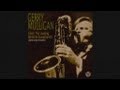
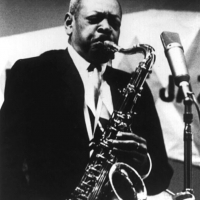
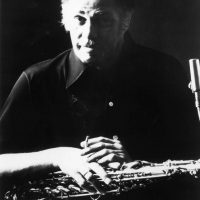
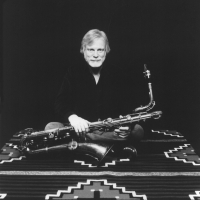
Gerry Mulligan’s Spotify BioThe most famous and probably greatest jazz baritonist of all time, Gerry Mulligan was a giant. A flexible soloist who was always ready to jam with anyone from Dixielanders to the most advanced boppers, Mulligan brought a somewhat revolutionary light sound to his potentially awkward and brutal horn and played with the speed and dexterity of an altoist.
Mulligan started on the piano before learning clarinet and the various saxophones. His initial reputation was as an arranger. In 1944 he wrote charts for Johnny Warrington's radio band and soon was making contributions to the books of Tommy Tucker and George Paxton. He moved to New York in 1946 and joined Gene Krupa's Orchestra as a staff arranger; his most notable chart was "Disc Jockey Jump." The rare times he played with Krupa's band was on alto and the same situation existed when he was with Claude Thornhill in 1948.
Gerry Mulligan's first notable recorded work on baritone was with Miles Davis' Birth of the Cool nonet (1948-50) but once… again his arrangements ("Godchild," "Darn That Dream" and three of his originals "Jeru," "Rocker" and "Venus de Milo") were more significant than his short solos. Mulligan spent much of 1949 writing for Elliot Lawrence's orchestra and playing anonymously in the saxophone section. It was not until 1951 that he began to get a bit of attention for his work on baritone. Mulligan recorded with his own nonet for Prestige, displaying an already recognizable sound. After he traveled to Los Angeles, he wrote some arrangements for Stan Kenton (including "Youngblood," "Swing House" and "Walking Shoes"), worked at the Lighthouse and then gained a regular Monday night engagement at the Haig. Around this time Mulligan realized that he enjoyed the extra freedom of soloing without a pianist. He jammed with trumpeter Chet Baker and soon their magical rapport was featured in his piano-less quartet. The group caught on quickly in 1952 and made both Mulligan and Baker into stars.
A drug bust put Mulligan out of action and ended that quartet but, when he was released from jail in 1954, Mulligan began a new musical partnership with valve trombonist Bob Brookmeyer that was just as successful. Trumpeter Jon Eardley and Zoot Sims on tenor occasionally made the group a sextet and in 1958 trumpeter Art Farmer was featured in Mulligan's Quartet. Being a very flexible player with respect for other stylists, Mulligan went out of his way to record with some of the great musicians he admired. At the 1958 Newport Jazz Festival he traded off with baritonist Harry Carney on "Prima Bara Dubla" while backed by the Duke Ellington Orchestra, and during 1957-60 he recorded separate albums with Thelonious Monk, Paul Desmond, Stan Getz, Ben Webster and Johnny Hodges. Mulligan played on the classic Sound of Jazz television special in 1958 and appeared in the movies I Want to Live and The Subterraneans.
During 1960-64 Mulligan led his Concert Jazz Band which gave him an opportunity to write, play baritone and occasionally double on piano. The orchestra at times included Brookmeyer, Sims, Clark Terry and Mel Lewis. Mulligan was a little less active after the big band broke up but he toured extensively with the Dave Brubeck Quartet (1968-72), had a part-time big band in the 1970s (the Age of Steam), doubled on soprano for a period, led a mid-'70s sextet that included vibraphonist Dave Samuels, and in 1986 jammed on a record with Scott Hamilton. In the 1990s he toured the world with his excellent "no-name" quartet and led a "Rebirth of the Cool Band" that performed and recorded remakes of the Miles Davis Nonet classics. Up until the end, Gerry Mulligan was always eager to play.
Among Mulligan's compositions were "Walkin' Shoes," "Line for Lyons," "Bark for Barksdale," "Nights at the Turntable," "Utter Chaos," "Soft Shoe," "Blueport," "Song for Strayhorn," "Song for an Unfinished Woman" and "I Never Was a Young Man" (which he often sang). He recorded extensively through the years for such labels as Prestige, Pacific Jazz, Capitol, Vogue, EmArcy, Columbia, Verve, Milestone, United Artists, Philips, Limelight, A&M, CTI, Chiaroscuro, Who's Who, DRG, Concord and GRP. ~ Scott Yanow, Rovi
Viberate is a music analytics platform built for A&Rs, artist managers, labels, booking agents, marketers, and artists.
It helps music professionals track artist growth, analyze audience data, monitor playlist activity, compare artists, follow song performance, and identify opportunities across the music market.
Public artist pages provide a free preview of selected artist data. Paid plans provide access to deeper analytics, historical data, charts, comparisons, playlist tools, exports, alerts, reports, and additional professional features.
Yes. Public Viberate artist pages provide selected artist analytics and music data for free.
Viberate also offers a 7-day free trial of the full platform. A credit card is required to start the trial. The trial includes access to the complete product so users can test deeper artist analytics, historical views, playlist insights, comparisons, charts, exports, alerts, and reporting features before choosing a paid plan.
Viberate provides artist analytics across streaming, playlists, social media, video, radio airplay, songs, and audience markets.
Users can analyze Spotify performance, Spotify and Apple Music playlists, YouTube activity, TikTok and Instagram growth, radio spins, song performance, audience locations, demographics, rankings, and overall artist momentum.
Artist profiles also connect to music charts, similar artists, and comparison tools, helping users benchmark performance and evaluate artists in context.
Viberate updates key artist and track data daily.
For followed artists and tracks, selected data is refreshed multiple times per day. This helps teams monitor playlist changes, streaming movement, audience growth, releases, and campaign performance with more current data.
Update frequency can vary depending on the metric and data source.
Yes. Viberate lets users compare up to five artists side by side across streaming, social media, audience, and engagement metrics.
Users can compare fanbase growth, audience demographics, locations, Spotify performance, social metrics, and other artist data over selected time periods.
Artist comparison can be used for A&R scouting, benchmarking, booking decisions, campaign planning, and evaluating artists with similar audiences or market positions.