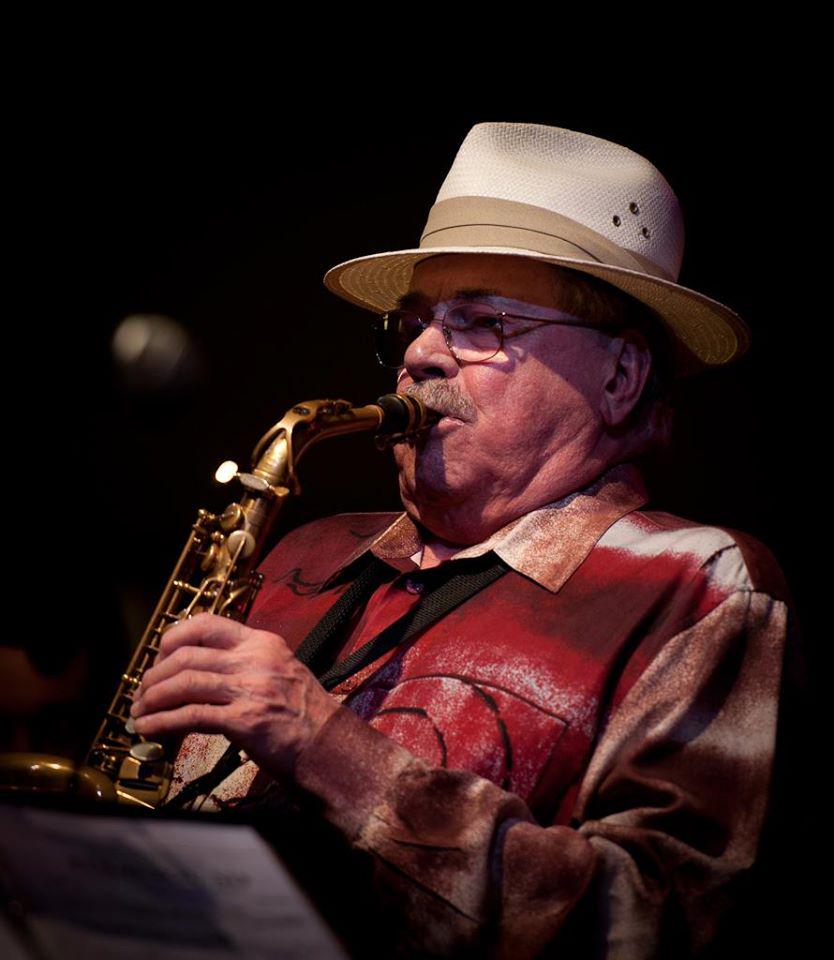
Lee Konitz

Jazz
Smooth Jazz
Bebop
Avant-garde Jazz
 Viberate Rank: 69000
 Viberate Rank: 69000
 Monthly ListenersFollowers
 Subscribers
 Followers
 Followers
 FansTop Spotify Songs
| Track | 7-Day Streams | |
|---|---|---|
1 | 57.32K | |
2 | 36.40K | |
3 | 18.55K | |
4 | 15.54K | |
5 | 13.86K |
Top YouTube VideosMonthly ListenersFeatured in Playlists| Playlist | Followers | |
|---|---|---|
1 |  Jazz Classics Spotify | 5.08M |
2 |  Dark Academia Jazz Spotify | 282.77K |
3 |  Instrumental Jazz Standards Spotify | 184.09K |
4 |  Just Jazz Spotify | 173.61K |
5 |  Cool Jazz Spotify | 163.13K |
Audience| City | Monthly Listeners | |
|---|---|---|
1 | | 5.04K |
2 | | 3.68K |
3 | | 3.32K |
4 |  | 3.18K |
5 | | 2.98K |
See full performance history, audience data, playlist activity, rankings, comparisons, and more in Viberate music analytics. Start with a free trial, then continue with a paid plan.
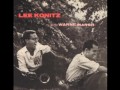
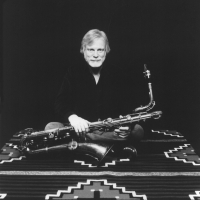
Lee Konitz’s Spotify BioOver the course of an epic 70-plus-year career, alto saxophonist Lee Konitz's distinctively clean tone and unpretentious harmonies made him a massively influential figure in progressive modern jazz. A protege of pianist Lennie Tristano, Konitz first emerged as a player in the '40s, building upon his main influences like saxophonists Lester Young and Charlie Parker while ably avoiding direct comparisons to either. Along with early work in Stan Kenton's band, he was an original member of Miles Davis' seminal nonet, helping lay the groundwork for the cool jazz sound of the '50s. Conversely, his recordings alongside Tristano are often cited as a precursor to the free jazz movement of the '60s. His own albums, like 1950's Subconscious-Lee, 1957's Tranquility, and 1967's The Lee Konitz Duets showcase his intuitive lyricism and artfully sculptural approach to harmony. Beginning in the '70s, Konitz began a longtime association with Woodstock, New York's Creative Music Studio, during which time… he recorded many more distinctive albums exploring both standards and his own unique original material. Konitz was at times even more appreciated in Europe than in the U.S., living and working there for substantial periods beginning in the late '60s. Nonetheless, he was celebrated by his peers on both continents, earning a 1992 Danish Jazzpar Prize and a 2009 NEA Jazz Masters Fellowship. Active well into his eighties, he continued to push himself stylistically, exploring French impressionist music alongside the Axis String Quartet and collaborating on big-band and chamber group projects with saxophonist Ohad Talmor. He also led a number of inventive small group dates for albums like 2011's Live at Birdland with bassist Charlie Haden, pianist Brad Mehldau, and drummer Paul Motian, 2017's Frescalalto with pianist Kenny Barron, and 2018's intimate duo album Decade with pianist Dan Tepfer.
Born in 1927 in Chicago, Leon Konitz grew up the youngest of three brothers in a Jewish immigrant family with an Austrian father and Russian mother. His parents ran a dry-cleaning business and encouraged their children to play music. Inspired by hearing Benny Goodman on the radio, he asked for a clarinet, which he started playing around age 11. Influenced by his love of jazz and the swinging dance bands of the '30s and '40s, he eventually switched first to tenor, then to alto saxophone as a teenager. He taught himself to improvise and left high school early to replace Charlie Ventura in Teddy Powell's band. He also spent time playing with Jerry Wald's group before moving to New York City.
In 1943, he began studying with pianist Lennie Tristano. An inventive, theoretically minded player, Tristano introduced Konitz to his varied musical ideas, including his use of strong, swinging eighth note and triplet lines, complex notions of contrapuntalism, and rich harmonic and motivic devices. Under Tristano's guidance, Konitz greatly expanded his approach to improvisation, ably balancing the influence of players like Lester Young and Charlie Parker with Tristano's pedagogic ideas. It was a combination that helped him avoid becoming a mimic, and one which led to his own highly individualistic sound and approach to improvisation. He and Tristano worked as a duo playing local cocktail bars; they also formed a sextet with the equally forward-leaning tenor player Warne Marsh. Together in 1949, they recorded the tracks "Intuition" and "Digression," which are often cited as two of the first "free improvisations" ever documented. It was alongside Tristano and Marsh that Konitz made his debut as leader on 1950's Subconscious-Lee for the Prestige label, which also featured pianist Sal Mosca, guitarist Billy Bauer, and bassist Arnold Fishkin.
Around the same time, Konitz was playing with Claude Thornhill's Orchestra, where he befriended baritone saxophonist Gerry Mulligan and arranger Gil Evans. Evans began holding informal jam sessions in his basement Manhattan apartment which drew the attention of trumpeter Miles Davis, who was looking for a different musical project after leaving Charlie Parker's quintet. By 1948, Konitz had joined Davis' Nonet, an innovative ensemble marked by Mulligan, Evans, and pianist John Lewis' harmonically sophisticated arrangements. He appeared on Davis' 1951 album Conception, and gained even more recognition after the nonet sessions were compiled on Davis' landmark 1957 album Birth of the Cool.
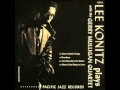
By the early '50s, Konitz had already begun to gain more notice for his distinctive sound. He toured Scandinavia -- where his laid-back and probing style found a welcoming audience -- further cementing the influence of cool jazz on European players. He also joined the Stan Kenton Orchestra, appearing on a number of the bandleader's albums during the decade. Konitz followed his debut with a 1953 co-session alongside Gerry Mulligan for Pacific Jazz. More albums followed, including 1954's Konitz, 1955's Lee Konitz with Warne Marsh, 1956's Inside Hi-Fi, and 1958's Very Cool. He also appeared on Tristano's groundbreaking (and at the time somewhat controversial) 1956 live album Tristano, in which the pianist utilized innovative piano overdubs. He also joined the equally progressive baritone saxophonist Jimmy Giuffre for 1959's Lee Konitz Meets Jimmy Giuffre. Giuffre also supplied arrangements for Konitz's 1960 brass and rhythm section date You and Lee, which featured contributions from pianist Bill Evans and guitarist Jim Hall.
In 1961, Konitz joined John Coltrane drummer Elvin Jones and bassist Sonny Dallas for Motion on Verve. Although essentially a standards session, the album found him playing in a loose, ad hoc style, barely hinting at melodies and often pushing the song form and harmony in inventive directions that edged toward free jazz. The following year, he moved to California where he began having difficulty finding gigs. Rock & Roll had usurped jazz in popular culture and jazz clubs were beginning to close. At the same time, jazz was evolving, propelled by the aggressive avant-garde work of players like Coltrane, Ornette Coleman, Albert Ayler, and others. Nonetheless, Konitz persisted, returning to New York in 1964 and eventually re-emerging with an even more broadminded approach to his own recordings. In 1967, he released Duets on Milestone, a stylistically varied production running from New Orleans jazz to cool tracks to more avant-garde songs, and featuring collaborations with Joe Henderson, Jim Hall, Eddie Gomez, Elvin Jones, Marshall Brown, and others. It was also in the late '60s that Konitz moved to Germany with his wife. There, he continued to work regularly, joining fellow saxophonists Pony Poindexter, Phil Woods, and Leo Wright for the adventurous Alto Summit in 1968. Also that year, he paired with French pianist Martial Solal for Impressive Rome and joined Italian trumpeter Enrico Rava for Stereokonitz.
By the early '70s, Konitz had moved back to Manhattan, where he began playing several nights a week at clubs like Strykers and Gregory's. He also appeared at workshops in Woodstock at the Creative Music Studio. His recorded output flourished as he released a number of albums on smaller labels, including SteepleChase, Philology, Soul Note, and others. 1973's Altissimo found him collaborating with saxophonists Gary Bartz, Jackie McLean, and Charlie Mariano. He also led a quartet for 1975's Satori, playing with Martial Solal, Jack DeJohnette, and Dave Holland. That same year, he released the solo saxophone album Lone-Lee. There was a live album with Chet Baker, a Cole Porter tribute album with Red Mitchell, and a duet session with Hal Galper. Konitz even reconnected with his fellow Lennie Tristano alum Warne Marsh for a series of albums on Storyville and played on highly regarded albums alongside luminaries like Paul Bley, John Scofield, and Shelly Manne.
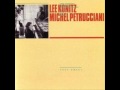
The '80s proved a fruitful period for Konitz, who continued to perform and tour often. In 1981, he appeared at the Woodstock Jazz Festival, held in celebration of the tenth anniversary of the Creative Music Studio. He continued playing in Europe, working often with bassist Martial Solal and pianist Michel Petrucciani. In 1983, he played in an octet with Swedish pianist Lars Sjösten for Dedicated to Lee, a tribute album to the late baritonist Lars Gullin. Konitz also built a lasting partnership with pianist Harold Danko, recording a mix of duo and small group albums, including 1984's Dovetail, 1986's Ideal Scene, and 1987's The New York Album. By the end of the decade, Konitz was expanding his approach, sometimes playing soprano saxophone.
In 1992, in appreciation of his deep influence on the European jazz scene, Konitz received the Danish Jazzpar prize. He continued to push himself creatively, working in a bevy of cross-pollinated settings, from orchestral ensembles to free improvisations. Still, standards and acoustic modern jazz remained a focus, as on 1992's Jazz Nocturne with pianist Kenny Barron, bassist James Genus, and drummer Kenny Washington. 1995's Haiku was an understated and textural quintet session with drummer Jerry Granelli, pianist Andreas Schmidt, bass clarinetist Rudi Mahall, and vocalist Sayumi Yoshida. Konitz appeared on trumpeter Kenny Wheeler's elegiac 1996 ECM album Angel Song with guitarist Bill Frisell and bassist Dave Holland. A year later, he made his Blue Note debut with Alone Together, an all-star trio album featuring bassist Charlie Haden and pianist Brad Mehldau. The trio returned for a second trio outing with 1999's Another Shade of Blue. Konitz investigated classical music alongside the Axis String Quartet with 2000's French Impressionist Music from the Turn of the Twentieth Century. There were also compelling dates with Paul Motian, Steve Swallow, John Abercrombie, Marc Johnson, and others. The Mark Masters Ensemble joined him for 2004's One Day with Lee, and in 2007 he recorded Portology with the Ohad Talmor Big Band.
In 2009, Konitz was honored with the NEA Jazz Masters Fellowship, one of the United States highest jazz awards given in recognition of his long and influential career. The following year, he released the concert album Live at the Village Vanguard. In 2011, he released the trio album Knowinglee, featuring saxophonist Dave Liebman, and pianist Richie Beirach. He also appeared on the live ECM date Live at Birdland with pianist Brad Mehldau, bassist Charlie Haden, and drummer Paul Motian. That same year, he was joined by drummer Joey Baron, guitarist Bill Frisell, and bassist Gary Peacock for Enfants Terribles: Live at the Blue Note. Three years later, he joined Dan Tepfer, Michael Janisch, and Jeff Williams for First Meeting: Live in London, Vol. 1. The quartet date Frescalalto arrived in 2017 and featured the saxophonist alongside pianist Kenny Barron, bassist Peter Washington, and drummer Kenny Washington. In 2019, Konitz rejoined saxophonist/arranger Ohad Talmor for Old Songs New, a nonet recording focusing on beloved, yet infrequently recorded standards. Konitz died on April 15, 2020 due to complications from the COVID-19 virus; he was 92 years old. ~ Matt Collar, Rovi
Viberate is a music analytics platform built for A&Rs, artist managers, labels, booking agents, marketers, and artists.
It helps music professionals track artist growth, analyze audience data, monitor playlist activity, compare artists, follow song performance, and identify opportunities across the music market.
Public artist pages provide a free preview of selected artist data. Paid plans provide access to deeper analytics, historical data, charts, comparisons, playlist tools, exports, alerts, reports, and additional professional features.
Yes. Public Viberate artist pages provide selected artist analytics and music data for free.
Viberate also offers a 7-day free trial of the full platform. A credit card is required to start the trial. The trial includes access to the complete product so users can test deeper artist analytics, historical views, playlist insights, comparisons, charts, exports, alerts, and reporting features before choosing a paid plan.
Viberate provides artist analytics across streaming, playlists, social media, video, radio airplay, songs, and audience markets.
Users can analyze Spotify performance, Spotify and Apple Music playlists, YouTube activity, TikTok and Instagram growth, radio spins, song performance, audience locations, demographics, rankings, and overall artist momentum.
Artist profiles also connect to music charts, similar artists, and comparison tools, helping users benchmark performance and evaluate artists in context.
Viberate updates key artist and track data daily.
For followed artists and tracks, selected data is refreshed multiple times per day. This helps teams monitor playlist changes, streaming movement, audience growth, releases, and campaign performance with more current data.
Update frequency can vary depending on the metric and data source.
Yes. Viberate lets users compare up to five artists side by side across streaming, social media, audience, and engagement metrics.
Users can compare fanbase growth, audience demographics, locations, Spotify performance, social metrics, and other artist data over selected time periods.
Artist comparison can be used for A&R scouting, benchmarking, booking decisions, campaign planning, and evaluating artists with similar audiences or market positions.