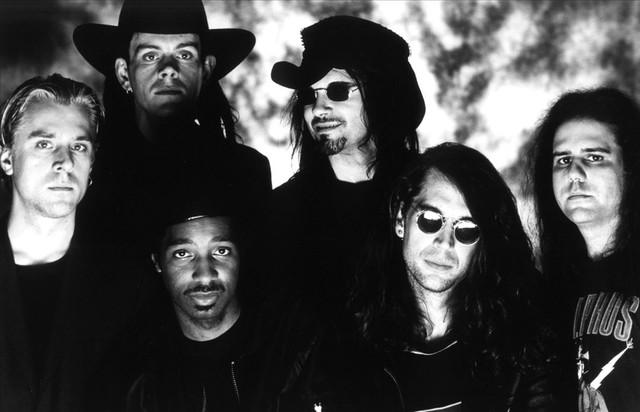
Foetus

Rock
Alternative Rock
Other Electronic Music
 Viberate Rank: 140399
 Viberate Rank: 140399
 Monthly ListenersFollowers
 Subscribers
 Followers
 Followers
 FansTop Spotify Songs
| Track | 7-Day Streams | |
|---|---|---|
1 | 993 | |
2 | 898 | |
3 | 646 | |
4 | 480 | |
5 | 444 |
Top YouTube Videos| Video | 7-Day Views | |
|---|---|---|
1 | 401 |
Monthly ListenersFeatured in Playlists| Playlist | Followers | |
|---|---|---|
1 |  DIGITAL HARDCORE!!!!!!!!! nikalz | 9.42K |
2 |  songs to eat glass to Machine Girl | 8.89K |
3 |  Vernon Subutex Jim Birmant | 8.28K |
4 |  Off Your Face anton newcombe | 5.86K |
5 |  80's NEW WAVE : Dark gothic / sinth pop / post punk / new romantic Edoardo Gramigna | 5.58K |
Audience| City | Monthly Listeners | |
|---|---|---|
1 |  | 94 |
2 | | 89 |
3 | | 68 |
4 | | 59 |
5 |  | 51 |
See full performance history, audience data, playlist activity, rankings, comparisons, and more in Viberate music analytics. Start with a free trial, then continue with a paid plan.
Foetus’ Spotify BioDespite the constant shifts in name (from Scraping Foetus Off the Wheel to Foetus Über Frisco to Foetus All-Nude Revue) and the less frequent variations in aesthetics (all focused around the same unforgiving sonic attack), the music manufactured under the prolific Foetus umbrella is solely the product of one J.G. (Jim) Thirlwell.
A native of Melbourne, Australia, Thirlwell relocated to London in 1978, where he conceived the basic Foetus concept -- impenetrable panoramas of extremist noise built on tape loops and syncopated rhythms -- as an alternative to the constraints of rock music. Finding no takers for his work, Thirlwell created his own label, Self-Immolation, to issue his debut single, "O.K.F.M.," which appeared under the first of the innumerable variants of the Foetus name, Foetus Under Glass. As You've Got Foetus on Your Breath, he released his full-length debut, Deaf, later that year. Thirlwell spent the next several years exploring his brand of industrial sounds as a solo… artist, issuing a steady stream of LPs, EPs, singles, and compilations before adopting another alias, Clint Ruin, and teaming with ex-Swan Roli Mosimann in 1986 to record the album Dirtdish as the duo Wiseblood.
After 1988's Thaw (recorded as Foetus Interruptus), Thirlwell formed Foetus Corruptus with other members of the Swans, Hugo Largo, and Unsane; both the 1989 "official bootleg" Rife and 1990's more above-board Male -- credited to Foetus in Excelsis Corruptus Deluxe -- documented the group's live set. Out of the experience grew Steroid Maximus, a group employing much of the same personnel that produced instrumental music for the scores of imaginary films on 1991's Quilombo and 1992's Gondwanaland. With 1995's Gash, Thirlwell entered the ranks of the major labels thanks to a deal with Sony; the LP, as well as the subsequent EP releases Null and Void, earned the rare distinction of appearing under the simple name Foetus.
In 1997 the Foetus Symphony Orchestra's York (First Exit to Brooklyn), featuring narration by Lydia Lunch, was issued by Thirsty Ear, and 2001 saw the label release the album Flow (with Thirlwell returning to the simple Foetus moniker again) along with its related remix project, Blow. Foetus released Love on Birdman Records in 2005, and tracks from that album were remixed by the likes of Mike Patton, Matmos, Tweaker, and Fennesz on 2007's Vein, also issued on Birdman. ~ Jason Ankeny, Rovi
Viberate is a music analytics platform built for A&Rs, artist managers, labels, booking agents, marketers, and artists.
It helps music professionals track artist growth, analyze audience data, monitor playlist activity, compare artists, follow song performance, and identify opportunities across the music market.
Public artist pages provide a free preview of selected artist data. Paid plans provide access to deeper analytics, historical data, charts, comparisons, playlist tools, exports, alerts, reports, and additional professional features.
Yes. Public Viberate artist pages provide selected artist analytics and music data for free.
Viberate also offers a 7-day free trial of the full platform. A credit card is required to start the trial. The trial includes access to the complete product so users can test deeper artist analytics, historical views, playlist insights, comparisons, charts, exports, alerts, and reporting features before choosing a paid plan.
Viberate provides artist analytics across streaming, playlists, social media, video, radio airplay, songs, and audience markets.
Users can analyze Spotify performance, Spotify and Apple Music playlists, YouTube activity, TikTok and Instagram growth, radio spins, song performance, audience locations, demographics, rankings, and overall artist momentum.
Artist profiles also connect to music charts, similar artists, and comparison tools, helping users benchmark performance and evaluate artists in context.
Viberate updates key artist and track data daily.
For followed artists and tracks, selected data is refreshed multiple times per day. This helps teams monitor playlist changes, streaming movement, audience growth, releases, and campaign performance with more current data.
Update frequency can vary depending on the metric and data source.
Yes. Viberate lets users compare up to five artists side by side across streaming, social media, audience, and engagement metrics.
Users can compare fanbase growth, audience demographics, locations, Spotify performance, social metrics, and other artist data over selected time periods.
Artist comparison can be used for A&R scouting, benchmarking, booking decisions, campaign planning, and evaluating artists with similar audiences or market positions.