Ferdinand Ries

Classical
Chamber Music
 Viberate Rank: 350764
 Viberate Rank: 350764
 Monthly ListenersFollowers
 Subscribers
 Followers
 Followers
 FansTop Spotify SongsTop YouTube VideosMonthly ListenersFeatured in Playlists
| Playlist | Followers | |
|---|---|---|
1 |  Sad,very sad, classical music Peer Wijntjes | 12.86K |
2 |  Freemasonry Masonic Music 1149695658 | 5.95K |
3 |  pride and prejudice vibes AliceWindisch | 4.52K |
4 |  Música Clásica Tranquila Benjamin Gonzalez Pohlenz | 4.45K |
5 |  Chamber Music for Self-Renewal synergy555 | 4.21K |
Audience| City | Monthly Listeners | |
|---|---|---|
1 |  | 266 |
2 |  | 240 |
3 |  | 209 |
4 |  | 203 |
5 |  | 174 |
See full performance history, audience data, playlist activity, rankings, comparisons, and more in Viberate music analytics. Start with a free trial, then continue with a paid plan.
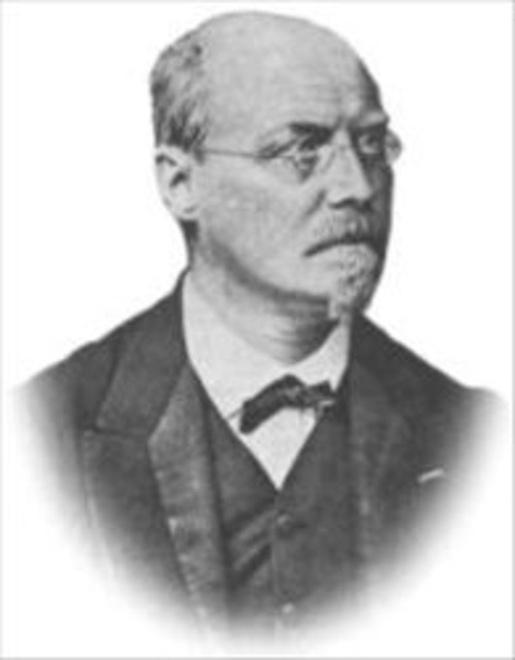
Ferdinand Ries’ Spotify BioFerdinand Ries came from a line of German musicians of the Rhine region who are traced back to Johann Ries (1723-1784), a trumpeter in Bonn. His first son, Franz Anton Ries (1755-1846), a child prodigy on violin who chose to remain in Bonn, was Beethoven's teacher, and lived long enough to be honored as such when he was ninety and attended the unveiling of the famous statue to Beethoven there.
Ferdinand Ries was Franz Anton's eldest son, who was also his first piano and violin teacher. At the age of five he was also sent to study cello with B.H. Romberg. The boy was so accomplished that he was slated for a job playing in the elector's orchestra. But in 1794 the electoral court was dissolved, and the position never materialized. Ferdinand continued to study with his father. In 1797 he went to Arnsberg for more violin study, found out he was better than his intended teacher, and stayed to give him lessons.
In 1801 he moved to Munich and studied for a short time with Peter von Winter. He… also earned money as a music copyist. Working very hard and living frugally, he saved up enough to go to Vienna in October of the same year. Beethoven was glad to see the son of his old teacher, and took him on as a piano pupil and as a secretary and copyist. Beethoven referred him to Albrechtsberger as a composition teacher.
Beethoven also secured for him a job as pianist on the staff of Count Browne in Baden in 1802, and with Prince Lichnowsky in the summer of 1805.
In 1804 Ries made his debut as a pianist. Beethoven turned out to be a nervous teacher, worried about his pupil's success. He advised Ries to simplify a particular difficult passage, but Ries played it as written, and perfectly, much to Beethoven's delight.
As a citizen of Bonn, Ries in 1805 became subject to conscription into the French army. To avoid this, he moved to Koblenz. This is a rather strange turn of events, since he had lost the sight of one eye in childhood to a smallpox infection. When he was actually rejected for military service, he moved to Paris. He lived poorly there.
He moved back to Vienna in 1808, but he had a temporary breach with Beethoven due to a misunderstanding. In 1809, he went on an extended series of tours that lasted nearly four years in Northern Germany, Scandinavia, and Russia. The tour was quite lucrative, and by 1813 brought him to London. There he met the famous impresario J.P. Salomon (who was another teacher of his father's), who arranged his first appearance with the Philharmonic Concerts in March 1814. He remained in London for 11 years. His music was very popular there, and frequently appeared on concert and recital programs. In July 1814 he married Harriet Mangean, an English lady.
He was a prolific composer, but there is little originality in his music, charming as it often was. Beethoven rather tactlessly but with considerable accuracy commented, "He imitates me too much." Very little of it is played today.
Ries had earned enough to retire in 1824, and returned in the Rhineland, finally moving to Frankfurt am Main in 1827. Although he toured no more, he did accept a position as head of the orchestra there and conductor of the Singakademie of Aachen. He was a co-author of one of the most important early biographies of Beethoven. He also did much in establishing the Lower Rhine Music Festivals.
Viberate is a music analytics platform built for A&Rs, artist managers, labels, booking agents, marketers, and artists.
It helps music professionals track artist growth, analyze audience data, monitor playlist activity, compare artists, follow song performance, and identify opportunities across the music market.
Public artist pages provide a free preview of selected artist data. Paid plans provide access to deeper analytics, historical data, charts, comparisons, playlist tools, exports, alerts, reports, and additional professional features.
Yes. Public Viberate artist pages provide selected artist analytics and music data for free.
Viberate also offers a 7-day free trial of the full platform. A credit card is required to start the trial. The trial includes access to the complete product so users can test deeper artist analytics, historical views, playlist insights, comparisons, charts, exports, alerts, and reporting features before choosing a paid plan.
Viberate provides artist analytics across streaming, playlists, social media, video, radio airplay, songs, and audience markets.
Users can analyze Spotify performance, Spotify and Apple Music playlists, YouTube activity, TikTok and Instagram growth, radio spins, song performance, audience locations, demographics, rankings, and overall artist momentum.
Artist profiles also connect to music charts, similar artists, and comparison tools, helping users benchmark performance and evaluate artists in context.
Viberate updates key artist and track data daily.
For followed artists and tracks, selected data is refreshed multiple times per day. This helps teams monitor playlist changes, streaming movement, audience growth, releases, and campaign performance with more current data.
Update frequency can vary depending on the metric and data source.
Yes. Viberate lets users compare up to five artists side by side across streaming, social media, audience, and engagement metrics.
Users can compare fanbase growth, audience demographics, locations, Spotify performance, social metrics, and other artist data over selected time periods.
Artist comparison can be used for A&R scouting, benchmarking, booking decisions, campaign planning, and evaluating artists with similar audiences or market positions.