Rudolf Serkin

Classical
Classical Crossover
Chamber Music
 Viberate Rank: 197281
 Viberate Rank: 197281
 Monthly ListenersFollowers
 Subscribers
 Followers
 Followers
 FansTop Spotify Songs
| Track | 7-Day Streams | |
|---|---|---|
1 | 1.21K | |
2 | 904 | |
3 | 818 | |
4 | 438 | |
5 | 310 |
Top YouTube VideosMonthly ListenersFeatured in Playlists| Playlist | Followers | |
|---|---|---|
1 |  This Is Schubert Spotify | 155.91K |
2 |  Haruki Murakami's vinyl collection Masamaro | 109.94K |
3 |  Easy Listening Classical For Study, Work, Relaxing, Chillout, Anything But Serious Listening Ulysses' Classical | 99.24K |
4 |  a summer in italy 🇮🇹 delina k | 84.97K |
5 |  VIOLONCELLO Barko | 37.70K |
Audience| City | Monthly Listeners | |
|---|---|---|
1 |  | 383 |
2 |  | 324 |
3 |  | 307 |
4 | | 306 |
5 |  | 279 |
See full performance history, audience data, playlist activity, rankings, comparisons, and more in Viberate music analytics. Start with a free trial, then continue with a paid plan.
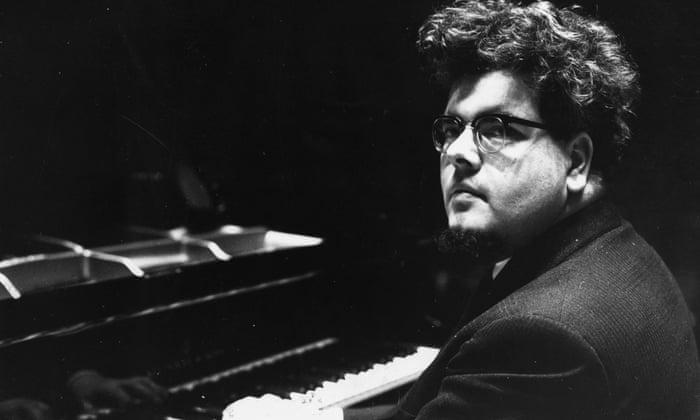
Rudolf Serkin’s Spotify BioRudolf Serkin emerged from the environment of post-World War I Austria to become one of the most profound and challenging pianists of the century, leaving a lasting impression on following generations.
Childhood studies in Vienna with Richard Robert for piano, and Joseph Marx and Arnold Schoenberg for composition, led to a 1915 debut performance with the Vienna Symphony Orchestra at the age of 12. After 1920, Serkin was associated with noted violinist Adolf Busch, both as a duo-sonata partner, and with the Busch Chamber Orchestra (and, from 1935, as Busch's son-in-law). An American debut in 1936 with the New York Philharmonic under Toscanini led to Serkin's decision to relocate to the U.S. in 1939. Invited to join the piano faculty of the Curtis Institute of Music, he quickly rose to become head of the piano department, and, from 1968, president of the Institute. He devoted his summers to cultivating several generations of young musicians at the Marlboro Festival in Vermont.
Many… observers have remarked that Serkin was not a natural pianist. Indeed, he seemed rather to play by force of will alone, and the strength of his musicianship lay more in the deep insight that he brought to the music of the composers he held dearest -- traditional Austrian and German masters -- than in virtuosic pianism. In Beethoven's sonatas, Serkin found particular inspiration. His Beethoven interpretations do not necessarily please the listener in terms of superficial "beauty," but rather convey the unique mixture of logic, violence, and spiritual transcendence that he feels is the essence of Beethoven's work. In the Brahms concerti, Serkin's vision was nothing short of titanic. On off-nights, however, Serkin's lofty, cerebral brand of pianism sometimes failed him, and the austere, "square" approach to phrasing that makes his playing so immediately recognizable sometimes sounded unnecessarily harsh.
Rudolf Serkin's discography is impressive, spanning most of the general repertory from Bach to the early/mid-20th century, and including such relative novelties as the F minor Concerto of Max Reger, a composer Serkin had an abiding affinity for. His work at the Curtis Institute, and, during the summers, at the Marlboro Festival, made him one of the most influential American teachers of the post-World War II era. Serkin's son Peter was also a pianist of considerable renown. ~ Blair Johnstone, Rovi
Viberate is a music analytics platform built for A&Rs, artist managers, labels, booking agents, marketers, and artists.
It helps music professionals track artist growth, analyze audience data, monitor playlist activity, compare artists, follow song performance, and identify opportunities across the music market.
Public artist pages provide a free preview of selected artist data. Paid plans provide access to deeper analytics, historical data, charts, comparisons, playlist tools, exports, alerts, reports, and additional professional features.
Yes. Public Viberate artist pages provide selected artist analytics and music data for free.
Viberate also offers a 7-day free trial of the full platform. A credit card is required to start the trial. The trial includes access to the complete product so users can test deeper artist analytics, historical views, playlist insights, comparisons, charts, exports, alerts, and reporting features before choosing a paid plan.
Viberate provides artist analytics across streaming, playlists, social media, video, radio airplay, songs, and audience markets.
Users can analyze Spotify performance, Spotify and Apple Music playlists, YouTube activity, TikTok and Instagram growth, radio spins, song performance, audience locations, demographics, rankings, and overall artist momentum.
Artist profiles also connect to music charts, similar artists, and comparison tools, helping users benchmark performance and evaluate artists in context.
Viberate updates key artist and track data daily.
For followed artists and tracks, selected data is refreshed multiple times per day. This helps teams monitor playlist changes, streaming movement, audience growth, releases, and campaign performance with more current data.
Update frequency can vary depending on the metric and data source.
Yes. Viberate lets users compare up to five artists side by side across streaming, social media, audience, and engagement metrics.
Users can compare fanbase growth, audience demographics, locations, Spotify performance, social metrics, and other artist data over selected time periods.
Artist comparison can be used for A&R scouting, benchmarking, booking decisions, campaign planning, and evaluating artists with similar audiences or market positions.