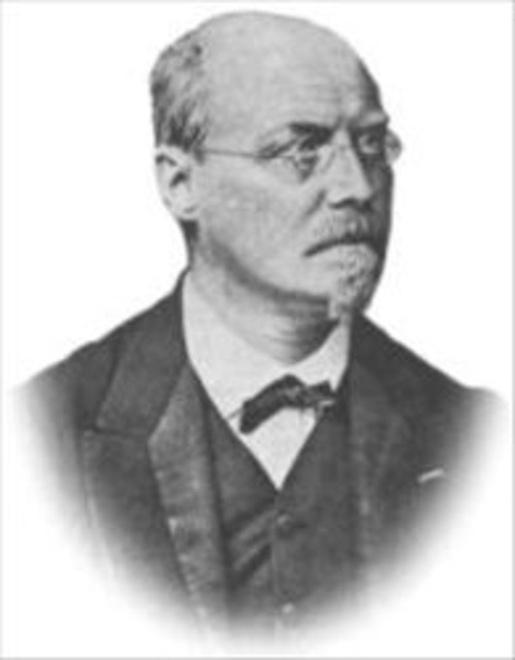
Joachim Raff

Classical
Opera
Classical Crossover
 Viberate Rank: 497410
 Viberate Rank: 497410
 Monthly ListenersFollowers
 Subscribers
 Followers
 Followers
 FansTop Spotify Songs
| Track | 7-Day Streams | |
|---|---|---|
1 | 363 | |
2 | 208 | |
3 | 208 | |
4 | 75 | |
5 | 72 |
Top YouTube VideosMonthly ListenersFeatured in Playlists| Playlist | Followers | |
|---|---|---|
1 |  The Sound of Everything The Sounds of Spotify | 53.82K |
2 | Ignatious Pop 1 | 17.19K |
3 |  Peaceful Classical – Orchestral Music and Piano Classics Filtr Germany | 11.88K |
4 |  Legion - TV Show FX Joel | 9.76K |
5 |  Chamber Music for Self-Renewal synergy555 | 4.21K |
Audience| City | Monthly Listeners | |
|---|---|---|
1 |  | 71 |
2 |  | 61 |
3 |  | 61 |
4 |  | 57 |
5 |  | 54 |
See full performance history, audience data, playlist activity, rankings, comparisons, and more in Viberate music analytics. Start with a free trial, then continue with a paid plan.
Joachim Raff’s Spotify BioOne of several forgotten Romantic composers whose works found a performance renaissance near the twentieth century's end, Joachim Raff was the son of a German organist from Württemberg. The family had modest resources, and Raff's only formal education consisted of teacher-training studies at a Jesuit school. But he was determined on a musical career and taught himself the essentials of composition.
Raff eventually sent some of his piano music to Mendelssohn, who recommended them for publication. Encouraged, the young composer moved to Zurich, continuing to teach himself from treatises. In 1845 Liszt played a concert in Basle, and, in a journey reminiscent of Bach's supposed pilgrimage to hear Buxtehude a century and a half before, Raff walked all the way there to hear it. He met Liszt and showed him some of his music; the great virtuoso-composer took Raff back to Germany and got him a job in a music shop in Cologne. However, Raff also became a critic, and his writings so antagonized… certain local personalities that he was forced to leave the city. He settled in Stuttgart, where he formed a lifelong friendship with the conductor Hans von Bülow.
In 1846 he finally met Mendelssohn and made plans to study with him. However, Mendelssohn died in November of that year. Once again Liszt came to the rescue, finding a job for Raff in Hamburg as a representative of his publisher's firm, Schuberth. When Liszt gained a position as kapellmeister in Weimar, he hired Raff as an assistant. Like most composers, Liszt found the mundane part of the job, like making fair copies of the music to send to printers and extracting parts, to be tedious and uncreative, and he was happy to be able to delegate it to an employee; in addition, Raff orchestrated some of Liszt's early symphonic poems (some of which Liszt revised in later years when he was more skilled at orchestration).
In 1856 Raff gave up that position and moved to Wiesbaden to give piano lessons and compose. Raff had closely studied music of past eras, and as a result he saw his mission as one of reconciliation between the latest developments in music and the techniques of the past. Thus, many of his works combine Baroque counterpoint and Classical forms with his own generation's interest in program music. In 1877 Raff was appointed director of the Hoch Conservatory, and held the post until his death. He taught composition; among his pupils was the American, Edward MacDowell.
Raff's music was very highly regarded during his lifetime, a judgment that has not been seconded by history. Some commentators of the time ranked him with Wagner and Brahms. His music is well crafted, with brilliant orchestration and strong melodies; in fact, its entertaining qualities, it is now clear, damaged the music's durability by resembling too closely the salon music of the time. He was highly prolific, writing eleven symphonies (most of which have programs), and numerous other symphonic works and concertos. He wrote six operas, four of which have never been performed, and a huge amount of piano and chamber music.
Viberate is a music analytics platform built for A&Rs, artist managers, labels, booking agents, marketers, and artists.
It helps music professionals track artist growth, analyze audience data, monitor playlist activity, compare artists, follow song performance, and identify opportunities across the music market.
Public artist pages provide a free preview of selected artist data. Paid plans provide access to deeper analytics, historical data, charts, comparisons, playlist tools, exports, alerts, reports, and additional professional features.
Yes. Public Viberate artist pages provide selected artist analytics and music data for free.
Viberate also offers a 7-day free trial of the full platform. A credit card is required to start the trial. The trial includes access to the complete product so users can test deeper artist analytics, historical views, playlist insights, comparisons, charts, exports, alerts, and reporting features before choosing a paid plan.
Viberate provides artist analytics across streaming, playlists, social media, video, radio airplay, songs, and audience markets.
Users can analyze Spotify performance, Spotify and Apple Music playlists, YouTube activity, TikTok and Instagram growth, radio spins, song performance, audience locations, demographics, rankings, and overall artist momentum.
Artist profiles also connect to music charts, similar artists, and comparison tools, helping users benchmark performance and evaluate artists in context.
Viberate updates key artist and track data daily.
For followed artists and tracks, selected data is refreshed multiple times per day. This helps teams monitor playlist changes, streaming movement, audience growth, releases, and campaign performance with more current data.
Update frequency can vary depending on the metric and data source.
Yes. Viberate lets users compare up to five artists side by side across streaming, social media, audience, and engagement metrics.
Users can compare fanbase growth, audience demographics, locations, Spotify performance, social metrics, and other artist data over selected time periods.
Artist comparison can be used for A&R scouting, benchmarking, booking decisions, campaign planning, and evaluating artists with similar audiences or market positions.