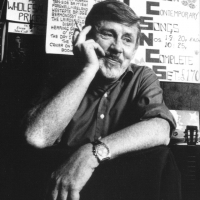
Ewan MacColl

Pop
Mainstream Pop
 Viberate Rank: 150640
 Viberate Rank: 150640
 Monthly ListenersFollowers
 Subscribers
 Followers
 Followers
 FansTop Spotify Songs
| Track | 7-Day Streams | |
|---|---|---|
1 | 4.53K | |
2 | 2.87K | |
3 | 2.85K | |
4 | 1.83K | |
5 | 1.83K |
Top YouTube VideosMonthly ListenersFeatured in Playlists| Playlist | Followers | |
|---|---|---|
1 |  Traditional English Folk Spotify | 80.85K |
2 |  leftist country only🤚🤨 Sophie Brady | 21.86K |
3 | ULTIMATE PROTEST SONGS LIST Jenny Ledezma | 18.13K |
4 |  Kampflieder der Arbeiterklasse Phil | 16.03K |
5 | 'Inside Llewyn Davis' Soundtrack Giloria | 15.45K |
Audience| City | Monthly Listeners | |
|---|---|---|
1 | | 1.84K |
2 | | 884 |
3 |  | 640 |
4 |  | 613 |
5 |  | 610 |
See full performance history, audience data, playlist activity, rankings, comparisons, and more in Viberate music analytics. Start with a free trial, then continue with a paid plan.
Ewan MacColl’s Spotify BioEwan MacColl may well have been the most influential person in the British folk song revival. From his early manhood until his death in 1989, he remained passionately committed to folk, though not exclusively; he was also a poet, playwright, organizer, activist, songwriter, husband, and father. MacColl was born James Henry Miller in Salford, England in 1915. His father was a lowland man who spoke Scots English, his mother a highlander who spoke Gaelic. Both of his parents were singers. MacColl left school at 14 to busk and act in the streets, and was quickly discovered by the BBC. Soon he was not only singing, but also writing programs for the radio. He founded the first folk club in England, the Ballads and Blues Club, as well as the Critic's Group, an influential early singing group that included such singers as Frankie Armstrong, Anne Briggs, and John Faulkner.
MacColl was one of the foremost interpreters of traditional songs ever recorded. The most ambitious project he undertook was… to record a representative sampling of Professor Francis James Child's English and Scottish popular ballads. While his early repertoire was mainly of street songs and traditional material, he was also an important songwriter. Most impressive was his competence in producing expressions that had an appeal to all levels of society; his songs have been covered by performers as diverse as Dick Gaughan, the Pogues, Roberta Flack, and Elvis Presley, and many have been collected in several versions from the oral tradition. They range from savage political satire to tender love songs, and are supremely effective at producing the desired emotions.
Beyond his activities as a singer and songwriter, MacColl was an actor and a playwright. In 1947, George Bernard Shaw commented, "Apart from myself, MacColl is the only man of genius writing for the theater in England today." His playwriting and songwriting joined seamlessly in his "radio ballads," radio plays that bordered on ballad operas. Many of his most lovely and best-remembered songs were written for these plays, some of which have been released in album form.
MacColl was married to Peggy Seeger, herself a singer of folk songs (and half-sister to American icon Pete Seeger). Together MacColl and Seeger, sometimes accompanied by their children, also skilled musicians and singers, recorded quite a few albums as well. Many of MacColl's albums are out of print products of long-defunct record companies. Some, however, are readily available. All, like MacColl himself, are important factors in the history of the folk revival, to be cherished by all who encounter them. This great singer made many, many albums over many years. All of them are recommended for fans of great singing, though some may be a bit specialized (i.e., unaccompanied singing in broad Scots dialect) for some listeners. ~ Steve Winick, Rovi
Viberate is a music analytics platform built for A&Rs, artist managers, labels, booking agents, marketers, and artists.
It helps music professionals track artist growth, analyze audience data, monitor playlist activity, compare artists, follow song performance, and identify opportunities across the music market.
Public artist pages provide a free preview of selected artist data. Paid plans provide access to deeper analytics, historical data, charts, comparisons, playlist tools, exports, alerts, reports, and additional professional features.
Yes. Public Viberate artist pages provide selected artist analytics and music data for free.
Viberate also offers a 7-day free trial of the full platform. A credit card is required to start the trial. The trial includes access to the complete product so users can test deeper artist analytics, historical views, playlist insights, comparisons, charts, exports, alerts, and reporting features before choosing a paid plan.
Viberate provides artist analytics across streaming, playlists, social media, video, radio airplay, songs, and audience markets.
Users can analyze Spotify performance, Spotify and Apple Music playlists, YouTube activity, TikTok and Instagram growth, radio spins, song performance, audience locations, demographics, rankings, and overall artist momentum.
Artist profiles also connect to music charts, similar artists, and comparison tools, helping users benchmark performance and evaluate artists in context.
Viberate updates key artist and track data daily.
For followed artists and tracks, selected data is refreshed multiple times per day. This helps teams monitor playlist changes, streaming movement, audience growth, releases, and campaign performance with more current data.
Update frequency can vary depending on the metric and data source.
Yes. Viberate lets users compare up to five artists side by side across streaming, social media, audience, and engagement metrics.
Users can compare fanbase growth, audience demographics, locations, Spotify performance, social metrics, and other artist data over selected time periods.
Artist comparison can be used for A&R scouting, benchmarking, booking decisions, campaign planning, and evaluating artists with similar audiences or market positions.