Dub War

Metal
Alternative Metal
Rap Metal
 Viberate Rank: 221768
 Viberate Rank: 221768
 Monthly ListenersFollowers
 Subscribers
 Followers
 Followers
 FansTop Spotify Songs
| Track | 7-Day Streams | |
|---|---|---|
1 | 1.10K | |
2 | 897 | |
3 | 897 | |
4 | 515 | |
5 | 396 |
Top YouTube Videos| Video | 7-Day Views | |
|---|---|---|
1 | 2 | |
2 | 1 |
Monthly ListenersFeatured in Playlists| Playlist | Followers | |
|---|---|---|
1 | DEEP MEDi MUSIK & Tempa Records .. deep funkyp1nky | 7.80K |
2 |  RAGGA METAL/REGGAE ROCK Papa Rocko | 5.52K |
3 |  Glastonbury 2022 RM | 4.50K |
4 |  Ragga metal Iris 🍄 | 4.42K |
5 |  SEKKDS 10K x 10K SEKKDS | 4.00K |
Audience| City | Monthly Listeners | |
|---|---|---|
1 | | 250 |
2 |  | 137 |
3 | | 127 |
4 | | 113 |
5 | | 105 |
See full performance history, audience data, playlist activity, rankings, comparisons, and more in Viberate music analytics. Start with a free trial, then continue with a paid plan.
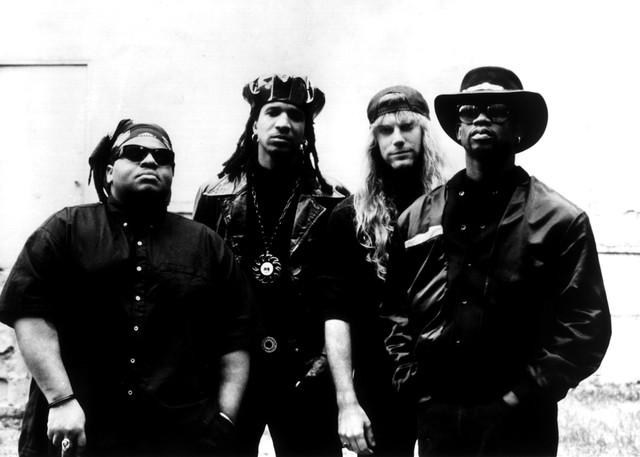
Dub War’s Spotify BioLike a renegade teen, Dub War roared out of Newport, Wales in 1993 blasting a collision of ragga, post-punk, metal, and otherworldly sonic effects. Their self-titled 12" won critical accolades globally, drawing comparisons to Faith No More, and Rage Against the Machine. The full-length Pain was issued by Earache in 1995, and the Wrong Side of Beautiful a year later. 1997 saw the more dance centric Soundclash EP released. A small handful of singles were issued in 1997 with the remix collection Step Ta Dis in 1998. They split in 1999 with some members forming Skindred and The Jones. In 2019, vocalist Benji Webbe, guitarist Jeff Rose, and bassist Richie Glover played a couple of reunion shows with different drummers. During the COVID-19 pandemic, they began writing together over the internet. They formally reunited for the Earache album Westgate Under Fire, issued in August 2022.
Founded in Wales in 1993, Dub War emerged on the U.K. scene the following year as a high-octane, highly… political extension of metallic hard rock's ability to merge innovative styles with the old, namely postpunk and skronky dub reggae. Guitarist Jeff Rose, bassist Richie Glover and drummer Martin Ford and reggae sound system vocalist Benji Webbe all came from diverse musical backgrounds. Rose had worked in Blood Brothers during the 1980s and as a session and touring guitarist with Samantha Fox; Glover had played in several minor punk bands, while Webbe was a veteran of toasting with reggae sound systems, working with dub producer Mad Professor, and playing the dancehall circuit. The band made its debut at the end of 1993 with a self-titled 12-inch EP that managed simultaneously to appear in three different New Musical Express charts. Following a debut mini-album in 1994, they signed to Earache Records for the Mental EP, joining Pop Will Eat Itself and Manic Street Preachers on tour. Mental featured remixes from Senser, Brand New Heavies and Jamiroquai, and was followed by a further EP, Gorrit.
After establishing critical bona fides and garnering a large and active concert following, they issued debut album Pain, in February 1995. Lauded globally, the band were able to tour the continental U.S. and across Europe. Fans were rewarded by the uniformly excellent Wrong Side of Beautiful in 1996; it was later re-released in a limited edition version with a bonus disc of remixes titled, appropriately enough, Right Side of Beautiful. The second album failed to provide the commercial breakthrough the band felt they deserved. They tried again with 1997's Soundclash EP followed by a clutch of singles. In 1998, Earache and Dub War commissioned the remix collection Step Ta Dis, but it was too late, and the band split.
Webbe launched side project Mass Mental (that also included future Metallica bassist Robert Trujillo) as well as a collaboration with Soulfly. Mass Mental morphed into ormed the nu-metal quartet Skindred, with Rose and Glover who in 2002 left to form Raw Bud, while the latter also co-founded The Jones. All but Skindred -- an ongoing concern -- were short lived.
In late 2019, Rose approached Webbe and Glover about doing some reunion gigs as Dub War. Utilizing several different drummers, they played more than a dozen sold out, critically acclaimed, creatively satisfying shows before being stopped by the pandemic in March 2020. Across the year, the pair began sending recorded ideas back and forth over the internet forming compositions. Liking what they heard, they enlisted Richard "Action" Jackson to produce and mix it. He, in turn, consulted other engineers. The band hired drummer Mike Gregor on the road and in studio, with six other drummers and a handful of guest contributors including Roy Mayorga (Stone Sour), Mike Bordin (Faith No More), Tanner Wayne (In Flames), Spike T. Smith (Killing Joke), and the late ska legend/ex-English Beat toaster Ranking Roger, who was recorded in a live guest spot in 2019, shortly before his passing.
All told, they cut 13 tracks, including the single "Blackkk Man" and a raucous cover of Max Romeo's "War Inna Babylon." The set was released as Westgate Under Fire in August 2022. ~ Thom Jurek, Rovi
Viberate is a music analytics platform built for A&Rs, artist managers, labels, booking agents, marketers, and artists.
It helps music professionals track artist growth, analyze audience data, monitor playlist activity, compare artists, follow song performance, and identify opportunities across the music market.
Public artist pages provide a free preview of selected artist data. Paid plans provide access to deeper analytics, historical data, charts, comparisons, playlist tools, exports, alerts, reports, and additional professional features.
Yes. Public Viberate artist pages provide selected artist analytics and music data for free.
Viberate also offers a 7-day free trial of the full platform. A credit card is required to start the trial. The trial includes access to the complete product so users can test deeper artist analytics, historical views, playlist insights, comparisons, charts, exports, alerts, and reporting features before choosing a paid plan.
Viberate provides artist analytics across streaming, playlists, social media, video, radio airplay, songs, and audience markets.
Users can analyze Spotify performance, Spotify and Apple Music playlists, YouTube activity, TikTok and Instagram growth, radio spins, song performance, audience locations, demographics, rankings, and overall artist momentum.
Artist profiles also connect to music charts, similar artists, and comparison tools, helping users benchmark performance and evaluate artists in context.
Viberate updates key artist and track data daily.
For followed artists and tracks, selected data is refreshed multiple times per day. This helps teams monitor playlist changes, streaming movement, audience growth, releases, and campaign performance with more current data.
Update frequency can vary depending on the metric and data source.
Yes. Viberate lets users compare up to five artists side by side across streaming, social media, audience, and engagement metrics.
Users can compare fanbase growth, audience demographics, locations, Spotify performance, social metrics, and other artist data over selected time periods.
Artist comparison can be used for A&R scouting, benchmarking, booking decisions, campaign planning, and evaluating artists with similar audiences or market positions.