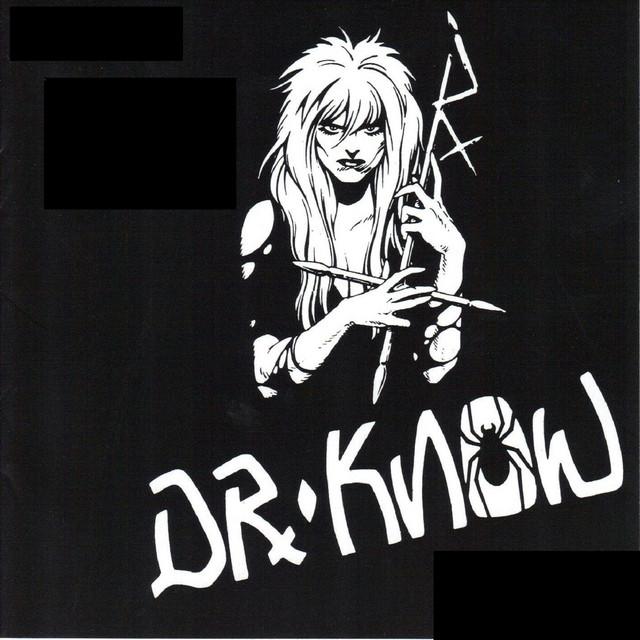
Dr. Know

Punk
Hardcore Punk
Punk Rock
 Viberate Rank: 191053
 Viberate Rank: 191053
 Monthly ListenersFollowers
 Subscribers
 Followers
 Followers
 FansTop Spotify Songs
| Track | 7-Day Streams | |
|---|---|---|
1 | 3.65K | |
2 | 1.59K | |
3 | 825 | |
4 | 631 | |
5 | 621 |
Top YouTube VideosMonthly ListenersFeatured in Playlists| Playlist | Followers | |
|---|---|---|
1 |  80's Hardcore Punk Antonio Leal Filho | 20.65K |
2 |  The Evolution of Punk (In Chronological Order) kingfirley | 16.18K |
3 |  Punk Goes Everything Nick Jones | 14.44K |
4 |  songs to eat glass to Machine Girl | 8.89K |
5 |  Hardcore Punk, Anarcho Punk, Crust Punk, Crossover Thrash Bahadır Mahmut | 8.03K |
Audience| City | Monthly Listeners | |
|---|---|---|
1 | | 900 |
2 | | 209 |
3 | | 205 |
4 | | 201 |
5 | | 199 |
See full performance history, audience data, playlist activity, rankings, comparisons, and more in Viberate music analytics. Start with a free trial, then continue with a paid plan.
Dr. Know’s Spotify BioAs co-founder of the Bad Brains, Dr. Know was one of punk rock's first and greatest guitar heroes who took the chops and technical finesse of a skilled jazz player and fused it with the punch-in-the-gut abandon of punk and metal. Founded in Washington, D.C., Bad Brains played faster and harder than nearly any other band on Earth when they released their self-titled debut cassette in 1982, but in addition to their faster-than-light punk tunes, they also embraced the space and deep grooves of reggae. 1986's I Against I incorporated hard rock and metal structures into their songs with force and elan, and while the band tended to break up and re-form often in the '90s and 2000s, the influence of the band and Dr. Know's guitar work had a profound influence on generations of punk, metal, and reggae artists.
Dr. Know was born Gary Miller in Washington, D.C., on September 15, 1958. Miller's first instrument was bass, and he was honing his skills on the instrument before he even had one; he… jammed along with a friend using a guitar with two strings removed and tuned down to a bass scale. Miller had eclectic tastes in music, enjoying hard rock, funk, disco, and jazz, and after switching from bass to guitar, in 1976 he formed a jazz fusion group called Mind Power, with Paul Hudson on rhythm guitar, Darryl Jennifer on bass, and Earl Hudson on drums. Initially, Miller was attending college as a pre-med student (his nickname Dr. Know came from his passion for education) and was working in a restaurant to support himself, but as the band progressed, he followed his spirit and made music his first priority. In 1977, Miller and his bandmates became aware of the aggressive sounds of early punk bands like the Sex Pistols, the Damned, and the Ramones through their friend Sid McCray, and they shifted from jazz to punk, refining their sound through constant rehearsals to sound faster, tighter, and more precise than any other band in town. McCray was the band's first vocalist, and when he dropped out, Paul Hudson moved from rhythm guitar to lead vocals, adopting the stage name H.R.
Now known as the Bad Brains (taking the name from a Ramones song), they introduced themselves to the D.C. punk community with a free show at their house, and were soon one of the leading bands in the hardcore underground. After relocating from D.C. to New York, the group issued a dazzling debut single in 1980, "Pay to Cum" b/w "Stay Close to Me," and Bad Brains earned an enviable reputation through their frequent appearances at CBGB. The cassette-only ROIR label issued Bad Brains in 1982, and the 15-song album, which featured three slow reggae jams along with their faster-than-light hardcore rants -- all four members had adopted the Rastafarian faith -- was hailed as an instant classic. Ric Ocasek of the Cars became a fan, and he would produce their second full-length, 1983's Rock for Light. Tensions within the group began to grow as H.R. was more interested in pursuing the band's reggae direction than their punk side, but after a short breakup, they reunited and signed to SST Records, which released 1986's I Against I, a blend of metal, punk, and reggae that was well received by fans as well as critics.
The Bad Brains lineup began to splinter -- H.R. and Earl Hudson left the band to play reggae exclusively -- and while Dr. Know remained loyal to the group, stop-gap iterations of the group would record 1989's Quickness and 1993's Rise. In 1995, the classic lineup reunited (after landing a lucrative deal with Madonna's Maverick Records imprint) to record 1995's God of Love, with Ric Ocasek returning as producer. By this time, H.R. had been showing signs of instability in public, and his performances on the album felt muted; during a show in Lawrence, Kansas on the supporting tour, H.R. attacked two fans with a microphone stand, and the band once again broke up. During their periods of inactivity, H.R. rarely performed with other artists, sometimes working at a natural food store to support himself, though he played with a short-lived project, Black Jack Johnson, in which he collaborated with keyboard player Bernie Worrell (of Parliament-Funkadelic and the expanded edition of Talking Heads), bassist Doug Wimbish (of Tackhead and the Sugarhill Gang Band), and drummer Will Calhoun (of Living Colour). The band backed rapper Mos Def on "Freaky Black Greetings," a track from his 2004 album The New Danger.
While Bad Brains would cut two more studio albums -- 2007's Build a Nation, produced by Adam Yauch of the Beastie Boys, and 2012's Into the Future -- H.R.'s ongoing problems with mental and physical health prevented them from gaining much momentum, and in 2015, Miller had a serious health scare of his own when he suffered a heart attack compounded by multiple organ failure, which led to a three-month hospital stay. In 2016, Miller was well enough to launch another project, Saudade, which also featured Chino Moreno of Deftones, experimental jazz guitarist David Torn, keyboardist John Medeski of Medeski, Martin & Wood, bassist Chuck Doom of Crosses and Team Sleep, and Mackie Jayson of the Cro-Mags, who had also played in the Bad Brains during Earl Hudson's absence from the group. The collective issued a handful of digital EPs between 2016 and 2019, though a stroke Miller suffered in 2016 sidelined him for a while as he recovered and re-learned his repertoire. Dr. Know also dabbled in production and studio work, lending his talents to sessions with Warzone, Coheed & Cambria, and Nitzer Ebb; he sat in on Darryl Jennifer's 2010 solo LP In Search of Black Judas. ~ Mark Deming, Rovi
Viberate is a music analytics platform built for A&Rs, artist managers, labels, booking agents, marketers, and artists.
It helps music professionals track artist growth, analyze audience data, monitor playlist activity, compare artists, follow song performance, and identify opportunities across the music market.
Public artist pages provide a free preview of selected artist data. Paid plans provide access to deeper analytics, historical data, charts, comparisons, playlist tools, exports, alerts, reports, and additional professional features.
Yes. Public Viberate artist pages provide selected artist analytics and music data for free.
Viberate also offers a 7-day free trial of the full platform. A credit card is required to start the trial. The trial includes access to the complete product so users can test deeper artist analytics, historical views, playlist insights, comparisons, charts, exports, alerts, and reporting features before choosing a paid plan.
Viberate provides artist analytics across streaming, playlists, social media, video, radio airplay, songs, and audience markets.
Users can analyze Spotify performance, Spotify and Apple Music playlists, YouTube activity, TikTok and Instagram growth, radio spins, song performance, audience locations, demographics, rankings, and overall artist momentum.
Artist profiles also connect to music charts, similar artists, and comparison tools, helping users benchmark performance and evaluate artists in context.
Viberate updates key artist and track data daily.
For followed artists and tracks, selected data is refreshed multiple times per day. This helps teams monitor playlist changes, streaming movement, audience growth, releases, and campaign performance with more current data.
Update frequency can vary depending on the metric and data source.
Yes. Viberate lets users compare up to five artists side by side across streaming, social media, audience, and engagement metrics.
Users can compare fanbase growth, audience demographics, locations, Spotify performance, social metrics, and other artist data over selected time periods.
Artist comparison can be used for A&R scouting, benchmarking, booking decisions, campaign planning, and evaluating artists with similar audiences or market positions.