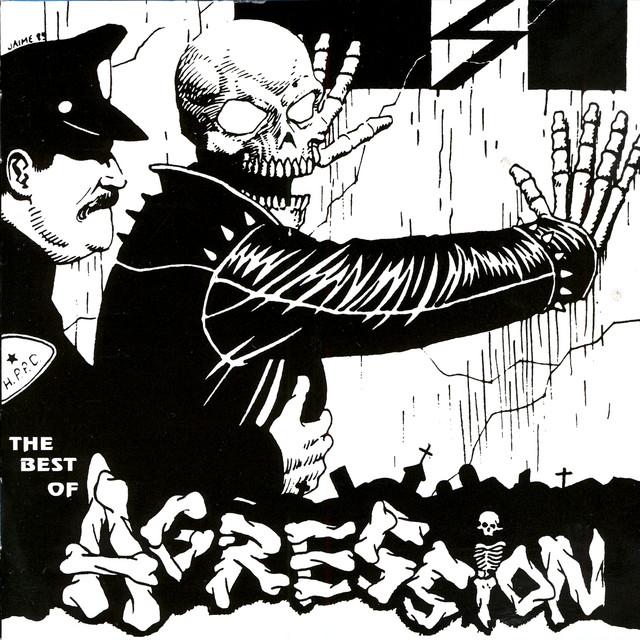
Agression

Punk
Hardcore Punk
Punk Rock
 Viberate Rank: 243662
 Viberate Rank: 243662
 Monthly ListenersFollowers
 Subscribers
 Followers
 Followers
 FansTop Spotify Songs
| Track | 7-Day Streams | |
|---|---|---|
1 | 1.20K | |
2 | 1.20K | |
3 | 587 | |
4 | 587 | |
5 | 557 |
Top YouTube VideosMonthly ListenersFeatured in Playlists| Playlist | Followers | |
|---|---|---|
1 |  80's Hardcore Punk Antonio Leal Filho | 20.65K |
2 |  Punk Goes Everything Nick Jones | 14.44K |
3 | Ska/Punk Covers billludwig | 7.86K |
4 | ROCK COVERS (Multiple Versions; Pick Your Favorite Versions) Dave | 6.11K |
5 |  Garage Punk Jorge Ramos | 5.89K |
Audience| City | Monthly Listeners | |
|---|---|---|
1 | | 504 |
2 | | 124 |
3 | | 122 |
4 | | 111 |
5 | | 104 |
See full performance history, audience data, playlist activity, rankings, comparisons, and more in Viberate music analytics. Start with a free trial, then continue with a paid plan.
Agression’s Spotify BioAgression was part of the first wave of skatepunk bands to emerge from southern California in the early '80s. These groups were on the front lines of a new union between the skateboard and punk rock cultures, which were put on a path to convergence by the establishment hassling each group. The resulting music was a confluence of punk's anger and simplicity, the furious speed of hardcore, and defiantly smart-assed machismo.
Emerging out of Oxnard, CA (which was such a hotbed of punk and skate bands that their sound became known as "Nardcore"), Agression consisted of vocalist Mark Hickey, guitarist Henry Knowles, bassist Bob Clark, and drummer Mark Aber. The unit was one of the first groups to be involved with the Better Youth Organization (BYO) -- the collective started by Shawn and Mark Stern of Youth Brigade -- and contributed two songs to Someone Got Their Head Kicked In, the label's classic 1982 compilation. Don't Be Mistaken followed in 1983, chock-full of rapid-fire skatepunk… rhythms. Contributions to various Mystic Records compilations followed, with Agression's sound wavering between skatepunk and more generic heavy metal; a self-titled LP on that label appeared in 1985, as did the "official" bootleg of an Agression show at the New York club CBGB. Agression was able to get as far as CBGB with the aid of their manager, Scott Hatch, who also managed the more established hardcore outfit Fear. As Hickey said at the time, it was difficult not to appreciate the coolness of "Agression" and "Fear" listed on one bill.
Aber left the group in 1985 for a spot with Angry Samoans, and Agression began to lose steam. Despite a series of low-quality live recordings for Mystic, the band couldn't re-capture the sneering rage of its original material, and eventually ground to a halt. Hickey left music and moved to Colorado. However, in 2000, Knowles was inspired to get the band back together. Hickey came on board, but before anything could be recorded, Hickey died of liver failure. Knowles solidered on, putting together a new version of Agression with old friends of the band. But in August 2002, he too passed away after a bout with leukemia. In Spring 2003, Cleopatra issued the Agression retrospective Full Circle; the collection included bonus live material. ~ Johnny Loftus, Rovi
Viberate is a music analytics platform built for A&Rs, artist managers, labels, booking agents, marketers, and artists.
It helps music professionals track artist growth, analyze audience data, monitor playlist activity, compare artists, follow song performance, and identify opportunities across the music market.
Public artist pages provide a free preview of selected artist data. Paid plans provide access to deeper analytics, historical data, charts, comparisons, playlist tools, exports, alerts, reports, and additional professional features.
Yes. Public Viberate artist pages provide selected artist analytics and music data for free.
Viberate also offers a 7-day free trial of the full platform. A credit card is required to start the trial. The trial includes access to the complete product so users can test deeper artist analytics, historical views, playlist insights, comparisons, charts, exports, alerts, and reporting features before choosing a paid plan.
Viberate provides artist analytics across streaming, playlists, social media, video, radio airplay, songs, and audience markets.
Users can analyze Spotify performance, Spotify and Apple Music playlists, YouTube activity, TikTok and Instagram growth, radio spins, song performance, audience locations, demographics, rankings, and overall artist momentum.
Artist profiles also connect to music charts, similar artists, and comparison tools, helping users benchmark performance and evaluate artists in context.
Viberate updates key artist and track data daily.
For followed artists and tracks, selected data is refreshed multiple times per day. This helps teams monitor playlist changes, streaming movement, audience growth, releases, and campaign performance with more current data.
Update frequency can vary depending on the metric and data source.
Yes. Viberate lets users compare up to five artists side by side across streaming, social media, audience, and engagement metrics.
Users can compare fanbase growth, audience demographics, locations, Spotify performance, social metrics, and other artist data over selected time periods.
Artist comparison can be used for A&R scouting, benchmarking, booking decisions, campaign planning, and evaluating artists with similar audiences or market positions.