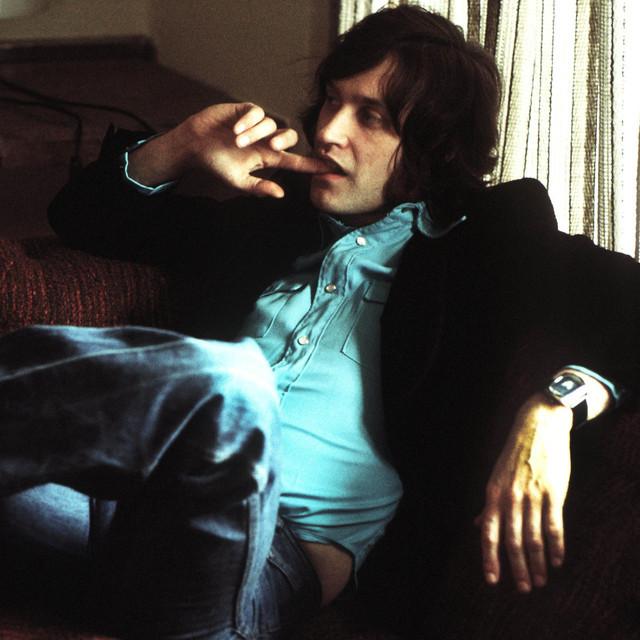
Dave Davies

Rock
Alternative Rock
Blues Rock
 Viberate Rank: 115807
 Viberate Rank: 115807
 Monthly ListenersFollowers
 Subscribers
 Followers
 Followers
 FansTop Spotify SongsTop YouTube VideosMonthly ListenersFeatured in Playlists
| Playlist | Followers | |
|---|---|---|
1 |  Fidi & Bumsi Spotify | 353.23K |
2 |  How I Met Your Mother: Songs From The Show Sam M. | 71.67K |
3 | How I Met Your Mother (Music from the Show) himym | 47.86K |
4 | wicks Brennan McDowell | 43.73K |
5 |  Tour of Duty - The Playlist Micha Bessems | 32.52K |
Audience| City | Monthly Listeners | |
|---|---|---|
1 |  | 144 |
2 | | 128 |
3 | | 98 |
4 | | 96 |
5 | | 94 |
See full performance history, audience data, playlist activity, rankings, comparisons, and more in Viberate music analytics. Start with a free trial, then continue with a paid plan.
Dave Davies’ Spotify BioAs the guitarist and occasional lead singer in the Kinks, Dave Davies played a pivotal role in pushing rock & roll into the modern era, creating the power chord on the band's early rockers "You Really Got Me" and "All Day and All of the Night." Davies functioned as the exuberant counterpoint to his wry brother Ray, especially during the late 1960s, when the group specialized in social commentary and satirical vignettes. At this point, Dave also found his voice as a songwriter, a growth showcased on the shambling folk-rock of "Death of a Clown," a Kinks song released as a solo single by Dave in 1967. It reached number three in the U.K., so for a brief period, Dave was marketed as a solo act before returning to the fold, where he occasionally contributed a song or a lead vocal to an album. Davies' solo career began in earnest with the release of AFL1-3603 in 1980, the first of three hard-rocking AOR albums that ran parallel to the Kinks' success on MTV. Once he and Ray parted ways for… good in the mid-'90s, Dave dedicated himself to his solo career, recording ambitious, idiosyncratic albums like 2002's Bug and 2013's I Will Be Me.
David Russell Gordon Davies was born on February 3, 1947 in the Muswell Hill section of London, England. Dave immersed himself in skiffle and early rock, and in 1963 he and bassist Pete Quaife formed the Kinks. It wasn't long before Dave's brother (and frequent rival) Ray Davies joined the band, and with the addition of Mick Avory on drums, the first edition of the Kinks was complete. The band landed a contract with Pye Records, and after a pair of singles that flopped, the Kinks found their sound in August 1964 with "You Really Got Me," which was powered by Dave's distorted lead guitar and a simple but muscular guitar riff. It was the first in a string of great 45s the band would release over the next several years, and while Ray was the Kinks' principal songwriter, Dave contributed more than his share of memorable tunes. In the late '60s, Dave made some solo singles that met with critical success in Britain, although they were unknown in the U.S. "Death of a Clown" (also included on the Kinks' Something Else LP) made number three on the British charts in 1967, and the follow-up, "Susannah's Still Alive," also did fairly well.
Dave considered making a solo album at this time, but after a couple other solo singles flopped, he seemed to lose heart and abandoned his plans (some unreleased solo tracks from this period turned up on the obscure Kinks bootleg Good Luck Charm). Dave finally began a solo career in earnest with a strong mainstream rock effort, 1980's AFL1-3603, followed by 1981's Glamour and 1983's Chosen People. These albums found limited commercial success despite modest but favorable reviews. Released in 1987, The Album That Never Was collected Dave's rare single sides from the '60s into a facsimile of what a Dave Davies solo effort might have been like. His work was neatly summarized on Unfinished Business: Dave Davies Kronikles 1963-1998. In 1996, the Kinks announced their retirement, and the hard-rocking Bug from 2002 was Dave's first album of new material in nearly 20 years. Davies suffered a major stroke in 2004 and used composing and painting as therapy during the lengthy recovery period that followed. The new song "God in My Brain" was inspired by the stroke and appeared on the 2006 compilation Kinked. In 2007, Davies released his first full-length post-stroke studio album, Fractured Mindz, on the Koch label.
In 2011, BBC Four aired the revealing documentary Dave Davies: Kinkdom Come, in which he was interviewed at length about his time with the Kinks, his relationship with Ray, and the spirituality that helped him through the aforementioned period of serious ill health. June 2013 brought I Will Be Me, an album that balanced hard-edged rockers with more sedate, contemplative material, all of which displayed a rich vein of nostalgia. In February 2014, Davies played his first U.K. concert since 2001, and he returned that autumn with Rippin' Up Time, a record produced by occasional Wondermints member David Nolte. In December 2015, Dave Davies played a concert at London's Islington Assembly Hall, where the pleasantly shocked audience saw his brother Ray Davies join his brother on-stage for a performance of "You Really Got Me." The show led to widespread speculation that the Kinks would reunite; that failed to happen, but Dave did collaborate on an album with his son Russ Davies, 2017's Open Road, and Davies announced a U.S. tour in support. The next year, Davies put out Decade, a compilation of recordings he made in the '70s but never released.
Dave Davies published Living on a Thin Line, his second autobiography, in 2022. Accompanying the book was a compilation of the same name that focused on latter-day material. ~ Stephen Thomas Erlewine & Richie Unterberger, Rovi
Viberate is a music analytics platform built for A&Rs, artist managers, labels, booking agents, marketers, and artists.
It helps music professionals track artist growth, analyze audience data, monitor playlist activity, compare artists, follow song performance, and identify opportunities across the music market.
Public artist pages provide a free preview of selected artist data. Paid plans provide access to deeper analytics, historical data, charts, comparisons, playlist tools, exports, alerts, reports, and additional professional features.
Yes. Public Viberate artist pages provide selected artist analytics and music data for free.
Viberate also offers a 7-day free trial of the full platform. A credit card is required to start the trial. The trial includes access to the complete product so users can test deeper artist analytics, historical views, playlist insights, comparisons, charts, exports, alerts, and reporting features before choosing a paid plan.
Viberate provides artist analytics across streaming, playlists, social media, video, radio airplay, songs, and audience markets.
Users can analyze Spotify performance, Spotify and Apple Music playlists, YouTube activity, TikTok and Instagram growth, radio spins, song performance, audience locations, demographics, rankings, and overall artist momentum.
Artist profiles also connect to music charts, similar artists, and comparison tools, helping users benchmark performance and evaluate artists in context.
Viberate updates key artist and track data daily.
For followed artists and tracks, selected data is refreshed multiple times per day. This helps teams monitor playlist changes, streaming movement, audience growth, releases, and campaign performance with more current data.
Update frequency can vary depending on the metric and data source.
Yes. Viberate lets users compare up to five artists side by side across streaming, social media, audience, and engagement metrics.
Users can compare fanbase growth, audience demographics, locations, Spotify performance, social metrics, and other artist data over selected time periods.
Artist comparison can be used for A&R scouting, benchmarking, booking decisions, campaign planning, and evaluating artists with similar audiences or market positions.