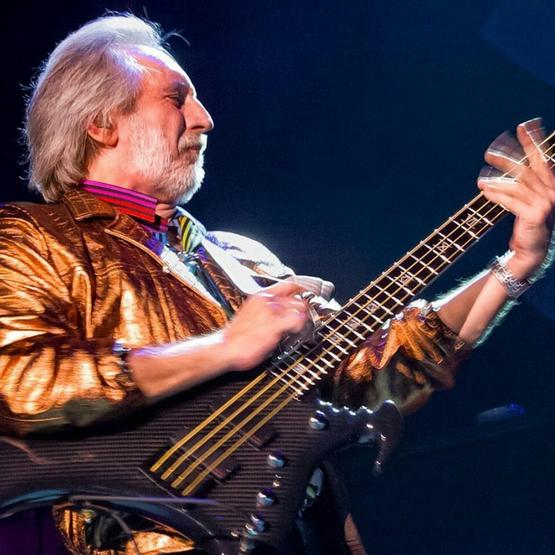
John Entwistle

Rock
Hard Rock
Alternative Rock
 Viberate Rank: 209055
 Viberate Rank: 209055
 Monthly ListenersFollowers
 Subscribers
 Followers
 Followers
 FansTop Spotify Songs
| Track | 7-Day Streams | |
|---|---|---|
1 | 732 | |
2 | 305 | |
3 | 210 | |
4 | 186 | |
5 | 180 |
Top YouTube VideosMonthly ListenersFeatured in Playlists| Playlist | Followers | |
|---|---|---|
1 |  70s Proto-Metal, Heavy Psych & Obscure Hard Rock Jordan Edrei | 11.27K |
2 | Mi casa es la tuya - Bertín Osborne Max Millares | 9.24K |
3 | Marijuana.com 420 Playlist 1225927807 | 5.98K |
4 |  Deep Cuts, Forgotten Gems & Classic Rock Gold Rick Kirby - music nerd | 5.63K |
5 |  BASS GUITAR GROOVES & SOLOS BASS INSTRUMENTALS BASSISTS DOUBLE BASS BAJO MELODIC AMBIENT BAIXO Tim Chapple Bass Guitar Bassist | 2.79K |
Audience| City | Monthly Listeners | |
|---|---|---|
1 |  | 95 |
2 |  | 92 |
3 | | 84 |
4 | | 76 |
5 |  | 64 |
See full performance history, audience data, playlist activity, rankings, comparisons, and more in Viberate music analytics. Start with a free trial, then continue with a paid plan.
John Entwistle’s Spotify BioJohn Alec Entwistle (b. October 9, 1944, d. June 27, 2002) is probably the most influential bassist in rock music. Before Entwistle came along as a member of the Who, bassists seldom stood out for their playing and few casual listeners knew or cared what purpose the four-stringed instrument served -- after he came along, everyone knew. Born in Chiswick, Entwistle was a member of the Confederates with Pete Townshend while still in grammar school in 1959. Trained in both the piano and the French horn, he was one of the most musically accomplished teenagers ever to play in a skiffle band. Invited by Roger Daltrey to join his band, the Detours, Entwistle accepted, and was joined soon after by Townshend. With the addition of drummer Keith Moon, this band, later renamed the High Numbers and finally the Who, became part of the second wave of successful British Invasion acts, getting their recording act together in 1964 and 1965.
The Who had started out with Daltrey and Townshend sharing guitar… chores, until Daltrey gave the instrument up. The change to a single guitar was vital to Entwistle (nicknamed "The Ox"), who began to play extremely loud and complex parts to compensate for the absence of a rhythm guitar -- the result was that, from the Who's first singles to their last, Entwistle's bass work was some of the most complex and audible in rock music. He played fills, countermelodies, and all manner of material, and stood out doing it. Moreover, he tended to stand out precisely by not standing out: Townshend had his windmill strumming technique, Daltrey was the lead singer, and Moon was so animated on the drums that he was scary, but amid this pandemonium on stage, Entwistle simply stood there and played, providing an anchor that kept the band from flying off in all directions, both visually and musically.
As a songwriter, he wasn't nearly as prolific as Townshend, but Entwistle had a bizarre sense of humor that contrasted very nicely with Townshend. From "Boris the Spider" and "Whiskey Man" to "My Wife," Entwistle had a knack for capturing dark humor that lightened up every Who album, and even managed to contribute a couple of songs to Tommy. As a solo musician, however, his career was somewhat more uneven than that of Townshend. Entwistle's first solo album, Smash Your Head Against the Wall (1971) was, in many ways, a lost Who album, recorded the way the bassist would've handled the group. His next album, Whistle Rhymes (1972), released the same week as Pete Townshend's Who Came First, was a rather more uneven album. Nine months later, Entwistle's third solo album, Rigor Mortis Sets In (1973), was released, to indifferent sales and critical response. It was nine years before another Entwistle solo album, Too Late the Hero, would appear. By that time, the Who had long passed their prime (Moon had died in 1978, and the group was in the midst of an awkward reassessment), but the record still managed to peak at number 71 in America. The band was to have retired following its farewell tour in 1982, but Entwistle's financial problems, coupled with the seeming demand for a reunion, led to another tour in 1989, which set the bandmembers up well financially but was a critical disaster.
In 1996, a never-released Entwistle album from the mid-1980s titled Rock appeared on the Griffin label; a year before, Entwistle had begun putting together a backing unit with producer Steve Luongo. Christened simply the John Entwistle Band, the outfit featured guitarist Godfrey Townsend and keyboardist Gordon Cotton, with vocal chores divided between all the members. This group issued Left for Live in 1999. In late June 2002, the Who had regrouped and were about to kick off a North American tour when John Entwistle died at the age of 57 in Las Vegas' Hard Rock Hotel. ~ Bruce Eder, Rovi
Viberate is a music analytics platform built for A&Rs, artist managers, labels, booking agents, marketers, and artists.
It helps music professionals track artist growth, analyze audience data, monitor playlist activity, compare artists, follow song performance, and identify opportunities across the music market.
Public artist pages provide a free preview of selected artist data. Paid plans provide access to deeper analytics, historical data, charts, comparisons, playlist tools, exports, alerts, reports, and additional professional features.
Yes. Public Viberate artist pages provide selected artist analytics and music data for free.
Viberate also offers a 7-day free trial of the full platform. A credit card is required to start the trial. The trial includes access to the complete product so users can test deeper artist analytics, historical views, playlist insights, comparisons, charts, exports, alerts, and reporting features before choosing a paid plan.
Viberate provides artist analytics across streaming, playlists, social media, video, radio airplay, songs, and audience markets.
Users can analyze Spotify performance, Spotify and Apple Music playlists, YouTube activity, TikTok and Instagram growth, radio spins, song performance, audience locations, demographics, rankings, and overall artist momentum.
Artist profiles also connect to music charts, similar artists, and comparison tools, helping users benchmark performance and evaluate artists in context.
Viberate updates key artist and track data daily.
For followed artists and tracks, selected data is refreshed multiple times per day. This helps teams monitor playlist changes, streaming movement, audience growth, releases, and campaign performance with more current data.
Update frequency can vary depending on the metric and data source.
Yes. Viberate lets users compare up to five artists side by side across streaming, social media, audience, and engagement metrics.
Users can compare fanbase growth, audience demographics, locations, Spotify performance, social metrics, and other artist data over selected time periods.
Artist comparison can be used for A&R scouting, benchmarking, booking decisions, campaign planning, and evaluating artists with similar audiences or market positions.