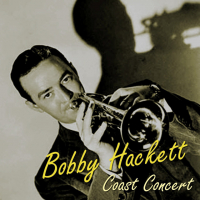
Bobby Hackett

Jazz
Swing
Big band Jazz
 Viberate Rank: 91714
 Viberate Rank: 91714
 Monthly ListenersFollowers
 Subscribers
 Followers
 Followers
 FansTop Spotify Songs
| Track | 7-Day Streams | |
|---|---|---|
1 | 18.79K | |
2 | 9.61K | |
3 | 9.27K | |
4 | 8.06K | |
5 | 8.06K |
Top YouTube VideosMonthly ListenersFeatured in Playlists| Playlist | Followers | |
|---|---|---|
1 |  Haruki Murakami's vinyl collection Masamaro | 109.94K |
2 |  Good Morning Matthew Meyer | 31.54K |
3 |  Essential Classics Essential Classics | 31.39K |
4 |  LINDY HOP Dance Music Li Smuki | 22.75K |
5 |  fall jazz by snoopy ash ♡ | 19.86K |
Audience| City | Monthly Listeners | |
|---|---|---|
1 | | 740 |
2 | | 734 |
3 | | 587 |
4 |  | 424 |
5 | | 415 |
See full performance history, audience data, playlist activity, rankings, comparisons, and more in Viberate music analytics. Start with a free trial, then continue with a paid plan.
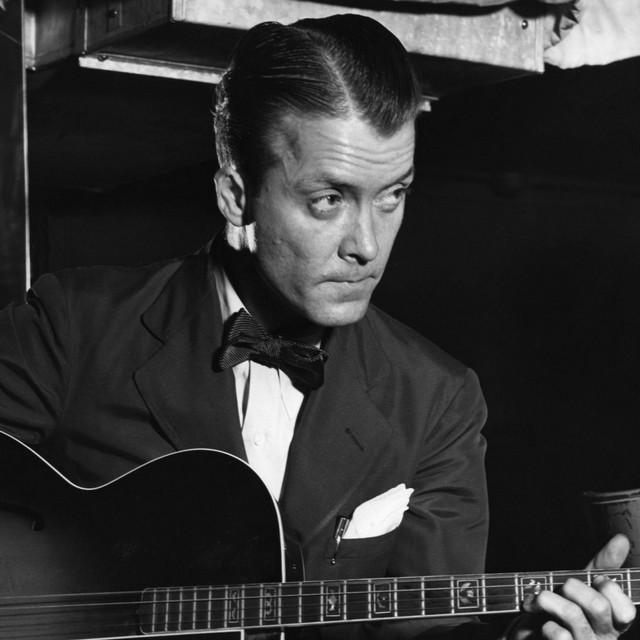
Bobby Hackett’s Spotify BioBobby Hackett's mellow tone and melodic style offered a contrast to the brasher Dixieland-oriented trumpeters. Emphasizing his middle-register and lyricism, Hackett was a flexible soloist who actually sounded little like his main inspiration, Louis Armstrong.
When Hackett first came up he was briefly known as "the new Bix" because of the similarity in his approach to that of Bix Beiderbecke, but very soon he developed his own distinctive sound. Originally a guitarist (which he doubled on until the mid-'40s), Hackett performed in local bands, and by 1936 was leading his own group. He moved to New York in 1937, played with Joe Marsala, appeared at Benny Goodman's 1938 Carnegie Hall concert (recreating Beiderbecke's solo on "I'm Coming Virginia"), recorded with Eddie Condon, and by 1939 had a short-lived big band. Hackett played briefly with Horace Heidt, and during 1941-1942 was with Glenn Miller's Orchestra, taking a famous solo on "String of Pearls." Next up was a stint with the Casa… Loma Orchestra, and then he became a studio musician while still appearing with jazz groups. Hackett was a major asset at Louis Armstrong's 1947 Town Hall Concert, in the 1950s he was a star on Jackie Gleason's commercial but jazz-flavored mood music albums, and he recorded several times with Eddie Condon and Jack Teagarden. During 1956-1957, Hackett led an unusual group that sought to modernize Dixieland (using Dick Cary's arrangements and an unusual instrumentation), but that band did not catch on. Hackett recorded some commercial dates during 1959-1960 (including one set of Hawaiian songs and another in which he was backed by pipe organ), he worked with Benny Goodman (1962-1963); backed Tony Bennett in the mid-'60s; co-led a well-recorded quintet with Vic Dickenson (1968-1970); and made sessions with Jim Cullum, the World's Greatest Jazz Band, and even Dizzy Gillespie and Mary Lou Williams, remaining active up until his death. Among the many labels Bobby Hackett recorded for as a leader were Okeh (reissued by Epic), Commodore, Columbia, Epic, Capitol, Sesac, Verve, Project 3, Chiaroscuro, Flying Dutchman, and Honey Dew. ~ Scott Yanow, Rovi
Viberate is a music analytics platform built for A&Rs, artist managers, labels, booking agents, marketers, and artists.
It helps music professionals track artist growth, analyze audience data, monitor playlist activity, compare artists, follow song performance, and identify opportunities across the music market.
Public artist pages provide a free preview of selected artist data. Paid plans provide access to deeper analytics, historical data, charts, comparisons, playlist tools, exports, alerts, reports, and additional professional features.
Yes. Public Viberate artist pages provide selected artist analytics and music data for free.
Viberate also offers a 7-day free trial of the full platform. A credit card is required to start the trial. The trial includes access to the complete product so users can test deeper artist analytics, historical views, playlist insights, comparisons, charts, exports, alerts, and reporting features before choosing a paid plan.
Viberate provides artist analytics across streaming, playlists, social media, video, radio airplay, songs, and audience markets.
Users can analyze Spotify performance, Spotify and Apple Music playlists, YouTube activity, TikTok and Instagram growth, radio spins, song performance, audience locations, demographics, rankings, and overall artist momentum.
Artist profiles also connect to music charts, similar artists, and comparison tools, helping users benchmark performance and evaluate artists in context.
Viberate updates key artist and track data daily.
For followed artists and tracks, selected data is refreshed multiple times per day. This helps teams monitor playlist changes, streaming movement, audience growth, releases, and campaign performance with more current data.
Update frequency can vary depending on the metric and data source.
Yes. Viberate lets users compare up to five artists side by side across streaming, social media, audience, and engagement metrics.
Users can compare fanbase growth, audience demographics, locations, Spotify performance, social metrics, and other artist data over selected time periods.
Artist comparison can be used for A&R scouting, benchmarking, booking decisions, campaign planning, and evaluating artists with similar audiences or market positions.