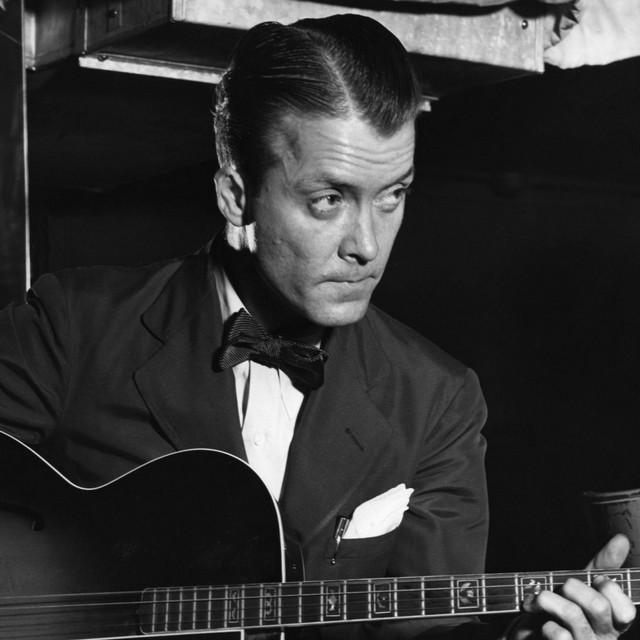
Eddie Condon

Jazz
Big band Jazz
 Viberate Rank: 211863
 Viberate Rank: 211863
 Monthly ListenersFollowers
 Subscribers
 Followers
 Followers
 FansTop Spotify Songs
| Track | 7-Day Streams | |
|---|---|---|
1 | 3.84K | |
2 | 2.90K | |
3 | 2.90K | |
4 | 2.90K | |
5 | 2.90K |
Top YouTube VideosMonthly ListenersFeatured in Playlists| Playlist | Followers | |
|---|---|---|
1 |  Dixieland Classics Filtr Legacy Sweden | 46.34K |
2 |  SWING DANCE - LINDY HOP - The best playlist - LOLA VAN Josep Anton Sr Escarlata | 44.61K |
3 |  LINDY HOP Dance Music Li Smuki | 22.77K |
4 | Lindy Hop / Vintage Jazz / Charleston / ... Filipe Abrantes | 13.54K |
5 |  Rockabilly Peter Karlsson | 13.32K |
Audience| City | Monthly Listeners | |
|---|---|---|
1 | | 249 |
2 | | 248 |
3 |  | 240 |
4 | | 240 |
5 |  | 169 |
See full performance history, audience data, playlist activity, rankings, comparisons, and more in Viberate music analytics. Start with a free trial, then continue with a paid plan.
Eddie Condon’s Spotify BioA major propagandist for freewheeling Chicago jazz, an underrated rhythm guitarist, and a talented wisecracker, Eddie Condon's main importance to jazz was not so much through his own playing as in his ability to gather together large groups of all-stars and produce exciting, spontaneous, and very coherent music.
Condon started out playing banjo with Hollis Peavey's Jazz Bandits when he was 17, he worked with members of the famed Austin High School Gang in the 1920s, and in 1927 he co-led (with Red McKenzie) the McKenzie-Condon Chicagoans on a record date that helped define Chicago jazz (and featured Jimmy McPartland, Jimmy Teschemacher, Joe Sullivan, and Gene Krupa). After organizing some other record sessions, Condon switched to guitar, moved to New York in 1929, worked with Red Nichols' Five Pennies and Red McKenzie's Blue Blowers, and recorded in several settings, including with Louis Armstrong (1929) and the Rhythm Makers (1932). During 1936-1937, he co-led a band with Joe Marsala.
A…lthough Condon had to an extent laid low since the beginning of the Depression, in 1938, with the opportunity to lead some sessions for the new Commodore label, he became a major name. Playing nightly at Nick's (1937-1944), Condon utilized top musicians in racially mixed groups. He started a long series of exciting recordings (which really continued on several labels up until his death), and his Town Hall concerts of 1944-1945 (which were broadcast weekly on the radio) were consistently brilliant and gave him an opportunity to show his verbal acid wit; the Jazzology label reissued them complete and in chronological order. Condon opened his own club in 1945, recorded for Columbia in the 1950s (all of those records have been made available by Mosaic on a limited-edition box set), and wrote three colorful books, including his 1948 memoirs We Called It Music. A partial list of the classic musicians who performed and recorded often with Condon include trumpeters/cornetists Wild Bill Davison, Max Kaminsky, Billy Butterfield, Bobby Hackett, Rex Stewart, and Hot Lips Page; trombonists Jack Teagarden, Lou McGarity, Cutty Cutshall, George Brunies, and Vic Dickenson; clarinetists Pee Wee Russell, Edmond Hall, Joe Marsala, Peanuts Hucko, and Bob Wilbur; Bud Freeman on tenor; baritonist Ernie Caceres; pianists Gene Schroeder, Joe Sullivan, Jess Stacy, and Ralph Sutton; drummers George Wettling, Dave Tough, and Gene Krupa; a string of bassists; and singer Lee Wiley. Many Eddie Condon records are currently available, and no jazz collection is complete without at least a healthy sampling. ~ Scott Yanow, Rovi
Viberate is a music analytics platform built for A&Rs, artist managers, labels, booking agents, marketers, and artists.
It helps music professionals track artist growth, analyze audience data, monitor playlist activity, compare artists, follow song performance, and identify opportunities across the music market.
Public artist pages provide a free preview of selected artist data. Paid plans provide access to deeper analytics, historical data, charts, comparisons, playlist tools, exports, alerts, reports, and additional professional features.
Yes. Public Viberate artist pages provide selected artist analytics and music data for free.
Viberate also offers a 7-day free trial of the full platform. A credit card is required to start the trial. The trial includes access to the complete product so users can test deeper artist analytics, historical views, playlist insights, comparisons, charts, exports, alerts, and reporting features before choosing a paid plan.
Viberate provides artist analytics across streaming, playlists, social media, video, radio airplay, songs, and audience markets.
Users can analyze Spotify performance, Spotify and Apple Music playlists, YouTube activity, TikTok and Instagram growth, radio spins, song performance, audience locations, demographics, rankings, and overall artist momentum.
Artist profiles also connect to music charts, similar artists, and comparison tools, helping users benchmark performance and evaluate artists in context.
Viberate updates key artist and track data daily.
For followed artists and tracks, selected data is refreshed multiple times per day. This helps teams monitor playlist changes, streaming movement, audience growth, releases, and campaign performance with more current data.
Update frequency can vary depending on the metric and data source.
Yes. Viberate lets users compare up to five artists side by side across streaming, social media, audience, and engagement metrics.
Users can compare fanbase growth, audience demographics, locations, Spotify performance, social metrics, and other artist data over selected time periods.
Artist comparison can be used for A&R scouting, benchmarking, booking decisions, campaign planning, and evaluating artists with similar audiences or market positions.