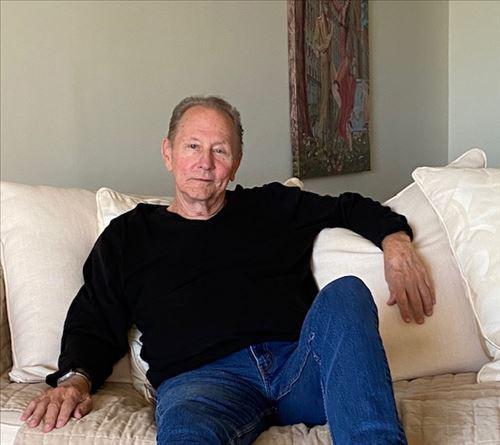
Bob Lind

Rock
Folk Rock
Progressive Rock
 Viberate Rank: 162043
 Viberate Rank: 162043
 Monthly ListenersFollowers
 Subscribers
 Followers
 Followers
 FansTop Spotify Songs
| Track | 7-Day Streams | |
|---|---|---|
1 | 11.87K | |
2 | 1.50K | |
3 | 702 | |
4 | 636 | |
5 | 612 |
Top YouTube VideosMonthly ListenersFeatured in Playlists| Playlist | Followers | |
|---|---|---|
1 |  Once Upon A Time In...Hollywood Radio Josh Gardner | 100.16K |
2 | 1960's top hits Wolfgang Schneider | 25.23K |
3 | Soft Rock and Pop: 60s, 70s, 80s dachweiler | 25.10K |
4 | Unofficial Reverb Radio Jeff Ferruzzo | 21.82K |
5 | 100% Big Thief | 19.55K |
Audience| City | Monthly Listeners | |
|---|---|---|
1 |  | 1.08K |
2 |  | 1.03K |
3 | | 935 |
4 | | 667 |
5 | | 573 |
See full performance history, audience data, playlist activity, rankings, comparisons, and more in Viberate music analytics. Start with a free trial, then continue with a paid plan.
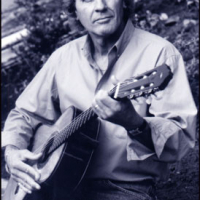
Bob Lind’s Spotify BioBob Lind has enjoyed a sizable cult following based on a rather small body of work. He released only four albums between 1966 and 1971 (one a collection of demos never intended for commercial release), and landed just one single in the Top 40. Despite this, he's acknowledged as one of the key artists in the '60s folk-rock boom, and over 200 different artists have recorded his songs. "Elusive Butterfly," a chart success in 1966, was a breezy number that nodded to psychedelia and sunshine pop, and his material of the era (as collected on The Best of Bob Lind: You Might Have Heard My Footsteps) is carefully crafted folk-rock with a pop sensibility. Lind detoured into country rock for 1971's Since There Were Circles, and when he returned to music with 2012's Finding You Again, he'd added Baroque accents to his arrangements (created by Jamie Hoover of the Spongetones), and a darker and more cynical lyrical outlook dominated 2016's Magellan Was Wrong and 2022's Something Worse Than… Loneliness.
Robert Neale Lind was born in Baltimore, Maryland on November 25, 1944. His family moved a great deal when he was young, but as a teenager he settled in Denver, Colorado and began singing rock & roll and rhythm & blues when he was in eighth grade. In high school, Lind formed a band called the Moonlighters, and while attending Western State University in Gunnison, Colorado, he led a rock group, Bob Lind & the Misfits, who specialized in early rock covers. As a new breed of songwriters emerged on the folk music scene in the early '60s, Lind took up songwriting and started playing occasional shows at local coffee houses. He relocated to San Francisco, where he continued writing songs and playing small venues, and in 1965, he headed south to Los Angeles, where he scored an audition with World Pacific Records, a subsidiary of Liberty Records. World Pacific signed Lind to a record contract, and after he landed a publishing deal with Metric Music, he was introduced to producer and arranger Jack Nitzsche, who liked Lind's songs and agreed to work with him. With Nitzsche providing artful backdrops for Lind's emotionally literate songs, the two proved to be an inspired pair in the studio, and World Pacific had high hopes for Lind's first single, "Cheryl's Goin' Home." However, several disc jockeys began playing the flipside, "Elusive Butterfly," and the song rose to number five on the Billboard Singles charts in 1966.
Lind's debut album, Don't Be Concerned, was released shortly afterwards, and also featured "Elusive Butterfly"'s follow-up, "Remember the Rain" b/w "Truly Julie's Blues," which peaked at number 65 in the United States. A second album, Photographs of Feeling, also produced by Nitzsche, was released by World Pacific by the end of the year, while Verve-Folkways issued an album called The Elusive Bob Lind, which featured early unreleased demos overdubbed with new accompaniment without Lind's input. By Lind's own admission, he developed a powerful taste for alcohol and drugs once "Elusive Butterfly" made him a celebrity, and he became angry and difficult to work with; he severed ties with Nitzsche and was dropped by World Pacific after a pair of unsuccessful singles. He briefly retired from music and moved to New Mexico, but recorded a new album in 1971 at the behest of Doug Weston, who ran the successful Los Angeles music club The Troubadour. 1971's Since There Were Circles was an accomplished set of folk-infused country-rock, but Capitol Records put little promotional effort behind it, and after it tanked in the marketplace, Lind once again turned his back on the music business.
Lind moved to Florida, gave up drinking and drugs, and began working as a writer, penning novels and screenplays while also contributing to the surreal tabloid the Weekly World News. Meanwhile, other artists continued to cover his songs, and his small body of work earned a following both in America and abroad; Jarvis Cocker paid homage to Lind in the song "Bob Lind (The Only Way Is Down)" on Pulp's 2001 album We Love Life, and Richard Hawley has cited Lind as an influence. Lind continued to write songs during his time away from the spotlight, and in 2004, he booked a small show at the Luna Star Café in North Miami. The show was well received, and Lind was soon invited by his longtime friend Arlo Guthrie to perform at the Guthrie Center in Great Barrington, Massachusetts. Lind resumed a regular touring schedule, playing clubs in the United States, and theaters and festivals in United Kingdom, while the majority of his back catalog has been reissued on CD. In 2006, Lind released a limited-edition live album from one of his periodic Miami shows, Live at the Luna Star Café, and after collaborating on new recordings with Jamie Hoover of the Spongetones, he released a fresh studio album, Finding You Again, in 2012. Four years later, Lind returned with an ambitious studio project, Magellan Was Wrong, which found him working with Hoover again, as well as jazz and R&B artist Greg Foat and experimental noise musician Frank "Rat Bastard" Falestra. Magellan Was Wrong also reflected a darker and less forgiving lyrical perspective from Lind, which continued on 2022's Something Worse Than Loneliness, his third collaboration with Jamie Hoover. ~ Mark Deming, Rovi
Viberate is a music analytics platform built for A&Rs, artist managers, labels, booking agents, marketers, and artists.
It helps music professionals track artist growth, analyze audience data, monitor playlist activity, compare artists, follow song performance, and identify opportunities across the music market.
Public artist pages provide a free preview of selected artist data. Paid plans provide access to deeper analytics, historical data, charts, comparisons, playlist tools, exports, alerts, reports, and additional professional features.
Yes. Public Viberate artist pages provide selected artist analytics and music data for free.
Viberate also offers a 7-day free trial of the full platform. A credit card is required to start the trial. The trial includes access to the complete product so users can test deeper artist analytics, historical views, playlist insights, comparisons, charts, exports, alerts, and reporting features before choosing a paid plan.
Viberate provides artist analytics across streaming, playlists, social media, video, radio airplay, songs, and audience markets.
Users can analyze Spotify performance, Spotify and Apple Music playlists, YouTube activity, TikTok and Instagram growth, radio spins, song performance, audience locations, demographics, rankings, and overall artist momentum.
Artist profiles also connect to music charts, similar artists, and comparison tools, helping users benchmark performance and evaluate artists in context.
Viberate updates key artist and track data daily.
For followed artists and tracks, selected data is refreshed multiple times per day. This helps teams monitor playlist changes, streaming movement, audience growth, releases, and campaign performance with more current data.
Update frequency can vary depending on the metric and data source.
Yes. Viberate lets users compare up to five artists side by side across streaming, social media, audience, and engagement metrics.
Users can compare fanbase growth, audience demographics, locations, Spotify performance, social metrics, and other artist data over selected time periods.
Artist comparison can be used for A&R scouting, benchmarking, booking decisions, campaign planning, and evaluating artists with similar audiences or market positions.