The Left Banke

Rock
Pop Rock
Progressive Rock
 Viberate Rank: 89197
 Viberate Rank: 89197
 Monthly ListenersFollowers
 Subscribers
 Followers
 Followers
 FansTop Spotify Songs
| Track | 7-Day Streams | |
|---|---|---|
1 | 28.34K | |
2 | 7.78K | |
3 | 2.40K | |
4 | 1.47K | |
5 | 804 |
Top YouTube VideosMonthly ListenersFeatured in Playlists| Playlist | Followers | |
|---|---|---|
1 | Classic Rock Greatest Hits Scott Pruden | 341.40K |
2 |  Baroque Pop Spotify | 120.31K |
3 |  Once Upon A Time In...Hollywood Radio Josh Gardner | 100.16K |
4 | 1960's top hits Wolfgang Schneider | 25.23K |
5 |  Ben Watt's SpinCycle Ben Watt | 23.18K |
Audience| City | Monthly Listeners | |
|---|---|---|
1 | | 1.45K |
2 | | 1.41K |
3 | | 1.36K |
4 | | 1.05K |
5 |  | 875 |
See full performance history, audience data, playlist activity, rankings, comparisons, and more in Viberate music analytics. Start with a free trial, then continue with a paid plan.
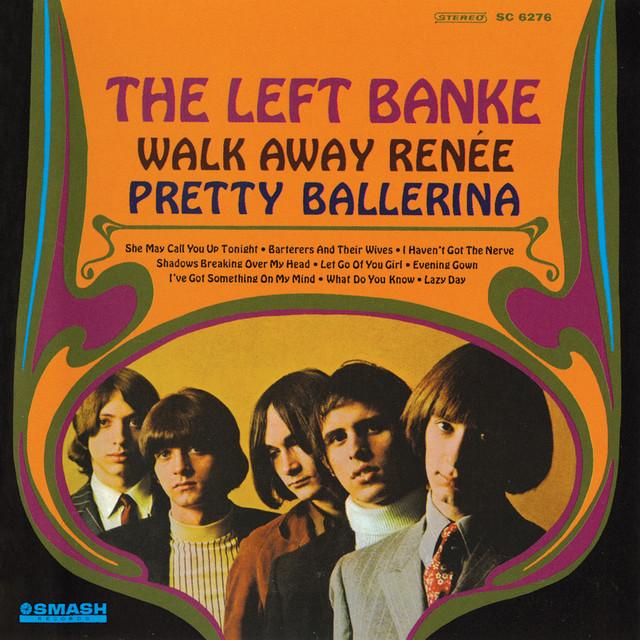
The Left Banke’s Spotify BioThe Left Banke are one of the best and most definitive examples of ‘60s Baroque pop, combining lush orchestral instrumentation like string arrangements and harpsichord with melancholic songwriting and the occasional hint of psychedelic fuzz. Though they never reached the same level of commercial fame as contemporaries like the Zombies or the Beatles, the Left Banke had two substantial hits, including “Pretty Ballerina” and the Top Five, oft-covered “Walk Away Renee.” Centered around the songwriting of keyboardist Michael Brown, the Left Banke’s membership was often shuffled, and internal tensions caused several breakups and line-up reconfigurations. The earliest phases of the Left Banke lasted roughly four years, between 1965 and 1969, but the band re-formed in 1978 to work on their long-shelved third album, Strangers on a Train, and subsequent generations of music fans discovered the band’s early chamber pop when compilations like 1992’s There’s Gonna Be a Storm: The Complete… Recordings 1966-1969 began surfacing. The various bandmembers remained active in music to different degrees throughout the years, and some of them reunited in 2011 for several live performances.
The Left Banke formed in New York in 1965, featuring then-teenage prodigy Brown as keyboardist and chief songwriter, and the soaring, near-falsetto lead vocals of Steve Martin (aka Steve Martin Caro), bassist Tom Finn, drummer George Cameron and guitarist Jeff Winfield. Initially, the group made some recordings that were produced by Brown's father, Harry Lookofsky. When these recordings failed to interest companies in signing the band, the Left Banke broke up, and Brown moved to California. A backing track for "Walk Away Renee" had already been completed, and the other members overdubbed vocals in Brown's absence. The song was released on Smash and became a hit in 1966, and the musicians reunited to tour and continue recording. Their second single “Pretty Ballerina” also had chart success, and a debut album was assembled around these two songs. Simple titled Walk Away Renee/Pretty Ballerina, the Left Banke’s first full-length was released in 1967, padding out their hit singles with nine additional Baroque pop gems. Due to the ornate nature of their music (which often employed session musicians), the Left Banke's sound was difficult to reproduce on the road, and Brown wanted to concentrate on writing and recording while the rest of the musicians took to the road. A variety of guitarists, as both session musicians and ostensible group members, flitted in and out of the lineup; Rick Brand, credited as the guitarist on the first LP, actually plays on only one of the album's songs. Adding fuel to the fire, Brown's bandmates wanted to oust his father as the act's manager. In early 1967, Brown went as far as to record a Left Banke single without them, using vocalist Bert Sommer. That single ("And Suddenly") didn’t draw much attention, and for a brief time in September 1967, the original members were recording together again. After just one single ("Desiree"), though, Brown left for good. Most of the group's second album, The Left Banke Too, was recorded without him. While it still sported Baroque arrangements and contained some fine moments, Brown's absence was noticeable. Brown went on to work with Baroque-psych group Montage, which released some work in the late '60s. He later teamed up to form Stories with vocalist Ian Lloyd and had a number one hit with the project's 1973 single "Brother Louie."
There were some confusing Left Banke-related recordings over the next few years, although the band really came to a halt in 1969, after the second album. Brown, Martin, and unknown musicians made a few recordings in late 1969; then, oddly, the original group re-formed for a fine early 1971 single on Buddah ("Love Songs in the Night" b/w "Two by Two"), although the record itself was credited to Steve Martin. The original group got together to record more music in 1978, but Brown quit after just one day in the studio. The remaining members recorded an album's worth of recordings without Brown, which were shelved for years before surfacing under the title Strangers on a Train in 1986.
The Left Banke's cult following slowly grew over time, especially after the release of 1992's There's Gonna Be a Storm, which collected the group's entire Smash Records catalog on one CD. Left Banke songs have been covered by everyone from Rickie Lee Jones and Susanna Hoffs & Matthew Sweet to Richard Thompson and Alice Cooper. In 2010, two of the original members of the group, Tom Finn and George Cameron, staged a pair of Left Banke reunion shows at Joe's Pub in New York City; joining them were vocalist Mike Fornatale, guitarist Paul Alves, bassist Charly Cazalet, drummer Rick Reil, and keyboardists Mickey Finn and Joe McGinty. The Joe's Pub shows were a critical and popular success, and the new edition of the Left Banke gigged periodically over the next few years. In 2011, Sundazed Records reissued Walk Away Renee/Pretty Ballerina and The Left Banke Too on vinyl and CD, allowing the two albums to be heard in their original sequence since they fell out of print in the '60s. In April 2013, Michael Brown joined the new Left Banke on-stage in New York City to perform "Pretty Ballerina," and it was announced that Steve Martin had signed on to return as the group's lead vocalist on March 18, 2015. These reunions would sadly never come to be, as Brown died shortly after the news was shared. Over the next several years, the rest of the original bandmembers would die with projects yet to be realized, with Cameron, Martin, and Finn all passing on between 2018 and 2020. ~ Richie Unterberger & Fred Thomas, Rovi
Viberate is a music analytics platform built for A&Rs, artist managers, labels, booking agents, marketers, and artists.
It helps music professionals track artist growth, analyze audience data, monitor playlist activity, compare artists, follow song performance, and identify opportunities across the music market.
Public artist pages provide a free preview of selected artist data. Paid plans provide access to deeper analytics, historical data, charts, comparisons, playlist tools, exports, alerts, reports, and additional professional features.
Yes. Public Viberate artist pages provide selected artist analytics and music data for free.
Viberate also offers a 7-day free trial of the full platform. A credit card is required to start the trial. The trial includes access to the complete product so users can test deeper artist analytics, historical views, playlist insights, comparisons, charts, exports, alerts, and reporting features before choosing a paid plan.
Viberate provides artist analytics across streaming, playlists, social media, video, radio airplay, songs, and audience markets.
Users can analyze Spotify performance, Spotify and Apple Music playlists, YouTube activity, TikTok and Instagram growth, radio spins, song performance, audience locations, demographics, rankings, and overall artist momentum.
Artist profiles also connect to music charts, similar artists, and comparison tools, helping users benchmark performance and evaluate artists in context.
Viberate updates key artist and track data daily.
For followed artists and tracks, selected data is refreshed multiple times per day. This helps teams monitor playlist changes, streaming movement, audience growth, releases, and campaign performance with more current data.
Update frequency can vary depending on the metric and data source.
Yes. Viberate lets users compare up to five artists side by side across streaming, social media, audience, and engagement metrics.
Users can compare fanbase growth, audience demographics, locations, Spotify performance, social metrics, and other artist data over selected time periods.
Artist comparison can be used for A&R scouting, benchmarking, booking decisions, campaign planning, and evaluating artists with similar audiences or market positions.