Allan Gray

Jazz
Big band Jazz
Swing
 Viberate Rank: 320293
 Viberate Rank: 320293
 Monthly ListenersFollowers
 Subscribers
 Followers
 Followers
 FansTop Spotify SongsTop YouTube VideosMonthly ListenersFeatured in Playlists
| Playlist | Followers | |
|---|---|---|
1 |  Fallout Radio Jon | 170.87K |
2 |  1930's-1950's Swing & Jazz michaeldil | 126.92K |
3 |  Fallout Radio (All Games) morgan | 112.87K |
4 | Swing Jazz Ragtime Early Rock & Roll 20's 30's 40's 50's 60's George Ace Thomas | 49.08K |
5 | Fallout 3 - Galaxy News Radio nonrandom | 43.45K |
Audience| City | Monthly Listeners | |
|---|---|---|
1 | | 276 |
2 | | 247 |
3 |  | 205 |
4 | | 182 |
5 |  | 182 |
See full performance history, audience data, playlist activity, rankings, comparisons, and more in Viberate music analytics. Start with a free trial, then continue with a paid plan.
Allan Gray’s Spotify BioAllan Gray was one of the busier film composers in England from the late '30s through the 1950s. Born Joseph Zmigrod in Poland in 1902, he took up music as a boy and studied with Arnold Schoenberg during the 1920s. At the end of that decade, he went to work for producer Max Reinhardt as a composer and was responsible for authoring a children's opera, Wavelength ABC, in the early '30s.
Gray began his career writing for motion pictures with the movie F.P. 1 (aka Flying Platform 1 Doesn't Answer), a 1933 feature mixing espionage, romance, and science fiction that was simultaneously produced in versions with different casts in England, Germany, France, and Spain. His last German film score was the music for the 1936 version of Emil and the Detectives, after which he left Germany for England, where he took the name Allan Gray. He -- along with Georges Auric and William Walton, and light music specialists such as Richard Addinsell, Charles Williams, and Eric Coates -- became one of the busier… composers in English films of the late '30s and early '40s.
Gray's film music didn't achieve real international exposure, however, until he went to work for the writer/producer/director team of Michael Powell and Emeric Pressburger, whose films received -- albeit, often after some delays owing to the exigencies of war -- major distribution around the world. After writing the music for a relatively obscure drama, The Silver Fleet, that the team produced but did not direct, Gray became their composer of choice. Beginning with The Life and Death of Colonel Blimp (1943), a 163-minute Technicolor character study covering the life of a man and a nation across three wars and five decades (often called "the British Citizen Kane"), Gray began writing in a lush, boldly orchestrated yet extremely nimble and clever style for the screen.
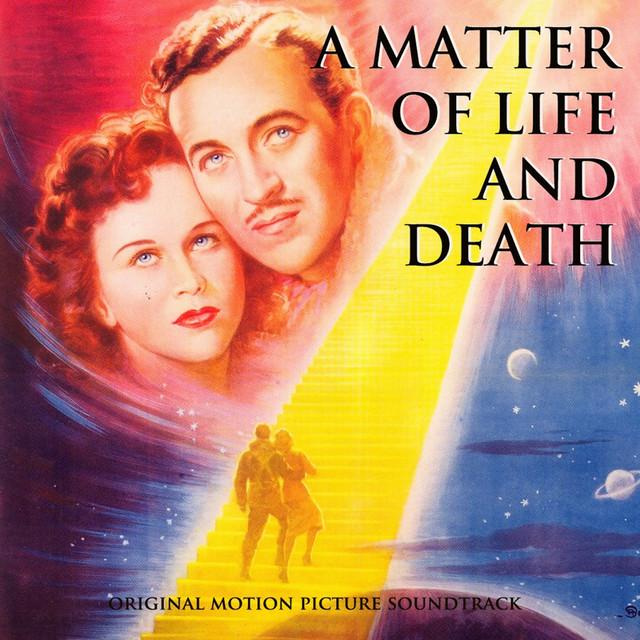
Beginning with The Life and Death of Colonel Blimp, Gray was propelled to the forefront of film music composition in England alongside the ranks of serious composers such as Georges Auric and William Walton, and specialists in light classical like Richard Addinsell, Charles Williams, and Eric Coates. His scores for A Canterbury Tale (1944) and I Know Where I'm Going (1945) utilized elements of traditional hymns and folk material in their content, to delightful and even occasionally dazzling effect, though in A Canterbury Tale he deferred to Johann Sebastian Bach and the Toccata and Fugue in D minor for the climactic section of the movie. Gray's magnum opus, however, was also Powell and Pressburger's greatest cinematic conjuring trick: Stairway to Heaven (aka A Matter of Life and Death). The 1946 fantasy/drama, the first movie to receive a Royal Command Performance, allowed Gray the opportunity to compose music on a vast canvas and range of scales, from the interior of a man's mind in the deepest state of dreaming to images encompassing much of the known universe -- sometimes in the same shot. In particular, an eight-note theme symbolizes stricken pilot David Niven's injury-caused hallucination of a heavenly trial for his life, after surviving a jump from a burning plane without a parachute (or perhaps it really isn't a hallucination -- the incident is based on fact). The theme is transmuted in a series of variations, orchestrations, and reductions from a piece on solo piano to a grand orchestral setting that even includes elements of a habanera-like dance in its tempo. Gray's music was so striking in its originality that it even withstood the opportunity, made necessary by one element of the script, for Felix Mendelssohn's A Midsummer Night's Dream scherzo to upstage his original material. Gray's score for Stairway to Heaven was his first to be recorded for commercial release, in the form of a short prelude that contained the major themes, made by composer/conductor Charles Williams and the Queen's Hall Light Orchestra on EMI's Columbia label. Gray's relationship with Powell and Pressburger ended after 1946, however, and his subsequent film assignments, apart from John Huston's The African Queen in 1951, were of a decidedly less prominent nature. After the 1950s, Gray, like most composers of his generation in England, disappeared from the film music landscape as producers and studios began looking for simpler, more directly commercial scores with which to present their films and sell soundtrack albums.
Gray's music at its best displays a command of strangely compelling melodies and unusual harmonies and scoring, all of it melodic, but stretching the meaning of that word into unusual shapes. Yet Gray could also write in styles that echoed the sounds of other composers from other traditions and eras -- his stately, lyrical, enveloping chorale accompanying the aftermath of the Armistice in The Life and Death of Colonel Blimp, for example, is a superb piece of pseudo-Elgarian composition. Additionally, his own style fit in easily alongside the Mendelssohn and Bach works, and traditional sources that the scripts of the films on which he worked often required as source music.
Viberate is a music analytics platform built for A&Rs, artist managers, labels, booking agents, marketers, and artists.
It helps music professionals track artist growth, analyze audience data, monitor playlist activity, compare artists, follow song performance, and identify opportunities across the music market.
Public artist pages provide a free preview of selected artist data. Paid plans provide access to deeper analytics, historical data, charts, comparisons, playlist tools, exports, alerts, reports, and additional professional features.
Yes. Public Viberate artist pages provide selected artist analytics and music data for free.
Viberate also offers a 7-day free trial of the full platform. A credit card is required to start the trial. The trial includes access to the complete product so users can test deeper artist analytics, historical views, playlist insights, comparisons, charts, exports, alerts, and reporting features before choosing a paid plan.
Viberate provides artist analytics across streaming, playlists, social media, video, radio airplay, songs, and audience markets.
Users can analyze Spotify performance, Spotify and Apple Music playlists, YouTube activity, TikTok and Instagram growth, radio spins, song performance, audience locations, demographics, rankings, and overall artist momentum.
Artist profiles also connect to music charts, similar artists, and comparison tools, helping users benchmark performance and evaluate artists in context.
Viberate updates key artist and track data daily.
For followed artists and tracks, selected data is refreshed multiple times per day. This helps teams monitor playlist changes, streaming movement, audience growth, releases, and campaign performance with more current data.
Update frequency can vary depending on the metric and data source.
Yes. Viberate lets users compare up to five artists side by side across streaming, social media, audience, and engagement metrics.
Users can compare fanbase growth, audience demographics, locations, Spotify performance, social metrics, and other artist data over selected time periods.
Artist comparison can be used for A&R scouting, benchmarking, booking decisions, campaign planning, and evaluating artists with similar audiences or market positions.