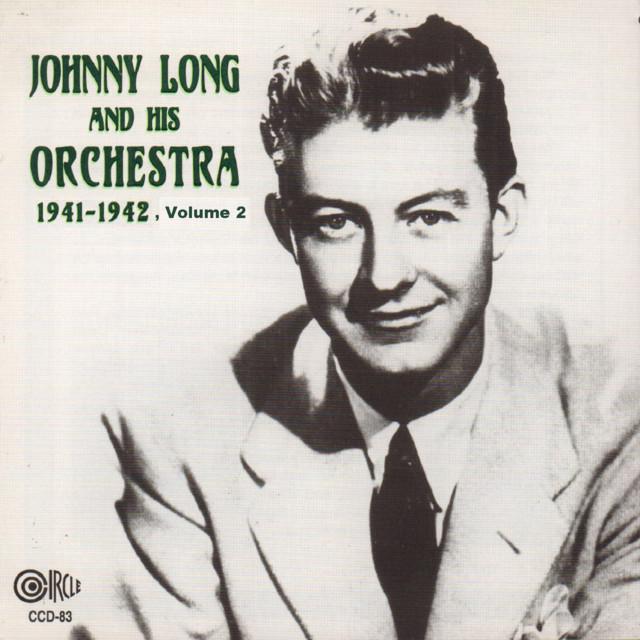
Johnny Long

Jazz
Swing
Big band Jazz
 Viberate Rank: 385547
 Viberate Rank: 385547
 Monthly ListenersFollowers
 Subscribers
 Followers
 Followers
 FansTop Spotify Songs
| Track | 7-Day Streams | |
|---|---|---|
1 | 7.43K | |
2 | 30 | |
3 | 27 | |
4 | 20 | |
5 | 9 |
Top YouTube VideosMonthly ListenersFeatured in Playlists| Playlist | Followers | |
|---|---|---|
1 |  Fallout Radio Jon | 170.87K |
2 |  Fallout Radio (All Games) morgan | 112.87K |
3 |  Wasteland Sounds Bearded Geek | 37.80K |
4 | Appalachia Radio Pierce Talbert | 32.32K |
5 |  Vintage Thanksgiving Music Audrey’s JukeBox | 30.32K |
Audience| City | Monthly Listeners | |
|---|---|---|
1 | | 198 |
2 | | 157 |
3 | | 134 |
4 | | 130 |
5 | | 120 |
See full performance history, audience data, playlist activity, rankings, comparisons, and more in Viberate music analytics. Start with a free trial, then continue with a paid plan.
Johnny Long’s Spotify BioJohnny Long, known as "the Man Who's Long on Music," was one of those ubiquitous talents of the big-band era, leading a group that -- to his detriment in terms of long-term exposure -- fit comfortably neither into the "swing" (i.e., jazz) nor "sweet" (i.e., pop) category beginning at the end of the 1930s. Johnny Long was born in 1915 (some sources say 1916) in Newell, NC. He was raised on a farm and manifested a serious interest in music while still a young boy, taking up the violin at age six. Long was born right-handed, but at age seven he seriously injured two fingers on his right hand in an accident on the farm -- he might well have left the violin, but he refused to give up on the instrument and his teacher was inspired by his dedication to reverse the stringing on his violin, and he proceeded to learn to play left-handed.
He was good enough to aspire to play professionally, a goal he pursued even as an undergraduate at Duke University. He formed a band, the Duke Collegians, in the… mid-'30s, and replaced Les Brown's group as the official college band after Brown's graduation. The members stayed together after their own graduation, renaming themselves the Johnny Long Orchestra, Long serving as their leader with assistance from his fellow Duke graduate Hal Kemp. The Johnny Long Orchestra came along with a sound that crossed swing and sweet sounds just as the swing boom was sweeping the country, and were good enough to play most of the better hotels in the East and the Midwest, with singers Bob Houston and Helen Young (who sang a killer version of "Takin' a Chance on Love") as well as the entire band -- often referred to as "the Glee Club" -- taking the vocals.
In 1939, while appearing in their first national radio broadcast on The Fitch Summer Bandwagon Show, the band was picked as one of the up-and-coming orchestras deserving of attention. And they scored a million-selling hit for the Decca label in 1940 with the song "In a Shanty in Old Shanty Town," which later replaced their old Duke University tribute, "White Star of Sigma Nu," as the group's signature tune, and from that time on they had no problem getting broadcast spots and engagements at the biggest hotels, which were then a rich source of income and exposure. Their subsequent hits included the wartime romantic number "No Love, No Nuthin'," sung by Patti Dugan, "Time Waits for No One," and "My Dreams Are Getting Better All the Time." They were soon known as one of the top dance bands in the country and engagements in the best nightspots in the biggest cities followed in short order.
In 1941, Long and company made the jump to motion pictures with their appearance in the short Swingin' at the Seance, and a year later they were the stars of the short RKO Jamboree: Johnny Long & His Orchestra. Their movie breakthrough came in 1943, however, when they were featured in the Abbott & Costello comedy Hit the Ice, in which the band played a very prominent role and Long also played one of the movie's two male romantic leads (albeit secondary to the two comedians) in the plot, opposite pop songstress Ginny Simms. With his pleasant personality and good looks, he was a natural for secondary male leads, at least, but Long appeared in just one more movie, Follies Girl, that same year. The regular television showings (and subsequent video releases) of the Abbott & Costello movie have kept Long and his band's on-screen legacy alive across more than 60 years.
At its peak in 1943, Long's band included saxman Ernie Caceres, multi-instrumentalist Pinie Caceres, alto man Jack Goldie, drummer Cliff Leeman, trumpeter Carl Berg, trombonist George Arus, guitarist Allan Reuss, pianist Ike Carpenter, and saxman Ted Nash. A lot of these players came from top bands, including those of Jack Teagarden and Benny Goodman, and a few, such as Nash and singers Bob Houston and Patti Dugan, later worked with Glenn Miller and Claude Thornhill, respectively. Dave Lambert, of Lambert, Hendricks & Ross, also passed through the group's lineup during the mid-'40s, and the group also got arrangements out of Glenn Miller mainstay Jerry Gray.
The orchestra's popularity lasted past the middle of the 1940s, and Long was able to keep the group together in a reduced version into the 1950s, playing to what audiences remained for big-band dance music -- he included singers Francie Laine, Janet Brace, and the vocal ensemble the Beachcombers, and managed to make a few recordings for Signature, Forum, and King. He finally called it quits in the early '60s, the end of the big bands' last gasp, in the hotel and cruise business, accomplishing what his old hand injury failed to do and driving him out of music. He embarked on a second career as an English teacher. His health declined steadily over the ensuing decade, however, and Long passed away in 1972, ironically just as a wave of nostalgia was reviving interest in the swing bands and the pop music of the 1930s through the 1950s, as a companion phenomenon to the late-'60s oldies craze in rock & roll. His image endures mostly through showings of Hit the Ice and a handful of historical recordings such as Collectors' Choice's Johnny Long & His Orchestra, part of their Forgotten Big Bands series. ~ Bruce Eder, Rovi
Viberate is a music analytics platform built for A&Rs, artist managers, labels, booking agents, marketers, and artists.
It helps music professionals track artist growth, analyze audience data, monitor playlist activity, compare artists, follow song performance, and identify opportunities across the music market.
Public artist pages provide a free preview of selected artist data. Paid plans provide access to deeper analytics, historical data, charts, comparisons, playlist tools, exports, alerts, reports, and additional professional features.
Yes. Public Viberate artist pages provide selected artist analytics and music data for free.
Viberate also offers a 7-day free trial of the full platform. A credit card is required to start the trial. The trial includes access to the complete product so users can test deeper artist analytics, historical views, playlist insights, comparisons, charts, exports, alerts, and reporting features before choosing a paid plan.
Viberate provides artist analytics across streaming, playlists, social media, video, radio airplay, songs, and audience markets.
Users can analyze Spotify performance, Spotify and Apple Music playlists, YouTube activity, TikTok and Instagram growth, radio spins, song performance, audience locations, demographics, rankings, and overall artist momentum.
Artist profiles also connect to music charts, similar artists, and comparison tools, helping users benchmark performance and evaluate artists in context.
Viberate updates key artist and track data daily.
For followed artists and tracks, selected data is refreshed multiple times per day. This helps teams monitor playlist changes, streaming movement, audience growth, releases, and campaign performance with more current data.
Update frequency can vary depending on the metric and data source.
Yes. Viberate lets users compare up to five artists side by side across streaming, social media, audience, and engagement metrics.
Users can compare fanbase growth, audience demographics, locations, Spotify performance, social metrics, and other artist data over selected time periods.
Artist comparison can be used for A&R scouting, benchmarking, booking decisions, campaign planning, and evaluating artists with similar audiences or market positions.