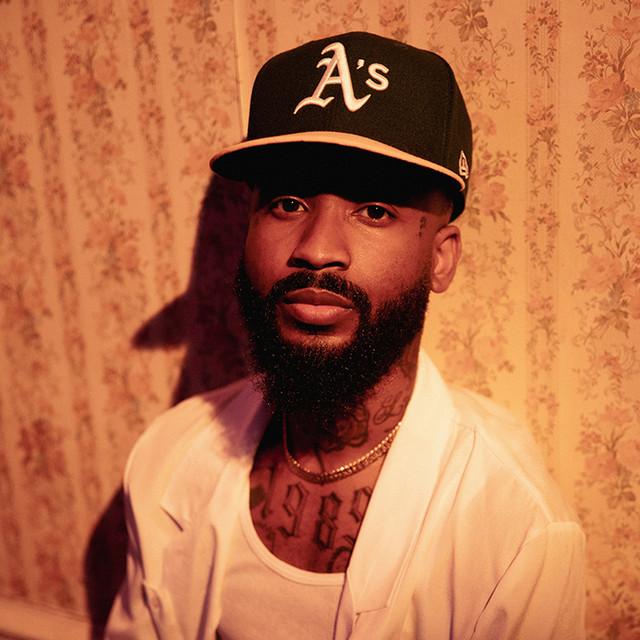
WESTSIDE BOOGIE

Hip Hop
Trap
Funk
 Viberate Rank: 15063
 Viberate Rank: 15063
 Monthly ListenersFollowers
 Subscribers
 Followers
 Followers
 FansTop Spotify Songs
| Track | 7-Day Streams | |
|---|---|---|
1 | 113.40K | |
2 | 68.83K | |
3 | 53.03K | |
4 | 42.19K | |
5 | 31.03K |
Top YouTube VideosMonthly ListenersFeatured in Playlists| Playlist | Followers | |
|---|---|---|
1 |  Mellow Bars Spotify | 1.40M |
2 | Ed Sheeran - All Songs 🇬🇧 Stewart Harding 🎤🎸✌🏻 | 525.76K |
3 |  COLORS - ALL SHOWS COLORSxSTUDIOS | 350.13K |
4 | Chris Brown - All Songs 🇬🇧 Stewart Harding 🎤🎸✌🏻 | 343.89K |
5 |  GYM TRAP🔥 | WORKOUT BOOST 💪 Gym Trap | 339.44K |
Audience| City | Monthly Listeners | |
|---|---|---|
1 | | 16.46K |
2 | | 12.54K |
3 | | 10.85K |
4 |  | 10.82K |
5 | | 10.12K |
See full performance history, audience data, playlist activity, rankings, comparisons, and more in Viberate music analytics. Start with a free trial, then continue with a paid plan.
WESTSIDE BOOGIE’s Spotify BioCompton rapper Westside Boogie was raised in Long Beach on gospel music and gangbanging, which later informed a sound that positioned him between Kendrick Lamar and Chance the Rapper. After bubbling in the underground for much of the late 2010s, he signed with Shady Records and issued his debut full-length, Everything's for Sale, in 2019. His second album, the more confessional More Black Superheroes, arrived in 2022.
Born Anthony Dixson, he originally performed as simply Boogie, issuing his debut mixtape, Thirst 48, in 2014. A year later, he released The Reach and the viral hit single "Oh My," produced by Jahlil Beats. As his audience continued to grow, he put out his third mixtape, Thirst 48 Part II, in 2016. By the end of the following year, he had a co-sign from Eminem and joined the veteran rapper's Shady Records. His first output for the label, "Violence" with Masego, arrived that December. Further singles peppered 2018 until the eventual release of his debut LP, Everything's for… Sale, in January 2019. The album featured appearances by JID ("Soho"), tourmate 6lack ("Skydive II"), and Eminem ("Rainy Days").
In 2020, in addition to the release of a handful of singles, he changed his stage name, a nod to where he came from. One of his first offerings as Westside Boogie was a collaboration with Joey Bada$$, "Outside." The following year, he teamed with Malz Monday for "Tripping." His second album More Black Superheroes appeared in 2022, featuring guests like Snoop Dogg, Soulja Boy, and Shelley FKA DRAM. Included on the album was the single "Halfway Right" with Rapsody & Alex Isley. ~ Neil Z. Yeung, Rovi
Viberate is a music analytics platform built for A&Rs, artist managers, labels, booking agents, marketers, and artists.
It helps music professionals track artist growth, analyze audience data, monitor playlist activity, compare artists, follow song performance, and identify opportunities across the music market.
Public artist pages provide a free preview of selected artist data. Paid plans provide access to deeper analytics, historical data, charts, comparisons, playlist tools, exports, alerts, reports, and additional professional features.
Yes. Public Viberate artist pages provide selected artist analytics and music data for free.
Viberate also offers a 7-day free trial of the full platform. A credit card is required to start the trial. The trial includes access to the complete product so users can test deeper artist analytics, historical views, playlist insights, comparisons, charts, exports, alerts, and reporting features before choosing a paid plan.
Viberate provides artist analytics across streaming, playlists, social media, video, radio airplay, songs, and audience markets.
Users can analyze Spotify performance, Spotify and Apple Music playlists, YouTube activity, TikTok and Instagram growth, radio spins, song performance, audience locations, demographics, rankings, and overall artist momentum.
Artist profiles also connect to music charts, similar artists, and comparison tools, helping users benchmark performance and evaluate artists in context.
Viberate updates key artist and track data daily.
For followed artists and tracks, selected data is refreshed multiple times per day. This helps teams monitor playlist changes, streaming movement, audience growth, releases, and campaign performance with more current data.
Update frequency can vary depending on the metric and data source.
Yes. Viberate lets users compare up to five artists side by side across streaming, social media, audience, and engagement metrics.
Users can compare fanbase growth, audience demographics, locations, Spotify performance, social metrics, and other artist data over selected time periods.
Artist comparison can be used for A&R scouting, benchmarking, booking decisions, campaign planning, and evaluating artists with similar audiences or market positions.