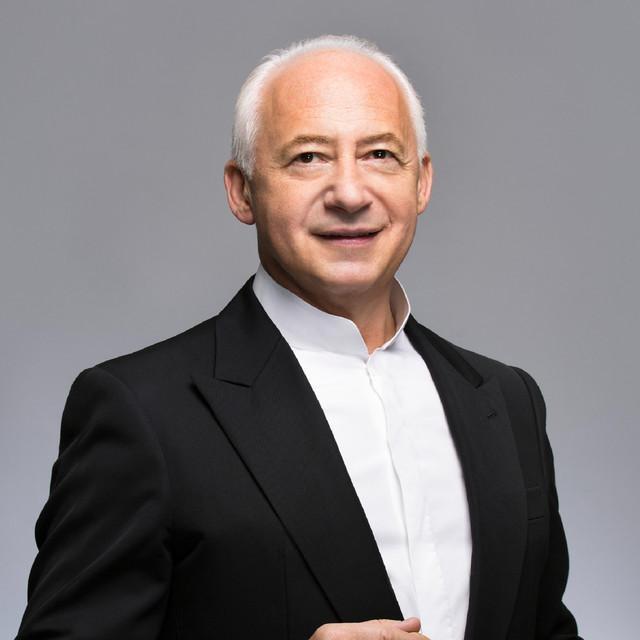
Vladimir Spivakov

Classical
Orchestral
Chamber Music
 Viberate Rank: 118982
 Viberate Rank: 118982
 Monthly ListenersFollowers
 Subscribers
 Followers
 Followers
 FansTop Spotify Songs
| Track | 7-Day Streams | |
|---|---|---|
1 | 34.46K | |
2 | 3.01K | |
3 | 2.28K | |
4 | 1.68K | |
5 | 1.58K |
Top YouTube VideosMonthly ListenersFeatured in Playlists| Playlist | Followers | |
|---|---|---|
1 |  Classical Essentials Spotify | 3.82M |
2 |  Best Classical Music Peaceful Classics | 857.63K |
3 |  Música Clásica Que Sí Es Clásica José Gonzales | 339.76K |
4 | Beautiful, Calming Classical Music vcmstow | 72.73K |
5 |  Best of Klassik - Klassische Musik die jeder kennt The Sound Of | 69.47K |
Audience| City | Monthly Listeners | |
|---|---|---|
1 |  | 2.09K |
2 |  | 1.68K |
3 |  | 1.57K |
4 |  | 1.22K |
5 |  | 1.09K |
See full performance history, audience data, playlist activity, rankings, comparisons, and more in Viberate music analytics. Start with a free trial, then continue with a paid plan.
Vladimir Spivakov’s Spotify BioVladimir Spivakov is one of the world's best-known violinists and a highly regarded conductor, and is respected for his worldwide humanitarian activities. His hometown of Ufa is in Russia's Ural Mountains, the low range traditionally regarded as the division between Europe and Asia. As often happened when children showed particularly promising musical talent, he was moved to Moscow to attend the Central School of Music. His violin teacher there was Lubov Siegal. He then attended the Leningrad Conservatory as a pupil of Veniamin (Benjamin) Sher, and then at the Tchaikovsky Conservatory in Moscow under Yuri Yankelevich.
By then, he had already won major national attention by winning, at the age of 13, the first prize for violin in the White Nights Festival in Leningrad in 1958. In 1969, he emerged on the international stage with a first prize in the International Competition for Violinists in Montreal, and the next year he was the second prize winner at the Tchaikovsky Competition in… Moscow. At that point he went on the concert tour circuit throughout the U.S.S.R. and Eastern Europe.
He began appearing outside the Soviet bloc, debuting in the United States in 1975 with the New York Philharmonic, and gave a triumphant pair of recitals at Carnegie Hall in New York in 1976.
In 1977, he toured as a soloist with the Moscow State Orchestra and debuted with the London Philharmonic. He was a particular favorite in America and in the next few years appeared with the Cleveland, Dallas, Pittsburgh, and San Francisco orchestras.
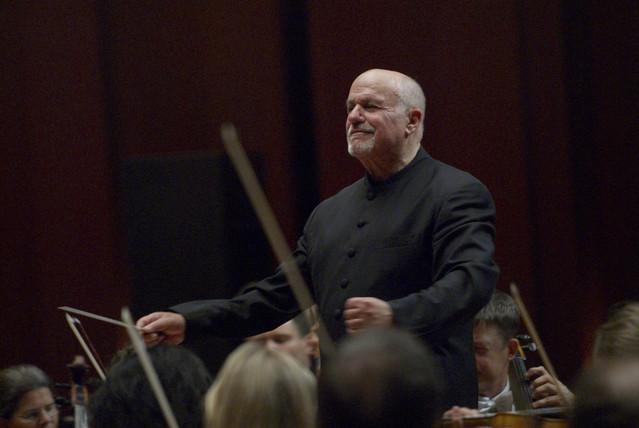
Meanwhile he was studying conducting. He made his debut in that capacity at the very top rank of orchestras, leading the Chicago Symphony in 1979 at a Ravinia Festival summer concert. The press notices of that appearance make it clear that the occasion was a triumph, and it resulted in immediate engagements with other major symphonies around the world. Also in 1979, he founded the Moscow Virtuosi, which rapidly became known as one of the finest chamber orchestras of the world and celebrated its 30th anniversary with a special concert in London in 2009.
He maintained both his solo violin career and his conducting. He conducted such groups as the Santa Cecilia Orchestra of Rome, the Leningrad (St. Petersburg) Philharmonic, the Houston Symphony, the London Symphony, and many international chamber orchestras, such as the English, the Scottish, and major chamber groups in Rome, Dresden, and the Netherlands. In 1989, he became artistic director of the Colmar International Festival in France. In 1998 he was appointed to succeeded founder Mikhail Pletnev as the principal conductor and music director of the Russian National Orchestra, the first privately owned orchestra in Russia since the 1917 Revolution.
He teaches at the Madrid Conservatory. He has been honored with Russia's highest prize, the National Cultural Heritage Award, and is Ambassador of the Arts of the World Economic Forum in Davos, Switzerland. He has established a Vladimir Spivakov Foundation to give creative and financial support for talented young people from around the world, and to needy children of Russia. He has also worked to raise relief for victims of Stalinism and children suffering from the Chernobyl power plant disaster. He is the founder of the European Sakharov Foundation.
He has recorded extensively for RCA Victor and conducts the Russian National Orchestra on the Well-Tempered Productions label. He played a violin bequeathed to him by his teacher Yankelevich, a 1716 instrument made by the Venetian luthier Francesco Bogetti, until 1997 when he was loaned a Stradivarius for life.
Viberate is a music analytics platform built for A&Rs, artist managers, labels, booking agents, marketers, and artists.
It helps music professionals track artist growth, analyze audience data, monitor playlist activity, compare artists, follow song performance, and identify opportunities across the music market.
Public artist pages provide a free preview of selected artist data. Paid plans provide access to deeper analytics, historical data, charts, comparisons, playlist tools, exports, alerts, reports, and additional professional features.
Yes. Public Viberate artist pages provide selected artist analytics and music data for free.
Viberate also offers a 7-day free trial of the full platform. A credit card is required to start the trial. The trial includes access to the complete product so users can test deeper artist analytics, historical views, playlist insights, comparisons, charts, exports, alerts, and reporting features before choosing a paid plan.
Viberate provides artist analytics across streaming, playlists, social media, video, radio airplay, songs, and audience markets.
Users can analyze Spotify performance, Spotify and Apple Music playlists, YouTube activity, TikTok and Instagram growth, radio spins, song performance, audience locations, demographics, rankings, and overall artist momentum.
Artist profiles also connect to music charts, similar artists, and comparison tools, helping users benchmark performance and evaluate artists in context.
Viberate updates key artist and track data daily.
For followed artists and tracks, selected data is refreshed multiple times per day. This helps teams monitor playlist changes, streaming movement, audience growth, releases, and campaign performance with more current data.
Update frequency can vary depending on the metric and data source.
Yes. Viberate lets users compare up to five artists side by side across streaming, social media, audience, and engagement metrics.
Users can compare fanbase growth, audience demographics, locations, Spotify performance, social metrics, and other artist data over selected time periods.
Artist comparison can be used for A&R scouting, benchmarking, booking decisions, campaign planning, and evaluating artists with similar audiences or market positions.