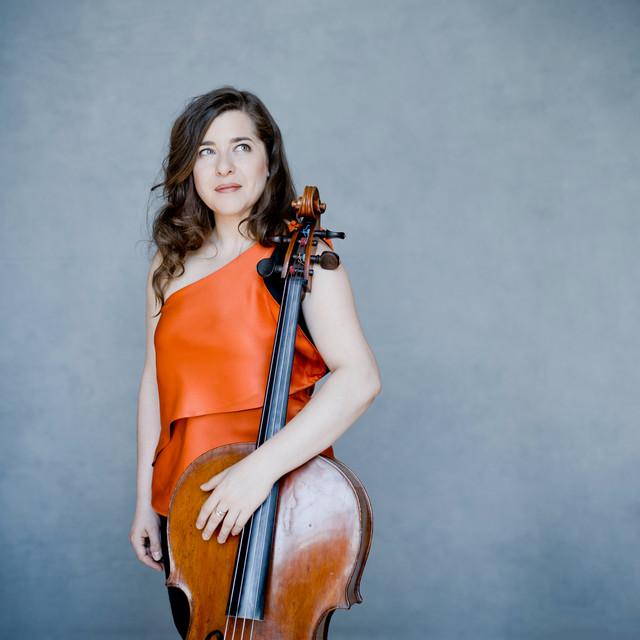
Alisa Weilerstein

Classical
Chamber Music
Orchestral
 Viberate Rank: 131034
 Viberate Rank: 131034
 Monthly ListenersFollowers
 Subscribers
 Followers
 Followers
 FansTop Spotify Songs
| Track | 7-Day Streams | |
|---|---|---|
1 | 14.53K | |
2 | 11.69K | |
3 | 6.49K | |
4 | 2.97K | |
5 | 2.06K |
Top YouTube Videos| Video | 7-Day Views | |
|---|---|---|
1 | 197 | |
2 | 182 | |
3 | 114 | |
4 | 101 | |
5 | 28 |
Monthly ListenersFeatured in Playlists| Playlist | Followers | |
|---|---|---|
1 |  Classical Essentials Spotify | 3.82M |
2 |  This Is Chopin Spotify | 684.58K |
3 |  Classical Reading Spotify | 634.31K |
4 |  Easy Classical Spotify | 471.84K |
5 |  Mellow Cello Spotify | 452.27K |
Audience| City | Monthly Listeners | |
|---|---|---|
1 |  | 2.34K |
2 |  | 2.27K |
3 |  | 1.74K |
4 | | 1.56K |
5 |  | 1.30K |
See full performance history, audience data, playlist activity, rankings, comparisons, and more in Viberate music analytics. Start with a free trial, then continue with a paid plan.
Alisa Weilerstein’s Spotify BioCellist Alisa Weilerstein has appeared with leading orchestras all over the U.S. and Europe and has played chamber music with her parents, both well-known performers, in the Weilerstein Trio. Unusually among classical musicians, she is the recipient of a prestigious MacArthur Fellowship. Her repertory is wide but has been marked by a focus on contemporary music. Weilerstein has a substantial recording catalog that includes the album Brahms: Cello Sonatas (2024).
Weilerstein was born in Rochester, New York, on April 14, 1982. Her parents are Donald Weilerstein, first violinist of the Cleveland Quartet, and pianist Vivian Hornik Weilerstein; violinist and conductor Joshua Weilerstein is her brother. At age two-and-a-half, Weilerstein contracted chickenpox. As she recuperated, her mother created a makeshift cello from a Rice Krispies box. Alisa was delighted but frustrated that the instrument could not produce musical notes, and she demanded a real cello. At four, she received one, and… within six months, she was performing in public. As a child, Weilerstein performed Tchaikovsky's Variations on a Rococo Theme, Op. 33, with the Cleveland Orchestra. Two years later, she performed with the New York Youth Symphony. In 2000, she released her debut album, Alisa Weilerstein, Cello, on the Angel label.
Weilerstein attended Columbia University, majoring in Russian history and graduating in 2004. Her career was propelled by several major awards and grants, including the Leonard Bernstein Prize at the Schleswig-Holstein Music Festival in 2006, and, most important, a MacArthur Foundation Fellowship, popularly known as a "genius grant," in 2011. She used some of the proceeds of the latter to develop relationships with living composers. She has not just championed contemporary music but has premiered multiple pieces by such composers as Osvaldo Golijov and Lera Auerbach. Weilerstein has also played the difficult Cello Concerto of Elliott Carter, selecting that work for her first recording on the Decca label in 2012.
In traditional repertory, Weilerstein has appeared as a concerto soloist with numerous major orchestras around the U.S. and Europe, including such Central European stalwarts as the Berlin Philharmonic, the Staatskapelle Berlin, and the Czech Philharmonic, with which she toured the U.S. as a soloist in Dvořák's Cello Concerto in B minor, Op. 104. In 2018, she began a multi-year engagement as Artistic Partner to Norway's innovative Trondheim Soloists. She recorded for Decca from 2012 to 2016, and since then for PentaTone Classics. On that label, she released the album Bach, featuring that composer's six suites for solo cello, in 2020. In the early 2020s, she released a pair of recordings with pianist Inon Barnatan, Beethoven: Cello Sonatas (2022) and Brahms: Cello Sonatas (2024); the latter album included a transcription for cello and piano by the performers of the Brahms Violin Sonata No. 1 in G major, Op. 78. A sufferer from Type 1 diabetes, Weilerstein has served as a celebrity spokesperson for the Juvenile Diabetes Research Foundation. ~ James Manheim, Rovi
Viberate is a music analytics platform built for A&Rs, artist managers, labels, booking agents, marketers, and artists.
It helps music professionals track artist growth, analyze audience data, monitor playlist activity, compare artists, follow song performance, and identify opportunities across the music market.
Public artist pages provide a free preview of selected artist data. Paid plans provide access to deeper analytics, historical data, charts, comparisons, playlist tools, exports, alerts, reports, and additional professional features.
Yes. Public Viberate artist pages provide selected artist analytics and music data for free.
Viberate also offers a 7-day free trial of the full platform. A credit card is required to start the trial. The trial includes access to the complete product so users can test deeper artist analytics, historical views, playlist insights, comparisons, charts, exports, alerts, and reporting features before choosing a paid plan.
Viberate provides artist analytics across streaming, playlists, social media, video, radio airplay, songs, and audience markets.
Users can analyze Spotify performance, Spotify and Apple Music playlists, YouTube activity, TikTok and Instagram growth, radio spins, song performance, audience locations, demographics, rankings, and overall artist momentum.
Artist profiles also connect to music charts, similar artists, and comparison tools, helping users benchmark performance and evaluate artists in context.
Viberate updates key artist and track data daily.
For followed artists and tracks, selected data is refreshed multiple times per day. This helps teams monitor playlist changes, streaming movement, audience growth, releases, and campaign performance with more current data.
Update frequency can vary depending on the metric and data source.
Yes. Viberate lets users compare up to five artists side by side across streaming, social media, audience, and engagement metrics.
Users can compare fanbase growth, audience demographics, locations, Spotify performance, social metrics, and other artist data over selected time periods.
Artist comparison can be used for A&R scouting, benchmarking, booking decisions, campaign planning, and evaluating artists with similar audiences or market positions.