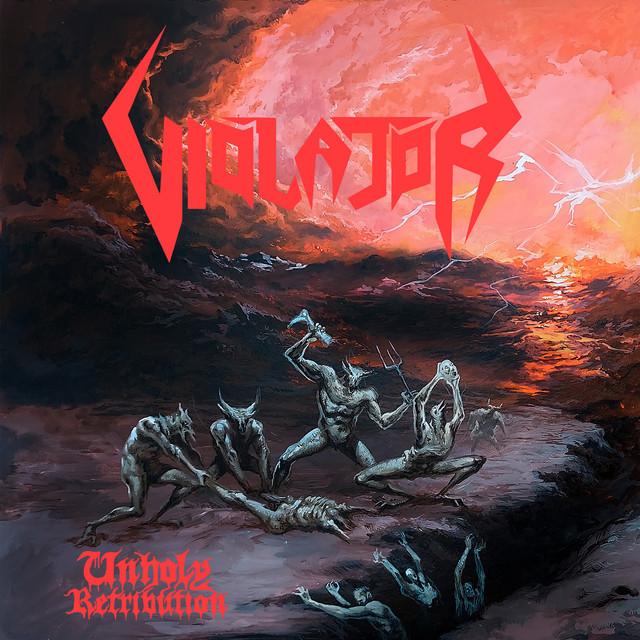
Violator

Metal
Thrash Metal
 Viberate Rank: 46982
 Viberate Rank: 46982
 Monthly ListenersFollowers
 Subscribers
 Followers
 Followers
 FansTop Spotify Songs
| Track | 7-Day Streams | |
|---|---|---|
1 | 5.61K | |
2 | 5.16K | |
3 | 2.75K | |
4 | 1.77K | |
5 | 1.71K |
Top YouTube VideosMonthly ListenersFeatured in Playlists| Playlist | Followers | |
|---|---|---|
1 |  Thrashers Spotify | 586.86K |
2 | Best of Trash Metal Lomprdik | 86.64K |
3 |  Heavy Metal Instrumentals 🎸 JaviFlames | 13.79K |
4 |  TRASH METAL⚡️BEST OF THRASH METAL 🔱 THEOCIDE STUDIOS 🔱 | 13.72K |
5 |  Keep calm and listen trash metal 🤟😛 rockpepper-br | 12.20K |
Audience| City | Monthly Listeners | |
|---|---|---|
1 |  | 2.32K |
2 |  | 1.85K |
3 |  | 1.31K |
4 | | 1.22K |
5 |  | 424 |
See full performance history, audience data, playlist activity, rankings, comparisons, and more in Viberate music analytics. Start with a free trial, then continue with a paid plan.
Violator’s Spotify BioViolator hails from Brazil's capital city of Brasilia, where they were conceived almost in tandem with the new millennium; yet the inspiration for their music originates nearly two decades earlier, in the fast and frenzied sounds of vintage '80s thrash metal. In fact, members Pedro "Poney Ret" Arcanjo Matos (vocals/bass), Pedro Augusto "Capaça" Vasconcelos (guitar), Juan Lerda (guitar), and David "Batera" Soto Araya (drums), all placed their birth dates in 1985 -- the year when Exodus released their watershed debut, Bonded by Blood, arguably the ultimate pure thrash album. Violator's own thrashing really began to take shape in 2002, though, with the recording of their "Killer Instinct" demo, followed in quick succession by a three-song contribution to 2003's Fast-Food Thrash Metal compilation, 2004's Violent Mosh EP, and 2005's Violent War split album (with Bywar) -- all of which were supported with frequent touring in and around Brazil. By 2006 Violator were ready to record their… first full-length, Chemical Assault, for local Kill Again Records, and even though they welcomed new guitarist Márcio "Cambito" Nogueira (replacing Lerda) only months prior to entering the studio, the end results were deemed a roaring success: recapturing the unhinged excitement and general blueprint of the '80s Bay Area scene to its full extent. The quartet then embarked on their lengthiest tour yet, visiting neighboring countries such as Ecuador, Peru, Bolivia, Chile, and Argentina, as well as numerous Brazilian cities, naturally, throughout the course of 2007. And the following year was ushered in with a well-deserved appearance on Earache Records' Thrashing Like a Maniac compilation, after which the esteemed extreme metal label reissued Chemical Assault worldwide. Violator finally took some time off at that point, before starting to work on their sophomore album in late 2008. ~ Eduardo Rivadavia, Rovi
Viberate is a music analytics platform built for A&Rs, artist managers, labels, booking agents, marketers, and artists.
It helps music professionals track artist growth, analyze audience data, monitor playlist activity, compare artists, follow song performance, and identify opportunities across the music market.
Public artist pages provide a free preview of selected artist data. Paid plans provide access to deeper analytics, historical data, charts, comparisons, playlist tools, exports, alerts, reports, and additional professional features.
Yes. Public Viberate artist pages provide selected artist analytics and music data for free.
Viberate also offers a 7-day free trial of the full platform. A credit card is required to start the trial. The trial includes access to the complete product so users can test deeper artist analytics, historical views, playlist insights, comparisons, charts, exports, alerts, and reporting features before choosing a paid plan.
Viberate provides artist analytics across streaming, playlists, social media, video, radio airplay, songs, and audience markets.
Users can analyze Spotify performance, Spotify and Apple Music playlists, YouTube activity, TikTok and Instagram growth, radio spins, song performance, audience locations, demographics, rankings, and overall artist momentum.
Artist profiles also connect to music charts, similar artists, and comparison tools, helping users benchmark performance and evaluate artists in context.
Viberate updates key artist and track data daily.
For followed artists and tracks, selected data is refreshed multiple times per day. This helps teams monitor playlist changes, streaming movement, audience growth, releases, and campaign performance with more current data.
Update frequency can vary depending on the metric and data source.
Yes. Viberate lets users compare up to five artists side by side across streaming, social media, audience, and engagement metrics.
Users can compare fanbase growth, audience demographics, locations, Spotify performance, social metrics, and other artist data over selected time periods.
Artist comparison can be used for A&R scouting, benchmarking, booking decisions, campaign planning, and evaluating artists with similar audiences or market positions.