Underground Resistance

Electronic
Techno
Other Electronic Music
 Viberate Rank: 56906
 Viberate Rank: 56906
 Monthly ListenersFollowers
 Subscribers
 Followers
 Followers
 FansTop Spotify Songs
| Track | 7-Day Streams | |
|---|---|---|
1 | 3.19K | |
2 | 1.13K | |
3 | 1.08K | |
4 | 630 | |
5 | 591 |
Top YouTube VideosMonthly ListenersFeatured in Playlists| Playlist | Followers | |
|---|---|---|
1 | Gerson Berrio | 51.64K |
2 | Berghain Music Roman Wäger | 39.72K |
3 |  Miss Kittin's track IDs Spotify | 37.35K |
4 |  Kevin Saunderson's track IDs Spotify | 31.91K |
5 |  The Total Mixtape Ayhan Can Sezer | 29.57K |
Audience| City | Monthly Listeners | |
|---|---|---|
1 |  | 631 |
2 |  | 430 |
3 |  | 310 |
4 | | 280 |
5 | | 250 |
See full performance history, audience data, playlist activity, rankings, comparisons, and more in Viberate music analytics. Start with a free trial, then continue with a paid plan.
Underground Resistance’s Spotify BioUnderground Resistance is probably the most militantly political outcropping of modern urban American techno. Combining a grubby, four-track aesthetic, an almost strictly D.I.Y. business philosophy, and an oppositional, militaristic ethos similar to Public Enemy without the drama (or the familiarity; the members refuse to be photographed without bandanas obscuring their identities), UR have redirected their portion of the Detroit techno legacy to social activist ends, trading mainstream popularity and financial success for independence and self-determination. Begun in the early '90s by second-wave duo Jeff Mills and "Mad" Mike Banks -- who eventually enlisted Robert "Noise" Hood -- UR adapted the flavor and kick of early Detroit techno to the complex social, political, and economic circumstances in the wake of Reagan-era accelerated inner-city decline, and was formed as an outlet for uncompromising music geared toward awareness and change.
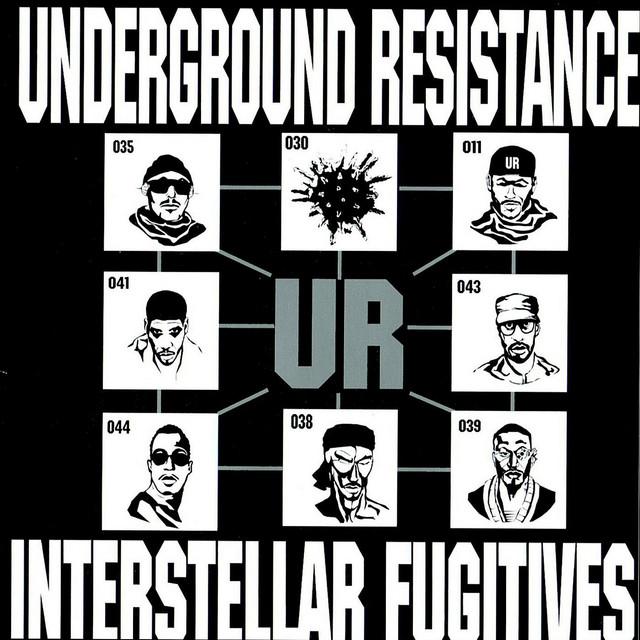
The early UR catalog is defined by a typically… Detroit combination of Motown and Chicago soul, and ruthless, at times caustic lo-fi techno, acid, and electro (Mills' background is in, among other things, Chicago industrial and EBM-style electro-techno, with Banks and Hood both coming from a solid house and techno base). Much of the label's early output was the product of various permutations of Banks, Mills, and Hood, both solo and in combination, before Mills and Hood left UR in 1992 to pursue (and achieve) international success. Banks continued to operate UR in the wake of the split, releasing EPs such as Return of Acid Rain, Message to the Majors, and Galaxy 2 Galaxy under the UR banner, as well as 12"s by newer UR members Drexciya, Suburban Knight, and DJ Rolando, among several others. Although UR remains largely aloof from the more high-profile American and European scenes, UR releases have occasionally leaked into various, relatively more established contexts (usually under the guise of "reconnaissance" or "infiltration"), with the noted German techno label Tresor reissuing 12"s from the early UR catalog and the React label compilation featuring exclusive tracks from Banks and other UR artists. The first actual full-lengths credited to Underground Resistance were 1992's Revolution for Change, followed by 1998's Interstellar Fugitives. ~ Sean Cooper, Rovi
Viberate is a music analytics platform built for A&Rs, artist managers, labels, booking agents, marketers, and artists.
It helps music professionals track artist growth, analyze audience data, monitor playlist activity, compare artists, follow song performance, and identify opportunities across the music market.
Public artist pages provide a free preview of selected artist data. Paid plans provide access to deeper analytics, historical data, charts, comparisons, playlist tools, exports, alerts, reports, and additional professional features.
Yes. Public Viberate artist pages provide selected artist analytics and music data for free.
Viberate also offers a 7-day free trial of the full platform. A credit card is required to start the trial. The trial includes access to the complete product so users can test deeper artist analytics, historical views, playlist insights, comparisons, charts, exports, alerts, and reporting features before choosing a paid plan.
Viberate provides artist analytics across streaming, playlists, social media, video, radio airplay, songs, and audience markets.
Users can analyze Spotify performance, Spotify and Apple Music playlists, YouTube activity, TikTok and Instagram growth, radio spins, song performance, audience locations, demographics, rankings, and overall artist momentum.
Artist profiles also connect to music charts, similar artists, and comparison tools, helping users benchmark performance and evaluate artists in context.
Viberate updates key artist and track data daily.
For followed artists and tracks, selected data is refreshed multiple times per day. This helps teams monitor playlist changes, streaming movement, audience growth, releases, and campaign performance with more current data.
Update frequency can vary depending on the metric and data source.
Yes. Viberate lets users compare up to five artists side by side across streaming, social media, audience, and engagement metrics.
Users can compare fanbase growth, audience demographics, locations, Spotify performance, social metrics, and other artist data over selected time periods.
Artist comparison can be used for A&R scouting, benchmarking, booking decisions, campaign planning, and evaluating artists with similar audiences or market positions.