Dopplereffekt

Electronic
Techno
Other Electronic Music
 Viberate Rank: 106578
 Viberate Rank: 106578
 Monthly ListenersFollowers
 Subscribers
 Followers
 Followers
 FansTop Spotify Songs
| Track | 7-Day Streams | |
|---|---|---|
1 | 4.76K | |
2 | 2.59K | |
3 | 1.43K | |
4 | 1.18K | |
5 | 1.02K |
Top YouTube VideosMonthly ListenersFeatured in Playlists| Playlist | Followers | |
|---|---|---|
1 |  MDMA doruk berker | 56.82K |
2 | Gerson Berrio | 51.64K |
3 |  PS5 EDM PlayStation®️ | 45.71K |
4 |  Aphex Twin: [mostly mellow] for Supreme Supreme | 44.15K |
5 |  HÖR BERLIN Rhadamanthus | 40.07K |
Audience| City | Monthly Listeners | |
|---|---|---|
1 |  | 674 |
2 |  | 645 |
3 | | 479 |
4 | | 477 |
5 | | 387 |
See full performance history, audience data, playlist activity, rankings, comparisons, and more in Viberate music analytics. Start with a free trial, then continue with a paid plan.
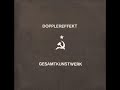
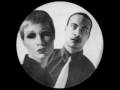
Dopplereffekt’s Spotify BioDopplereffekt's sound combines mechanistic Detroit techno with an uncanny pathos: their synthscapes “fetishize science” and suggest abandoned futures. Its founder Gerald Donald (Rudolf Klorzeiger) who has long been known as one half of Drexciya has spent the past two decades departing from the submerged mythology of Drexciya into his own cosmotechnical praxis. Dopplereffekt (with To-Nhan) debuted with Fascist State EP in 1995 on Donald's own Dataphysix Engineering label and Gesamtkunstwerk in 1999 through DJ Hell's International Deejay Gigolo Records. Intended to be a “total work of art” of abstract science and techno-politics, Dopplereffekt's titles and music draw from theoretical physics on early albums like Linear Accelerator in 2003 and Calabi Yau Space on Aphex Twin's Rephlex in 2007.
Leisure System’s revival of Dopplereffekt in the 2010s continued this arc, forming a clear continuation of Donald’s post-Drexciyan myth-science. The 2017 album Cellular Automata stripped away beats… to expose algorithmic fragments of harmonic progression, while Neurotelepathy in 2022 explored brain-computer fusion borrowing track titles like “Epigenetic Modulation” and “Neural Impulse Activator”. Metasymmetry, the duo's 2025 debut on Tresor Records continues this lineage.
Viberate is a music analytics platform built for A&Rs, artist managers, labels, booking agents, marketers, and artists.
It helps music professionals track artist growth, analyze audience data, monitor playlist activity, compare artists, follow song performance, and identify opportunities across the music market.
Public artist pages provide a free preview of selected artist data. Paid plans provide access to deeper analytics, historical data, charts, comparisons, playlist tools, exports, alerts, reports, and additional professional features.
Yes. Public Viberate artist pages provide selected artist analytics and music data for free.
Viberate also offers a 7-day free trial of the full platform. A credit card is required to start the trial. The trial includes access to the complete product so users can test deeper artist analytics, historical views, playlist insights, comparisons, charts, exports, alerts, and reporting features before choosing a paid plan.
Viberate provides artist analytics across streaming, playlists, social media, video, radio airplay, songs, and audience markets.
Users can analyze Spotify performance, Spotify and Apple Music playlists, YouTube activity, TikTok and Instagram growth, radio spins, song performance, audience locations, demographics, rankings, and overall artist momentum.
Artist profiles also connect to music charts, similar artists, and comparison tools, helping users benchmark performance and evaluate artists in context.
Viberate updates key artist and track data daily.
For followed artists and tracks, selected data is refreshed multiple times per day. This helps teams monitor playlist changes, streaming movement, audience growth, releases, and campaign performance with more current data.
Update frequency can vary depending on the metric and data source.
Yes. Viberate lets users compare up to five artists side by side across streaming, social media, audience, and engagement metrics.
Users can compare fanbase growth, audience demographics, locations, Spotify performance, social metrics, and other artist data over selected time periods.
Artist comparison can be used for A&R scouting, benchmarking, booking decisions, campaign planning, and evaluating artists with similar audiences or market positions.