Tzimon Barto

Classical
Orchestral
Chamber Music
 Viberate Rank: 333017
 Viberate Rank: 333017
 Monthly ListenersFollowers
 Subscribers
 Followers
 Followers
 FansTop Spotify Songs
| Track | 7-Day Streams | |
|---|---|---|
1 | 901 | |
2 | 209 | |
3 | 149 | |
4 | 67 | |
5 | 37 |
Top YouTube VideosMonthly ListenersFeatured in Playlists| Playlist | Followers | |
|---|---|---|
1 | Beautiful, Calming Classical Music vcmstow | 72.62K |
2 |  Chopin - Best - Updated Weekly classifyapp | 14.28K |
3 |  Sad,very sad, classical music Peer Wijntjes | 12.85K |
4 |  Kalm met Klassiek NPO Klassiek | 4.96K |
5 |  Música Clásica Tranquila Benjamin Gonzalez Pohlenz | 4.45K |
Audience| City | Monthly Listeners | |
|---|---|---|
1 |  | 186 |
2 |  | 186 |
3 | | 137 |
4 | | 128 |
5 |  | 120 |
See full performance history, audience data, playlist activity, rankings, comparisons, and more in Viberate music analytics. Start with a free trial, then continue with a paid plan.
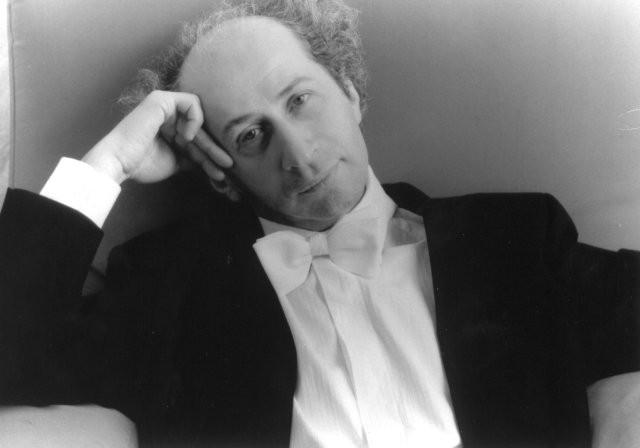
Tzimon Barto’s Spotify BioTzimon Barto is one of those rare musicians to have established a notable parallel career in another artistic field: along with achieving great success as a concert pianist, he has drawn acclaim for his first book, A lady of Greek origin, a work of 28 poems, all of disparate style. To say Barto's intellect is rare would be an understatement: he speaks five languages; reads ancient Greek, Hebrew, and Latin; and is a scholar of literature, philosophy, natural science and the Bible. Barto's piano repertory is broad, encompassing works by Bach, Rameau, Tchaikovsky, Prokofiev, Gershwin, de Falla, Joplin, and many others.
Barto was born Johnny Barto Smith, Jr., on January 2, 1963, in Eustis, FL. At 5 he began taking piano lessons from his grandmother, and at 9 he wrote an opera, including the libretto. He studied music at Rollins College and the Brevard Music Center. From 1981-1885 he studied at Juilliard under the iconic piano pedagogue Adele Marcus, who suggested that her student change his… name to Tzimon Barto.
Barto won the Juilliard concerto competition and twice won the Gina Bachauer Competition. At the behest of composer Gian Carlo Menotti, Barto, having also studied conducting, was invited to appear at the 1985 Spoleto Festival as both conductor and pianist. The following year Barto led performances there of Menotti's opera, The Saint of Bleecker Street.
1989 was a pivotal year in Barto's career: he debuted at the Vienna Musikverein in February with conductor Christoph Eschenbach, and his first recording -- featuring the Prokofiev Third Concerto, the Ravel G major Concerto, and Gershwin Rhapsody in Blue -- was released on EMI. At the invitation of Herbert von Karajan, he appeared at the Salzburg Festival the following year. Barto became a familiar presence on the concert circuit thereafter, regularly appearing at major venues in the U.S. and abroad: New York, Philadelphia, San Francisco, Paris, Berlin, and St. Petersburg. Numerous recordings appeared in the 1990s and early years of the new century as well.
In 2001, his book A lady of Greek origin was published and later a stage version of it was presented in Frankfurt, Germany, and Vienna (2005). Barto's collection on CD of keyboard works by Rameau, entitled A Basket of Wild Strawberries, was released in spring, 2006 on the Ondine label.
Viberate is a music analytics platform built for A&Rs, artist managers, labels, booking agents, marketers, and artists.
It helps music professionals track artist growth, analyze audience data, monitor playlist activity, compare artists, follow song performance, and identify opportunities across the music market.
Public artist pages provide a free preview of selected artist data. Paid plans provide access to deeper analytics, historical data, charts, comparisons, playlist tools, exports, alerts, reports, and additional professional features.
Yes. Public Viberate artist pages provide selected artist analytics and music data for free.
Viberate also offers a 7-day free trial of the full platform. A credit card is required to start the trial. The trial includes access to the complete product so users can test deeper artist analytics, historical views, playlist insights, comparisons, charts, exports, alerts, and reporting features before choosing a paid plan.
Viberate provides artist analytics across streaming, playlists, social media, video, radio airplay, songs, and audience markets.
Users can analyze Spotify performance, Spotify and Apple Music playlists, YouTube activity, TikTok and Instagram growth, radio spins, song performance, audience locations, demographics, rankings, and overall artist momentum.
Artist profiles also connect to music charts, similar artists, and comparison tools, helping users benchmark performance and evaluate artists in context.
Viberate updates key artist and track data daily.
For followed artists and tracks, selected data is refreshed multiple times per day. This helps teams monitor playlist changes, streaming movement, audience growth, releases, and campaign performance with more current data.
Update frequency can vary depending on the metric and data source.
Yes. Viberate lets users compare up to five artists side by side across streaming, social media, audience, and engagement metrics.
Users can compare fanbase growth, audience demographics, locations, Spotify performance, social metrics, and other artist data over selected time periods.
Artist comparison can be used for A&R scouting, benchmarking, booking decisions, campaign planning, and evaluating artists with similar audiences or market positions.