 Viberate
Julius Katchen
 FRAClassical, Chamber Music, Classical Crossover
N/A monthly listeners
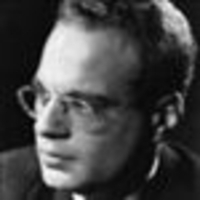 FRAClassical, Chamber Music, Classical Crossover

Famous French classical violinist Julius Katchen stands out in the field of chamber music for his fascinating musicality. Katchen effortlessly blends complex melodies and harmonies with his mastery of the piano, taking his listeners to a world of intense emotion and expression.
Katchen, a French native, developed a strong love for classical music from a young age. His unique talent for using the piano to portray the intricacies and complexities of the genre rapidly established him as a virtuoso. Katchen's performances stand out for their flawless technique, wide dynamic range, and capacity to highlight each composition's true character.
Katchen's talent shows even more in the field of chamber music. His musical collaborations with other musicians provide a beautiful tapestry of sound where one instrument melds into the other instruments to form a seamless whole. Katchen makes sure that every note and word carries its own weight, creating a wide range of emotions in the listener through his delicate interpretation and attention to detail.
Beyond his technical proficiency, Katchen is a talented musician. His performances are infused with an authenticity and depth because to his in-depth knowledge of the historical and cultural context of each work. His love for the music he performs is evident, and he has a truly amazing capacity to engage his audience on a deep level.
Julius Katchen is a shining example of talent and dedication in the fields of classical and chamber music. His concerts serve as a living example of his unrelenting devotion to his craft and his capacity to transcend musical conventions, affecting the hearts and souls of everyone who have the honor of witnessing his mesmerizing shows.
Famous French classical and chamber pianist Julius Katchen has a number of well-known songs that have become increasingly famous among music fans. His most well-known songs include "Intermezzo in A Major" from the 6 Piano Pieces, Op.118, "Waltz in B Minor" from the 16 Waltzes, Op. 39, and "Marche funebre (Lento)" from the Piano Sonata No.2 in B flat minor, Op.35.
With its subtle melodies and eloquent transitions, "Intermezzo in A Major" displays Katchen's proficient piano playing. Its calming and reflective mood draws many listeners. "Waltz in B Minor," another great track, radiates a sense of beauty and sorrow. The audience is left with a strong impression of the piece because of Katchen's rendition, which highlights its emotional depth.
Along with these songs, Katchen is renowned for her performance of "Alla Turca (Allegretto)" from the Piano Sonata No. 11 in A, K. 331, which is known for its exuberant energy and jovial melodies. The song exhibits Katchen's ability as a musician by exuding a bright and spirited atmosphere.
The "Finale (Presto)" from the Piano Sonata No. 2 in B flat minor, Op. 35, the "Wiegenlied" from the 16 Waltzes, Op. 39, and the "Romance in F Major" from the 6 Piano Pieces, Op. 118 are further noteworthy compositions by Julius Katchen. These songs showcase Katchen's extraordinary talent and musicianship, making them all favorites of fans of classical music.
The repertoire of Julius Katchen includes a wide variety of classical and chamber music works. Audiences have responded favorably to his renditions of these songs, making him a well-known artist in the genre.
Famous French classical and chamber music performer Julius Katchen lately put out some intriguing songs and CDs. "Dohnanyi & Rachmaninoff: Variations Uber Ein Kinderlied, OP. 25 - Rhapsody on a Theme of Paganini, OP. 43 (2022)" is one of his most recent recordings. In this album, Katchen explores the nuanced variants of great classical compositions, showcasing his extraordinary talent and craftsmanship.
Julius Katchen has also published a number of intriguing songs in addition to his album. One of his most recent singles is "Beethoven: Thirty-Three Variations on a Waltz by Diabelli, Op. 120: Variation 9. Allegro pesante e risoluto (2020)." This song is an excellent example of Katchen's ability to communicate the richness and intricacy of Beethoven's compositions. Every note he plays demonstrates his mastery of the piano, and his precise and expressive performance captivates listeners.
A second standout single is "Beethoven: Thirty-Three Variations on a Waltz by Diabelli, Op. 120: Variation 8. Poco vivace (2020)." In this song, Katchen demonstrates his musicianship and versatility by deftly handling the complex contrasts and tempo shifts of Beethoven's composition. As Katchen deftly brings these variations to life, the listener is drawn into a world of musical expression.
Julius Katchen never ceases to enthrall and inspire fans of chamber and classical music with his new works and CDs. His renditions of classical works exhibit his technical mastery and artistic sensitivity, making his music a joy to listen to. Whether it's from his most recent album or a single, Katchen's musical talent and passion are evident and leave a deep impression on listeners all over the world.
French classical musician Julius Katchen has worked with renowned orchestras and composers on a number of significant projects. His performance of Frederic Chopin's "Piano Sonata No. 2 in B flat minor, Op. 35: 3" is one famous collaboration. Funeral march (Lento). Katchen's performance demonstrates his mastery of emotive expression on the piano and perfectly conveys the solemn and melancholy nature of this work.
Katchen's version of Wolfgang Amadeus Mozart's "Piano Sonata No.11 in A, K.331 -"Alla Turca": 3. Alla Turca (Allegretto)" is another noteworthy collaboration. Mozart's music is brought to life in this vivacious and passionate composition by Katchen's deft fingers gliding over the complex melodies and playful rhythms.
Additionally, Katchen worked on the "Piano Concerto No. 2 in A, S.125: 4. Allegro animato" with Franz Liszt and the London Philharmonic Orchestra. The majesty of the orchestra and Katchen's perfect execution of Liszt's challenging piano passages serve as a showcase for his skill and technical mastery in this collaboration.
All of the above-mentioned collaborations are notable, but Katchen's performance of Sergei Rachmaninoff's "Piano Concerto No. 2 in C Minor, Op. 18: 2. Adagio sostenuto" stands out. With the London Symphony Orchestra joining her, conducted by Sir Georg Solti, Katchen gives a spellbinding performance brimming with emotion. A compelling musical experience is produced by the orchestra's subtle interaction with the piano.
These partnerships showcase Julius Katchen's breadth of experience and prowess as a classical and chamber music interpreter. Katchen has made a significant contribution to the field of classical music through his partnerships with eminent composers and ensembles.
Viberate is a professional music analytics service that provides a complete data overview of Julius Katchen, covering audience data, Spotify playlists and stats, individual track performance, and cross-platform metrics including Spotify, YouTube, streaming, and radio airplay analytics. The platform also includes full social media analytics across Instagram, TikTok, and Facebook, as well as insights from Apple Music playlists, SoundCloud, Beatport, Shazam, and Deezer, alongside artist charts, streaming charts, genre charts, and genre analytics to support A&R discovery, benchmarking, and strategic decision-making.
