Twelve Tribes

Metal
Metalcore/Deathcore
 Viberate Rank: 441101
 Viberate Rank: 441101
 Monthly ListenersFollowers
 Subscribers
 Followers
 Followers
 FansTop Spotify Songs
| Track | 7-Day Streams | |
|---|---|---|
1 | 373 | |
2 | 161 | |
3 | 144 | |
4 | 115 | |
5 | 102 |
Top YouTube VideosMonthly ListenersFeatured in Playlists| Playlist | Followers | |
|---|---|---|
1 | Bible of Nu-Metal/alternatif Grunt | 15.47K |
2 |  Headbangers Ball, Vol. 2 iamandrewdoom | 5.57K |
3 |  Trasher Magazine Linus Öberg | 3.22K |
4 | MTV Headbangers Ball V1-3 Kyle Bartosik | 1.76K |
5 |  MTV2 Headbanger's Ball Josh Hand | 1.64K |
Audience| City | Monthly Listeners | |
|---|---|---|
1 | | 23 |
2 | | 23 |
3 | | 22 |
4 |  | 21 |
5 |  | 21 |
See full performance history, audience data, playlist activity, rankings, comparisons, and more in Viberate music analytics. Start with a free trial, then continue with a paid plan.
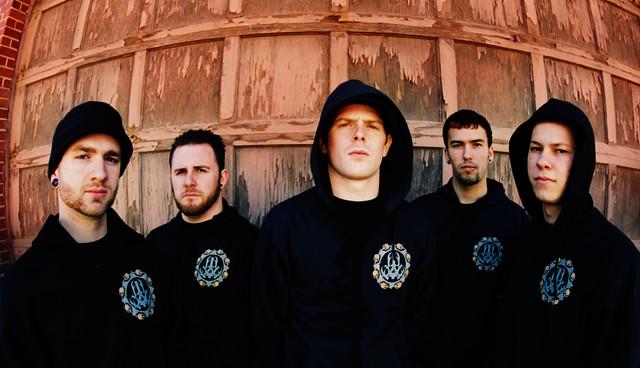
Twelve Tribes’ Spotify BioBased in Dayton, OH, Twelve Tribes are among the numerous metalcore bands that came out of the Midwest in the late ‘90s. Twelve Tribes (whose influences have ranged from Zao to Slayer to Hatebreed) are anything but subtle; exemplifying metalcore's harsh, ferocious and downright punishing nature, the Ohio residents thrive on sensory assault. Twelve Tribes have, at times, incorporated rapping; they have also hinted at the screamo style and flirted with the extreme vocals/clean vocals contrast that screamo (which is also called post-hardcore or melodic hardcore) is known for. But more often than not, lead singer Adam Jackson favors tortured screaming over clean vocals--and at the end of the day, Twelve Tribes' work should be categorized as metalcore, not screamo. Stylistically, they have a lot more in common with Throwdown, Every Time I Die, Deadsoil, Rotten Sound and Himsa than they do with screamo units like From Autumn to Ashes, Nora and Motion Picture Demise.
Formed in 1997, Twelve… Tribes' original lineup included, among others, lead singer Adam Jackson, guitarist Andrew Corpus and bassist Jason Thompson (who has long since left the band and joined a Dayton-based group called Waking Kills the Dream). The first thing Twelve Tribes recorded in 1997 (when Jackson and Corpus were still in high school) was a self-titled demo. The metalheads had been together about a year when they recorded their second demo, Two Cleft Tongues, which included drummer Alex Vernon (whose other associations have included the K10 Prospect, the Courage Crew and Red Roses for a Blue Lady) and caught to the attention of Eulogy Recordings (a small independent label based in Ft. Lauderdale, FL). Although Twelve Tribes sold copies of Two Cleft Tongues at their Dayton shows in 1998, their first official full-length album didn't come out until 1999, when Eulogy released As Feathers to Flowers and Petals to Wings. That release was followed by an EP titled Instrument, which Eulogy put out in 2000. After that, Twelve Tribes and Eulogy parted company--and it wasn't until early 2004 that the Dayton residents started recording their second full-length album, The Rebirth of Tragedy. For about two months in late 2003/early 2004, Twelve Tribes changed their name to Prodigal Zoo, but they ended up deciding that a name change wasn't a good idea after all--that there was too much history attached to their old name for them to abandon it--and by the time Ferret Records released The Rebirth of Tragedy in June 2004, they were back to being Twelve Tribes. Along the way, Twelve Tribes have had more than their share of lineup changes, which isn't the least bit uncommon in the hardcore and metalcore fields. Twelve Tribes' 2004 lineup consisted of Adam Jackson on lead vocals, Andrew Corpus on guitar, Kevin Schindel on guitar and background vocals, Matt Tackett on bass and Shane Shook (a 2002 arrival) on drums. 2004 found Twelve Tribes touring the United States with Candiria, Misery Signals and 36 Crazy Fists. ~ Alex Henderson, Rovi
Viberate is a music analytics platform built for A&Rs, artist managers, labels, booking agents, marketers, and artists.
It helps music professionals track artist growth, analyze audience data, monitor playlist activity, compare artists, follow song performance, and identify opportunities across the music market.
Public artist pages provide a free preview of selected artist data. Paid plans provide access to deeper analytics, historical data, charts, comparisons, playlist tools, exports, alerts, reports, and additional professional features.
Yes. Public Viberate artist pages provide selected artist analytics and music data for free.
Viberate also offers a 7-day free trial of the full platform. A credit card is required to start the trial. The trial includes access to the complete product so users can test deeper artist analytics, historical views, playlist insights, comparisons, charts, exports, alerts, and reporting features before choosing a paid plan.
Viberate provides artist analytics across streaming, playlists, social media, video, radio airplay, songs, and audience markets.
Users can analyze Spotify performance, Spotify and Apple Music playlists, YouTube activity, TikTok and Instagram growth, radio spins, song performance, audience locations, demographics, rankings, and overall artist momentum.
Artist profiles also connect to music charts, similar artists, and comparison tools, helping users benchmark performance and evaluate artists in context.
Viberate updates key artist and track data daily.
For followed artists and tracks, selected data is refreshed multiple times per day. This helps teams monitor playlist changes, streaming movement, audience growth, releases, and campaign performance with more current data.
Update frequency can vary depending on the metric and data source.
Yes. Viberate lets users compare up to five artists side by side across streaming, social media, audience, and engagement metrics.
Users can compare fanbase growth, audience demographics, locations, Spotify performance, social metrics, and other artist data over selected time periods.
Artist comparison can be used for A&R scouting, benchmarking, booking decisions, campaign planning, and evaluating artists with similar audiences or market positions.